Hindu family harassed in ‘Muslim locality’, stones and animal bones thrown at home, told to convert or vacate
 Jabalpur, Madhya Pradesh, India
  7 May, 2025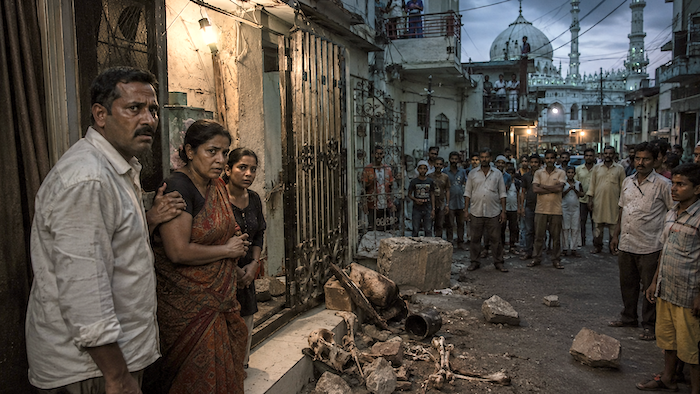
Case Summary
A Hindu woman and her family in the Katra Masjid area of Jabalpur, Madhya Pradesh, faced sustained intimidation and harassment from their Muslim neighbours over their continued presence in the locality. The Hindu family stated that they were repeatedly threatened, pressured to leave their home, and told that Hindus would not be allowed to live in the area. The harassment escalated into repeated stone pelting, throwing of animal bones at the Hindu family’s house, and threats demanding that they convert to Islam if they wished to continue living there. The Hindu woman, identified as Savita Lakhera, stated that the harassment had continued for nearly one year before she formally approached the authorities. The repeated threats and acts of intimidation created fear within the Hindu household and intensified concerns regarding the family’s safety and continued residence in the locality. The matter drew wider attention after the Hindu woman submitted a written complaint to the Central Superintendent of Police on 8th May 2026. Savita Lakhera lived with her family in the Aadhartal and Katra Masjid area of Jabalpur district. The Hindu family had constructed their house approximately two years earlier. Her husband worked as a statue maker and frequently travelled outside the locality for work. According to the complaint submitted by the Hindu woman, tensions with neighbouring Muslim residents began escalating during the previous year after Muslim neighbours started pressuring the family to vacate the property. The Hindu woman identified the perpetrators as Jameela Mansoori, Ruby Khan, Siraj Khan, and members of their family who lived adjacent to the Hindu family’s residence. The Hindu woman stated that the Muslim neighbours repeatedly informed the family that Hindus would not be permitted to continue residing in the locality and that the area would eventually become “Pakistan”. The Hindu woman further stated that the perpetrators repeatedly instructed the Hindu family to either leave the locality or convert to Islam in order to remain there. The intimidation gradually intensified through repeated acts targeting the Hindu family’s residence and sense of security. The Hindu woman stated that animal bones were regularly thrown near and at the family’s house. Stones were also repeatedly pelted at the residence. The acts specifically targeted the Hindu household and were carried out over a sustained period. The Hindu woman stated that the acts created fear within the family and disrupted their daily life. The harassment further escalated after the Hindu family attempted to install surveillance cameras outside the house for protection and monitoring. A few days after the cameras were installed, the closed-circuit television cameras were damaged through stone pelting. The Hindu woman stated that the Muslim neighbours continued gathering around the house, particularly when her husband was away for work. She further stated that obscene gestures were made towards her during these periods and that the continued intimidation was intended to pressure the Hindu family into abandoning their home. The Hindu woman also stated in her complaint that the perpetrators repeatedly instructed the family to “live like Muslims” if they wished to avoid consequences. The pressure extended beyond property-related intimidation and directly targeted the religious identity of the Hindu family. The Hindu woman stated that the Muslim neighbours insisted that conversion to Islam was necessary if the family wished to continue residing in the area peacefully. The Hindu woman additionally stated that Ruby Khan referred to her own son being imprisoned in a separate conversion-related case and used this during conversations with the Hindu family. The Hindu woman stated that gambling, betting, and alcohol related activities were openly carried out near the perpetrators’ residence and that the Hindu family was being pressured to vacate the locality so the area could be brought under the complete influence and control of the Muslim perpetrators without resistance from Hindu residents. As the harassment continued, the Hindu woman approached members of Hindu Dharma Sena for assistance. On 8th May 2026, Hindu Dharma Sena activists accompanied the Hindu victim and her family to the office of the Central Superintendent of Police in Jabalpur, where a formal written complaint was submitted. The organisation demanded strict action against the Muslim perpetrators and stated that Hindu families in the area were facing systematic intimidation and pressure to vacate their homes. Following the submission of the complaint, Central Superintendent of Police Bhagat Singh Gathoria acknowledged receiving the complaint from the Hindu family and Hindu Dharma Sena representatives. Police directed the Aadhartal police station to immediately examine the matter and begin appropriate action. Authorities stated that the allegations regarding harassment, intimidation, stone pelting, threats, and pressure upon the Hindu family would be investigated thoroughly. The investigation into the actions of the named Muslim perpetrators remained ongoing.
Why it is Hate Crime ?
This case has been added to the tracker under the primary category - Attack not resulting in death. Within this, the subcategory selected for this case is - Attacked for Hindu identity. In several cases, Hindus are attacked merely for their Hindu identity without any perceived provocation. A classic example of this category of religiously motivated hate crime is a murder in 2016. 7 ISIS terrorists were convicted for shooting a school principal in Kanpur because they got ‘triggered’ seeing the Kalava on his wrist and tilak that he had put. In this, the Hindu victim had offered no provocation except for his Hindu religious identity. The motivation for the murder was purely religious, driven by religious supremacy. Such cases where Hindus are targeted merely for their religious identity would be documented as a hate crime under this category. The other sub-category selected for this case is - Attacked for crossing 'Muslim area'. One of the reasons that Hindus get attacked unprovoked specifically by Islamists is for crossing ‘Muslim areas’. Essentially, Muslim mobs often attack Hindus crossing or present in certain areas which have a majority Muslim population. It has often been cited as one of the reasons to blame Hindus for attacks against themselves, signalling that Hindus displaying religious symbols, taking our religious processions or crossing any area which is dominated by Muslim residents is a provocation in and of itself. These areas are mostly ghettoized areas where mobs mobilize quickly to attack Hindus for a variety of reasons like playing music during a religious procession, crossing a mosque, wearing a tilak or any other religious symbol in a Muslim-dominated area, praying at a local temple in that area etc. There have been cases where the few local Hindus of that area have been attacked on their way to the Temple for prayers as well, simply because the area is considered a Muslim-dominated area. Several times, it is entirely possible that the immediate trigger for the violence against Hindus was non-religious in nature, however, the violence became religiously motivated in nature because the area was Muslim dominated and the residents on the whole harboured animosity towards Hindus, evidenced from the actions of the mob, the slogans, and the nature of the attack. Such crimes are motivated by the religious identity of the victims and are therefore classified as hate crimes under this category. The next subcategory selected is- Attacked to induce migration from non-Hindu dominated area. There have been cases where the Hindus living in an area, often with a majority dwelling belonging to non-Hindus or those harbouring animosity towards the Hindu faith, the Hindu residents experience threats and violence. The violence is employed with the aim of making the Hindus leave the area and relocate, so the area could be turned into an exclusive ghetto for adherents of the non-Hindu faith or those who harbor animosity towards the Hindu faith. In several cases, the aim of exodus is explicit. However, in several cases, the demand for exodus of Hindu residents is not explicit, however, violence by non-Hindu residents leaves the Hindu residents no option but to leave the area, thereby, turning the area into an exclusive ghetto of non-Hindu residents. In such cases, there are instances violence against the Hindu residents explicitly. For example, in the Hauz Qazi case of 2019, the Muslim residents claimed that mob violence against the Hindu residents had been triggered by a parking dispute. However, the violence did turn religious with a temple being desecrated and was directed specifically against the Hindu residents. The Hindu residents of the area were clear that the violence was religiously motivated and one of the motives was to affect an exodus of the Hindu residents. In such cases, even though the perpetrators have not explicitly expressed the aim of affecting exodus, the given circumstances and violence and precedent point to the intention of exodus and therefore would be categorized under this sub-category. Such crimes are religiously motivated and therefore are hate crimes. The other primary category selected here is- Predatory Proselytisation, and within this, the subcategory selected is- Harassment, threat, coercion for conversion. Harassment covers a wide range of behaviours of an offensive nature. It is commonly understood as behaviour that demeans, humiliates, and intimidates a person, including threats and coercion. Harassment and threats, in this case, find their root on discriminatory grounds which has the effect of nullifying a person’s rights or infringing upon his freedom to exercise his right specifically owing to the victim’s religious identity. Verbal and physical threats and psychological or physical harassment are often used against Hindu victims because they choose to practice their professed religion. Religious harassment also includes forced and involuntary conversions by harassment, threats or coercion. Coercion includes intimidatory tactics like force-feeding a Hindu victim beef to convert to another religion, forceful circumcision etc. In several cases documented, non-Hindu perpetrators or those who harbour specific animosity towards Hinduism, harass victims simply based on their religious identity. Such cases often also include harassment to ensure the Hindu victim abandons his/her professed religion and adopts the religion of the perpetrator. Such cases where Hindu victims are harassed to convert to the perpetrator’s religion are rooted in animosity towards the victim’s religious identity and are therefore documented as religiously motivated hate crimes. This case qualified as a religiously motivated hate crime because a Hindu family was deliberately subjected to sustained intimidation, threats, harassment, and attacks intended to force them out of their home and neighbourhood because of their Hindu identity. The Muslim perpetrators repeatedly informed the Hindu family that Hindus would not be permitted to live in the area and that they would either have to leave or convert to Islam in order to remain there. The harassment was not linked to an ordinary neighbourhood dispute or personal disagreement. The actions of the perpetrators directly targeted the Hindu family’s religious identity, their right to reside peacefully as Hindus, and their continued presence in an area the perpetrators sought to dominate through religious intimidation. The repeated use of threats invoking Islam, “Pakistan”, conversion pressure, and attacks on the Hindu household demonstrated that religion was central to the targeting and harassment inflicted upon the Hindu victims. The primary religious marker in this case was the direct attack upon the Hindu family because of their Hindu identity. The Muslim perpetrators repeatedly targeted the Hindu family’s residence by throwing animal bones and stones at the house, damaging surveillance cameras, intimidating the Hindu woman when she was alone, and threatening the family with consequences if they refused to comply with their demands. This was religiously significant because the Hindu family was not targeted randomly or incidentally. The perpetrators specifically focused on a visibly Hindu household and repeatedly made clear that the family’s continued existence in the locality as Hindus was unacceptable to them. The use of animal bones carried particular religious significance because the perpetrators consciously selected objects capable of causing psychological distress and humiliation to a Hindu family. The perpetrators deliberately weaponised symbols associated with impurity and intimidation in order to create fear within the Hindu household and destabilise their sense of safety, dignity, and religious belonging. The religious intent became even clearer through the repeated threats demanding that the Hindu family either vacate the locality or convert to Islam. The Muslim perpetrators directly linked the Hindu family’s right to remain in their home with the abandonment of their Hindu identity. This demonstrated that the harassment was not merely about property or neighbourhood conflict but about forcing a Hindu family into submission through religious pressure. The perpetrators consciously framed coexistence as conditional upon religious conformity and treated Hindu identity itself as something that had to be erased or removed from the locality. This revealed deliberate intent to target the Hindu victims specifically because they were Hindus and to use fear, intimidation, and social isolation as tools to pressure them into either displacement or religious surrender. The repeated attacks upon the Hindu residence, therefore, functioned not merely as acts of nuisance or intimidation but as deliberate instruments of religious persecution directed at a Hindu family because of their faith. The second religious marker emerged through the perpetrators’ repeated assertions that the area would become “Pakistan” and that Hindus would not be allowed to remain there. The Hindu family lived in the Katra Masjid and Aadhartal area near a mosque, and the Muslim perpetrators repeatedly asserted control and dominance over the locality while threatening the Hindu family’s continued residence there. This was religiously significant because the threats explicitly framed the area as an Islamic space where Hindu presence was unwelcome and conditional. The repeated references to transforming the locality into “Pakistan” carried a clear communal and religious meaning. The perpetrators consciously invoked the idea of an exclusively Muslim-dominated area in order to intimidate the Hindu family and communicate that non-Muslims, particularly Hindus, had no equal right to exist freely within that space. The perpetrators deliberately exploited the religious significance associated with demographic control and proximity to a mosque in order to maximise fear and insecurity within the Hindu household. The threats reflected a supremacist mindset in which the perpetrators viewed the locality as belonging exclusively to Muslims and treated Hindu residents as outsiders whose continued presence required submission to Islamic dominance. The demand that the Hindu family “live like Muslims” or convert to Islam further reinforced this attempt to impose religious conformity within the area. The harassment, therefore, extended beyond ordinary intimidation and became an assertion of communal control over territory, movement, and residence based explicitly on religious identity. This demonstrated deliberate intent to establish religious dominance over the locality by driving out or subordinating Hindu residents through sustained pressure and fear. The Muslim perpetrators consciously selected the Hindu family as targets because they viewed their Hindu identity and continued residence near the mosque as unacceptable within an area the perpetrators wished to define as exclusively Muslim. The repeated threats regarding “Pakistan”, the pressure to convert, the attacks upon the Hindu residents, and the attempts to make the family vacate their home collectively revealed a coordinated effort to marginalise and intimidate Hindus through religious hostility and exclusionary ideology. Such actions reflected deep-rooted religious animosity and an attempt to enforce communal supremacy through fear and coercion directed specifically at Hindu victims. Given that this case met the parameters of a religiously motivated hate crime, it was added to the hate crime database of the tracker. Disclaimer: The harassment and intimidation against the Hindu family were stated to have begun during 2025 and continued for nearly one year prior to the filing of the complaint. However, the exact starting date of the incidents was not specified in the available sources. For documentation purposes, the tracker has used 8th May 2025 as the indicative incident date, corresponding to the publication of the report dated 8th May 2026. This date has been selected solely to reflect the confirmed timeframe mentioned in the source material. The tracker records incident dates based on when the underlying acts occurred rather than when they were reported or published. Since the case involved sustained harassment over an extended period rather than a single isolated incident, the selected date is indicative and maintained for documentation purposes only.


Case Status
Complaint filed


Perpetrators Details
Perpetrators
Muslim Extremists
Perpetrators Range
From 2 To 5
Perpetrators Gender
both
 Sources




