Hindu community and Indian state targeted; Bangladesh Muslim leader calls for secession of West Bengal and mobilises Muslim population
 Bangladesh
  5 May, 2026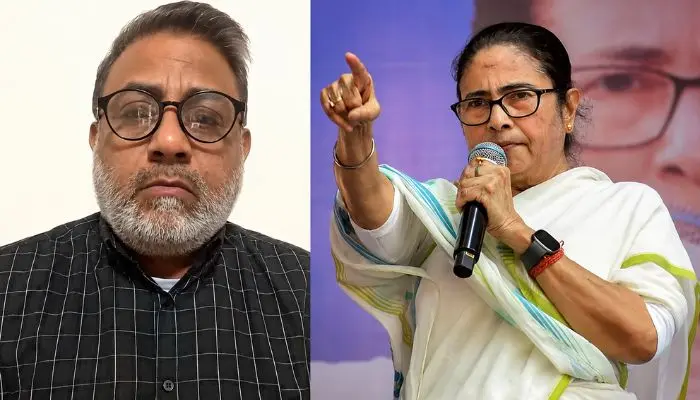
Case Summary
Following the West Bengal Assembly 2026 election results, India and Hindu civilisational identity was targeted Hindu and anti-India statements were made by Bangladeshi Jamaat leader Md Nurul Huda. He urged Mamata Banerjee to reject Delhi’s rule (rule of Union/central government) and declare West Bengal an independent nation, claiming that 170 million Muslims in Bangladesh would stand in support of her. Following the West Bengal Assembly 2026 election results, political tensions escalated sharply after Chief Minister Mamata Banerjee refused to accept defeat and questioned the legitimacy of the electoral process. In a press conference following the results, Mamata Banerjee claimed that she had not lost and would not resign, while also accusing the Election Commission of failing to conduct fair elections and asserting that nearly one hundred seats had been stolen through manipulation and rigging. During this time, in a video statement, Bangladeshi Jamaat leader Nurul Huda openly supported Mamata Banerjee’s decision not to step down from power and launched attacks against the BJP, referring to the party as “vote chor”, “communal” and “rioter”. He made provocative statements supporting West Bengal Chief Minister Mamata Banerjee and called upon her to declare West Bengal an independent nation and confront the Indian central government. He further claimed that Bengal should not accept what he described as alien and non-Bengali control from Delhi and added that Muslims across Bangladesh would support such a move. Nurul Huda also claimed that 170 million Muslims in Bangladesh would stand with Mamata Banerjee if West Bengal declared independence, and he encouraged her to “declare war against Delhi” rather than resign from office. His remarks triggered widespread outrage and intensified concerns regarding separatist rhetoric, communal polarisation and cross-border interference in India’s internal democratic affairs. BJP leaders demanded an immediate investigation into the matter and stated that such statements had the potential to inflame communal tensions and destabilise the political atmosphere in West Bengal.
Why it is Hate Crime ?
This case is added to the tracker under the primary category selected in this case is: Hate Speech against Hindus. Within this, the sub-category selected is: Violent Threats. Violent threats, explicit, implicit or implied, is the most dangerous form of hate speech since it goes beyond discriminatory and prejudicial language to express the intent of causing harm to an individual or a group of people based on their religious identity and faith. There could be several different kinds of threats that are issued to Hindus based on religious animosity. An explicit threat would mean the direct threat of violence towards an individual Hindu, a group of Hindus or Hindus at large. Physical violence, death threats, threats of destruction of property belonging to Hindus and threats of genocide would mean explicit threats against Hindus for their religious identity. Implicit threats may not be a direct threat but implied through the use of symbols of actions – for example – in the Nupur Sharma case, other than explicit threats, there were also implicit threats when Islamists took to the streets to burn and beat her effigies. It implies that they want to do the same to Nupur Sharma – thereby is considered an implicit threat. Violent threats can be delivered in person, through letters, phone calls, graffiti, or increasingly through social media and other online platforms. It would be important to understand that a threat – explicit or implicit, online or offline – to an individual who happens to be a Hindu does not qualify as a religiously motivated threat. Such a threat, while vile and dangerous, could be owing to non-religious reasons and/or personal animosity. To qualify as a religiously motivated threat, it would need to exhibit an indication that the individual is being targeted for religious reasons and/or owing to his/her religious identity as a Hindu. This case has been added to the tracker because the statements made by Bangladeshi Jamaat leader Md Nurul Huda displayed clear elements of communal mobilisation, separatist rhetoric, and hostility directed towards India’s national and civilisational identity, which is often viewed by Muslims as inseparable from its Hindu majority character. His remarks went far beyond ordinary political commentary or criticism of election results. Instead, he openly called upon Mamata Banerjee to reject the authority of Delhi, declare West Bengal an independent nation, and “declare war against Delhi”. The communal nature of the statement became even more pronounced when he invoked religious solidarity by declaring that “170 million Muslims” in Bangladesh would stand with Mamata Banerjee if West Bengal separated from India. By framing political resistance through the lens of Muslim solidarity and transnational Islamic support, the remarks transformed a domestic electoral issue into a communal and ideological confrontation. It is pertinent to note that Muslim extremists harbour specific animosity towards Hindus and their faith and also view India as a Hindu collectivity. The very basis of the partition of India and the creation of Pakistan (including modern-day Bangladesh) was that the Muslims believed that Islam was a nation unto itself, which could not survive with a Hindu collectivity like India. Consequently, when Muslim individuals, such as Md Nurul Huda, invoke religious identity, weaponise the idea of the global Ummah, and call for collective Muslim mobilisation against the Indian state, it is not merely political provocation but an ideological assertion that frames Hindus and the Indian nation as adversaries or outsiders. In this context, Nurul Huda’s call for Muslims of Bangladesh to unite behind the separation of West Bengal from India demonstrated more than support for a political leader; it portrayed religious hostility against India as a Hindu-majority nation. Furthermore, the nature of the remarks demonstrated that the support extended towards Mamata Banerjee and the All India Trinamool Congress was not rooted in any genuine concern for democratic principles or electoral fairness. Rather, the support stemmed because the TMC government had, over the years, adopted positions and policies which were favourable to Muslim interests while repeatedly displaying hostility towards Hindu religious expression and Hindu civil rights. This context becomes important in understanding why a Bangladeshi politician would publicly support Mamata Banerjee and call for West Bengal’s separation from India immediately after the defeat of the TMC by the Bharatiya Janata Party. The Trinamool Congress government, during its rule, had a history of targeting Hindus, Hindu activists, or the community in general. Over the past several years, a disturbing pattern has emerged in West Bengal, where incidents targeting Hindus, their temples, and festivals occurred with apparent support from the state administration. This targeting became institutionalised under Chief Minister Mamata Banerjee's leadership, as her government stood accused of deliberately shielding anti-Hindu elements while clamping down on Hindu rights and expressions of Hindu identity. There are increasing instances where the state actively suppresses Hindu religious expression. Hindus have been arrested simply for chanting “Jai Shri Ram”, a phrase vilified by the administration and the ruling party. Permission for Hindu processions, especially during festivals like Ram Navami or Hanuman Jayanti, is routinely denied on grounds of "law and order concerns", while Muslim religious gatherings face no such hurdles. Moreover, over the years, the Mamata-led government issued numerous prejudicial directives, like orders restricting Durga Puja immersions citing Muharram processions. Inaction on anti-Hindu mob violence in areas like Dhulian, Islampur, and Kaliachak. Public endorsements and appeasement of radical clerics and Islamist leaders, while dismissing concerns raised by Hindu groups as “communal provocation”. The systematic suppression of Hindu voices, denial of communal violence, and criminalisation of Hindu identity expressions such as “Jai Shri Ram” reflect not just administrative failure but deeper ideological hostility towards the Hindu community. Even communal attacks against Hindus have been downplayed by the state and police authorities. A glaring example of this systemic whitewashing appears in the handling of the Murshidabad violence, as well as multiple other incidents in Basirhat, Malda, Midnapore, and Uttar Dinajpur. For example, in the Basirhat incident of March 2025, after a Kali temple was vandalised and idols desecrated, the police quickly characterised the accused as mentally unstable, effectively dismissing the communal dimension of the attack before a detailed investigation had concluded. Similarly, following widespread violence in Murshidabad and Malda during April 2025, involving reports of arson, looting, attacks on Hindu homes, and idol desecration, state authorities described the incidents as minor clashes or local disputes unrelated to religion. Eyewitnesses and social media footage, however, contradicted several official narratives and intensified allegations that the state machinery was minimising or concealing the anti-Hindu nature of the violence. Such repeated patterns strengthened perceptions among critics that the TMC administration displayed institutional bias against Hindus and routinely downplayed hate crimes targeting the community . Therefore, against this backdrop, Nurul Huda made these statements, which ideologically aligned with broader Islamist hostility towards Hindu assertion and towards India as a Hindu-majority nation-state. His call for West Bengal to separate from India was therefore not an isolated political comment or a gesture of sympathy towards a defeated political leader. Instead, the remarks reflected an attempt to exploit communal fault lines and promote separatist sentiment by mobilising Islamic solidarity against the Indian state. The invocation of cross-border Muslim solidarity by Md Nurul Huda demonstrated how religious identity was weaponised to transcend national boundaries and mobilise support against India, simply because of India being a Hindu-majority nation. By calling upon “170 million Muslims” in Bangladesh to stand behind the separation of West Bengal from India, Nurul Huda framed the issue not as a routine political dispute but as a broader religious and civilisational confrontation. By invoking “170 million Muslims” in Bangladesh and encouraging confrontation against Delhi, the statements reinforced a communal narrative that aimed to ask for secession of India and encourage anti-Hindu hostility. His statements were rooted in religious animosity, which viewed India as a Hindu collective. This repeated invocation of “170 million Muslims” also carried an implicit message of demographic and religious intimidation directed towards Hindus and the Indian state. The emphasis on the collective strength of Muslims in Bangladesh was not merely political rhetoric but an attempt to project religious solidarity and numerical power in opposition to India and its Hindu-majority identity. By repeatedly invoking the strength of the Muslim population while calling for confrontation against Delhi and the separation of West Bengal from India, the remarks conveyed a message that Islamic unity and mobilisation should be used to challenge India’s territorial, civilisational framework and the larger Hindu community. Therefore, the statements made by Bangladeshi Jamaat leader Md Nurul Huda were not merely political remarks concerning election results in West Bengal, but reflected communal mobilisation, separatist rhetoric, and religious hostility directed towards India and its Hindu-majority identity. It is for these reasons that this case has been added to the Hinduphobia Tracker under the category of hate speech and violent threats targeting Hindus and India’s territorial unity. Disclaimer: The Hinduphobia Tracker records incidents based on when an event occurred or when the victim's ordeal began. It is important to clarify that none of the media sources covering this case has specified the exact date when Md Nurul Huda made those statements. Therefore, for documentation purposes, we have recorded the date based on when the incident was reported in the media, 6 May 2026.


Case Status
Unknown


Perpetrators Details
Perpetrators
Muslim Extremists
Perpetrators Range
One Person
Perpetrators Gender
male
 Sources




