Hindu brothers stabbed, attacked for wearing tilak and entering in Muslim dominated locality in Maharashtra
 Ulhasnagar, Maharashtra, India
  2 May, 2026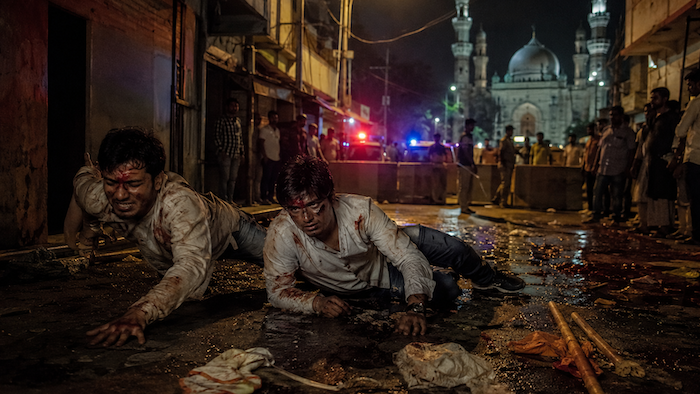
Case Summary
Two Hindu brothers were brutally assaulted in Ahilya Nagar, Maharashtra, after being identified by the tilak marks on their foreheads. Both sustained serious injuries in the attack, with one suffering critical stab wounds. The violence erupted when the Hindu youths entered an area where Muslim assailants confronted them, objected to their presence, and asserted control over the locality. According to reports, the Hindu victims were specifically stopped, threatened, and assaulted after being recognised as Hindus. Sharp weapons, sticks, and a sickle were used during the attack. One of the Hindu men sustained deep injuries to his chest and head and was rushed for emergency treatment. On 3rd May 2026, two Hindu youths from the Shiv Mandir Ekta Nagar area travelled to the Netaji Chowk locality in Ulhasnagar, Thane district, Maharashtra. The Hindu youths had gone there to meet a friend and planned to bring him back with them. During their visit, a group of 5-6 Muslim men led by Sameer Shaikh confronted the Hindu youths inside the locality. The Hindu victims were identified through the tilak marks worn on their foreheads. The Muslim perpetrators questioned why the Hindu youths had entered “their area” while wearing a tilak. The confrontation quickly escalated into violent abuse and threats. The perpetrators verbally intimidated the Hindu youths and warned them not to enter the locality again. The Muslim perpetrators then launched a coordinated physical assault on the Hindu youths using knives, sticks, rods, and a sickle. One Hindu victim stated that Sameer Shaikh repeatedly threatened to kill them if they entered the area again. The perpetrators surrounded the Hindu brothers and began striking them on the head and body. One Hindu victim sustained severe head injuries after being struck with sticks. He also suffered injuries to his hand during the attack. The second Hindu victim suffered injuries to his head and hand after being beaten during the assault. Ganesh Waghe sustained critical stab injuries to the chest after being attacked with a knife. Due to the severity of the injuries, he was admitted to a government hospital where he underwent emergency medical treatment. The assault created panic in the locality as residents gathered following the attack. The Hindu victims later described the violence in recorded statements, explaining that they were abused, threatened, and attacked after entering the Muslim-dominated lane while visibly displaying Hindu religious identity markers through the tilak on their foreheads. Following the attack, local police reached the area and began an investigation. A First Information Report was registered in connection with the assault. Police arrested one Muslim perpetrator while raids were initiated to locate the remaining accused individuals involved in the attack. A forensic team also inspected the crime scene as part of the investigation. The injured Hindu victims demanded strict legal action against the perpetrators and requested protection from further threats and violence.
Why it is Hate Crime ?
This case has been added to the tracker under the primary category - Attack not resulting in death. Within this, the subcategory selected for this case is - Attacked for Hindu identity. In several cases, Hindus are attacked merely for their Hindu identity without any perceived provocation. A classic example of this category of religiously motivated hate crime is a murder in 2016. 7 ISIS terrorists were convicted for shooting a school principal in Kanpur because they got ‘triggered’ seeing the Kalava on his wrist and tilak that he had put. In this, the Hindu victim had offered no provocation except for his Hindu religious identity. The motivation for the murder was purely religious, driven by religious supremacy. Such cases where Hindus are targeted merely for their religious identity would be documented as a hate crime under this category. Another sub-category selected for this case is - Attacked for crossing 'Muslim area'. One of the reasons that Hindus get attacked unprovoked specifically by Islamists is for crossing ‘Muslim areas’. Essentially, Muslim mobs often attack Hindus crossing or present in certain areas which have a majority Muslim population. It has often been cited as one of the reasons to blame Hindus for attacks against themselves, signalling that Hindus displaying religious symbols, taking our religious processions or crossing any area which is dominated by Muslim residents is a provocation in and of itself. These areas are mostly ghettoized areas where mobs mobilize quickly to attack Hindus for a variety of reasons like playing music during a religious procession, crossing a mosque, wearing a tilak or any other religious symbol in a Muslim-dominated area, praying at a local temple in that area etc. There have been cases where the few local Hindus of that area have been attacked on their way to the Temple for prayers as well, simply because the area is considered a Muslim-dominated area. Several times, it is entirely possible that the immediate trigger for the violence against Hindus was non-religious in nature, however, the violence became religiously motivated in nature because the area was Muslim dominated and the residents on the whole harboured animosity towards Hindus, evidenced from the actions of the mob, the slogans, and the nature of the attack. Such crimes are motivated by the religious identity of the victims and are therefore classified as hate crimes under this category. The attack on the Hindu brothers in Ahilya Nagar was a religiously motivated hate crime because the Muslim perpetrators identified the victims through visible Hindu religious markers and then violently targeted them. The Hindu victims were not attacked during a random altercation or personal dispute. They were confronted specifically over their Hindu identity, their tilak, and their presence inside an area the perpetrators described as “their area”. The assault escalated into a brutal armed attack that left one Hindu man in critical condition, demonstrating that the perpetrators deliberately used violence to intimidate and punish visibly identifiable Hindus. The brutality of the assault itself highlights the religious nature of the targeting. The Hindu victims were attacked with knives, sticks, rods, and a sickle, resulting in severe injuries and one brother sustaining critical stab wounds to the chest. The violence was not limited to verbal hostility or intimidation. The perpetrators escalated directly into life-threatening violence after identifying the victims through their tilak and confronting them over their presence in the locality. The repeated stabbing, beating, and threats to kill the victims demonstrated an intention to terrorise the Hindu men and physically enforce submission through fear. The choice to use sharp weapons against unarmed Hindu youths reflected an intent not merely to injure but to inflict maximum harm upon individuals singled out because of their Hindu identity. The brutality of the attack revealed that the perpetrators viewed the Hindu victims as targets whose religious identity justified violent punishment. A crucial religious marker in this case was the tilak worn by the Hindu brothers. The perpetrators immediately recognised the victims as Hindus and objected to their presence while visibly displaying a sacred Hindu symbol. This is significant because the tilak is not a neutral or incidental object but an open expression of Hindu faith, devotion, and cultural identity. The Muslim perpetrators focused specifically on this marker and treated the victims’ visible Hindu identity itself as the provocation. Their hostility was directed not at any criminal conduct by the Hindu youths, but at the fact that openly identifiable Hindus had entered the locality while visibly practising and expressing their faith. This demonstrates that the perpetrators consciously used the victims’ religious visibility to single them out for violence. The attack conveyed the message that Hindus displaying visible signs of their faith could be subjected to intimidation and assault merely for existing openly in public spaces. The religious motivation became even more explicit when the perpetrators told the Hindu victims that they should not enter “their area” and threatened to kill them if they returned. This reflects a supremacist and exclusionary mindset in which Muslim majority localities are treated as exclusive communal territories where Hindus are unwelcome. In many such communal incidents, areas surrounding mosques, dargahs, or Muslim-dominated neighbourhoods are informally treated as communal strongholds where dominance is asserted through intimidation and violence. Such behaviour stems from a mentality that numerical Muslim dominance gives the community social ownership and control over the locality, reducing Hindus to outsiders whose movement and visibility must remain subject to Muslim approval. In this case, the perpetrators acted upon that mentality by violently confronting Hindu youths for entering the area while displaying Hindu religious identity markers. The attack was therefore not only an assault on individuals but also an assertion of territorial and communal dominance. By warning the victims never to return, the perpetrators attempted to establish that openly practising Hindus could not move freely through the locality without facing violence and humiliation. The violence functioned as a tool of communal control designed to create fear among Hindus and reinforce the idea that the locality belonged exclusively to the Muslim community. This demonstrated clear religious animosity and an attempt to subordinate Hindus within shared civic spaces through intimidation and force. This incident was not an isolated assault but part of a broader pattern in which visibly identifiable Hindus are targeted for openly expressing their religious identity in public spaces. The Muslim perpetrators identified the Hindu victims through their tilak, objected to their presence inside a Muslim-dominated locality, and used extreme violence to punish and intimidate them. Such acts reflect deep-rooted hostility towards Hindu visibility, Hindu religious expression, and the equal right of Hindus to move freely and safely through public areas without fear of communal violence. Given that this case met the parameters of a religiously motivated hate crime, it was added to the hate crime database of the tracker.
Victim Details
Total Victim
2
Deceased
0
Gender
- Male 2
- Female 0
- Third Gender 0
- Unknown 0
Caste
- SC/ST 0
- OBC 0
- General 0
- Unknown 2
Age Group
- Minor 0
- Adult 2
- Senior Citizen 0
- Unknown 0


Case Status
Arrested


Perpetrators Details
Perpetrators
Muslim Extremists
Perpetrators Range
From 5 to 10
Perpetrators Gender
unknown
 Sources




