Hindu students attacked and injured for peacefully protesting against derogatory play insulting Hindu faith on university campus
 Hyderabad, Telangana, India
  4 May, 2026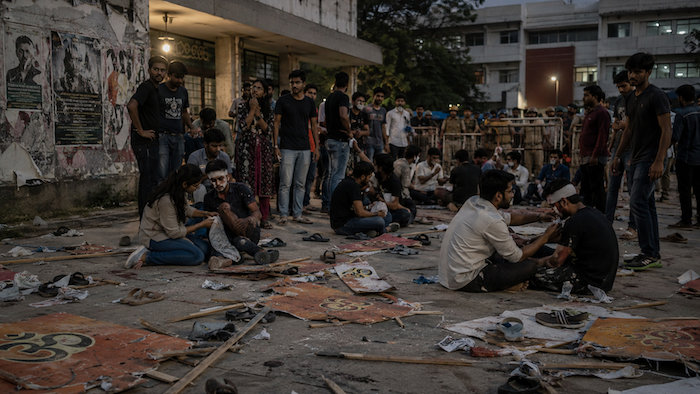
Case Summary
Hindu students at the University of Hyderabad in Hyderabad, Telangana, became the centre of a campus controversy after a student drama performance insulted Hindu religious sentiments and portrayed Hindu culture and civilisation in a disrespectful manner. Tensions escalated after Hindu students associated with the Akhil Bharatiya Vidyarthi Parishad protested against the performance. The confrontation later turned violent, leaving several Hindu students injured during clashes on campus. The controversy emerged around a drama staged by students from the Theatre Arts Department at the University of Hyderabad on 5th May 2026. Members of the Akhil Bharatiya Vidyarthi Parishad stated that the performance contained content targeting the Hindu community, Hindu religious beliefs, Hindu culture, and Hindu civilisation in a derogatory and insulting manner. Hindu students objected to the portrayal and raised concerns before university authorities. They stated that the individuals involved in the performance were aware of the objections raised regarding the content, but proceeded to stage the drama. According to the Hindu student organisation, concerns were communicated to university authorities immediately after the first performance. Hindu students stated that they sought intervention and action regarding the insult to Hindu religious sentiments. Despite these objections, the same drama was staged again on campus. Hindu students stated that the repeated performance intensified tensions among students and deepened concerns regarding the treatment of Hindu beliefs and cultural identity within the university environment. Following the repeated staging of the drama, members of the Akhil Bharatiya Vidyarthi Parishad organised a protest inside the university campus. The Hindu students described the protest as peaceful and democratic in nature. The protest focused on opposition to the content of the play and on demanding accountability from university authorities regarding the disrespect shown towards the Hindu religion and culture. Hindu students participating in the protest stated that they were exercising their right to object to material they believed insulted Hindu sentiments. During the protest, members of the Akhil Bharatiya Vidyarthi Parishad stated that individuals associated with the Students’ Federation of India and other Left-affiliated groups confronted the Hindu students protesting. According to the Hindu student organisation, several of its karyakartas were attacked and sustained injuries during the confrontation. Hindu students stated that the violence took place while they were protesting against the insult to Hindu beliefs and cultural identity. Injured students later underwent medical treatment for the injuries sustained during the incident. Akhil Bharatiya Vidyarthi Parishad unit president Ayush Singh stated that freedom of expression should not be used to hurt the sentiments of any religious community or disrespect cultural values. Hindu students involved in the protests stated that the incident caused distress among members of the student community who felt targeted by the portrayal of the Hindu religion and civilisation within the drama performance. The organisation publicly condemned both the play's content and the violence that followed the protest. Akhil Bharatiya Vidyarthi Parishad unit secretary Antony Basumatary stated that multiple Hindu student activists sustained injuries during the confrontation and criticised the violent conduct of the opposing groups. Hindu students further demanded accountability and action from university authorities over both the insult to Hindu religious sentiments and the attack on protesting students. The incident led to heightened tensions inside the University of Hyderabad campus. Akhil Bharatiya Vidyarthi Parishad demanded action against those involved in the drama performance as well as against those accused of attacking Hindu students during the protest. The matter remained a subject of dispute and debate within the university community following the incident.
Why it is Hate Crime ?
This case has been added to the tracker under the primary category - Hate speech against Hindus. Within this, the subcategory selected is - Anti-Hindu slurs, mocking faith. Anti-Hindu slurs and the deliberate mocking of the Hindu faith owing to religious animosity involve the usage of derogatory terms, stereotypes, or offensive references to religious practices, symbols, or figures. One of the common anti-Hindu slurs used against Hindus is “cow-worshipper” and “cow piss drinker”. The intention of using this term is to demean and mock Hindus as a group and their religious beliefs since Hindus consider the cow holy. Additionally, some symbols and the slurs attached to them have a historical context that exacerbates the insult, hate, stereotyping, dehumanisation and oppression against Hindus. Cow worship has been used for centuries to denigrate Hindus, insult their faith and oppress Hindus specifically as a religious group. There has been overwhelming documentation about how cow slaughter has been used to persecute Hindus with cow meat being thrown in temples and places of worship. There has also been overwhelming documentation where cow meat (beef) has been force-fed to Hindus to either forcefully convert them to Islam or denigrate their faith. Apart from cow worship, the Swastika – which holds deep religious significance for the Hindus – has also been misinterpreted and distorted to use as a slur against Hindus. Similarly, the worship of the Shivling has been used by supremacist ideologies and religions to denigrate Hindus owing to religious animosity. Such slurs and denigration stem out of inherent animosity and hate towards Hindus and their faith, therefore, it is categorised as hate speech targeted at Hindus specifically owing to their religious identity. Another primary category selected for this case is - Attack not resulting in death. Under this, the subcategory selected is - Attacked for opposing radicals or trying to save victim. In several cases, Hindus are attacked for opposing religiously motivated crimes being committed against a fellow Hindu or simply for voicing an opinion opposing radical elements, who either have in the past or continue to persecute Hindus. In such cases, the initial attack against the victim, against which the Hindu was trying to defend the victim, would also need to be classified as a religiously motivated hate crime. Since the initial crime itself was religiously motivated and the subsequent crime of attempting to save the victim or speaking against the radical elements ends up inviting a violent attack, it would also be classified as a religiously motivated hate crime under this category. The incident at the University of Hyderabad qualified as a religiously motivated hate crime because Hindu students were first subjected to derogatory attacks against their religion and civilisation and were later physically assaulted after peacefully objecting to that targeting. The hostility in this case was directed specifically towards Hindu beliefs, Hindu cultural identity, and Hindu students who publicly defended their faith. The perpetrators did not engage in neutral criticism or ordinary political disagreement. The actions inside the campus escalated from anti Hindu expression into direct violence against Hindu students protesting the insult to their religion and civilisation. The first religious marker emerged through the content of the drama performance staged inside the university campus. The performance contained material targeting the Hindu community, Hindu religious beliefs, Hindu culture, and Hindu civilisation in a derogatory and insulting manner. This was religiously significant because the Hindu students were not objecting to a general academic discussion or ideological disagreement. The content specifically focused on Hindu identity and treated Hindu beliefs and civilisational heritage as objects of ridicule and disrespect. Hinduism was deliberately selected as the target of the performance inside an educational institution attended by Hindu students who would inevitably be affected by such portrayals. Those involved in staging the drama consciously chose to portray Hindu religion and civilisation negatively despite objections raised by Hindu students after the first performance. The repeated staging of the same content after concerns had already been communicated demonstrated that the attack on Hindu sentiments was not accidental or incidental. The decision to continue the performance despite clear opposition from Hindu students revealed an intention to provoke and demean Hindu identity within the campus environment. The perpetrators deliberately exploited religiously sensitive themes connected to Hindu civilisation, faith, and cultural heritage in order to humiliate and alienate Hindu students. This reflected a conscious hostility towards Hindu beliefs and showed an intent to normalise disrespect towards the Hindu religion in a public institutional setting. The second religious marker emerged through the violence directed at Hindu students after they organised a peaceful protest against the insulting performance. Hindu students associated with the Akhil Bharatiya Vidyarthi Parishad organised a peaceful and democratic protest objecting to the derogatory portrayal of the Hindu religion and culture. During this protest, individuals associated with the Students’ Federation of India and other Left-affiliated groups confronted the Hindu students and physically attacked them, causing injuries that required medical treatment. This was religiously significant because the Hindu students were attacked specifically while defending their faith and objecting to anti-Hindu content. The violence was not directed at uninvolved individuals or random students. The Hindu students who became victims were publicly identifiable as those opposing the mockery of the Hindu religion and civilisation. The perpetrators consciously chose to escalate the situation from ideological disagreement into physical intimidation and assault against students expressing Hindu concerns. Instead of responding through debate, discussion, or institutional channels, the perpetrators used violence against Hindu students protesting peacefully. This demonstrated deliberate hostility towards Hindus, asserting their religious identity and demanding respect for their beliefs. The attack showed that the perpetrators intended to silence Hindu voices through fear and force. By physically assaulting Hindu students who resisted anti-Hindu expression, the perpetrators transformed verbal hostility against Hinduism into direct communal violence against Hindus defending their faith. This revealed a clear intent to punish Hindu students for opposing anti-Hindu narratives and for publicly asserting their religious and cultural identity. This incident was not an isolated campus disagreement but part of a broader pattern where Hindu beliefs, Hindu civilisation, and Hindu identity are targeted with hostility inside academic spaces, while Hindu students protesting such attacks face intimidation and violence. The deliberate ridicule of the Hindu religion, followed by physical attacks on Hindu students protesting peacefully, demonstrated a sustained pattern of anti-Hindu hostility directed both at the faith itself and at those defending it. Given that this case met the parameters of a religiously motivated hate crime, it was added to the hate crime database of the tracker.


Case Status
Complaint filed


Perpetrators Details
Perpetrators
Others
Perpetrators Range
Unknown
Perpetrators Gender
unknown
 Sources




