Hindu leader faces ‘Sar Tan Se Juda’ threats issued by Muslim organisation for raising voice against religious conversions in Indore, Madhya Pradesh
 Indore, Madhya Pradesh, India
  1 May, 2026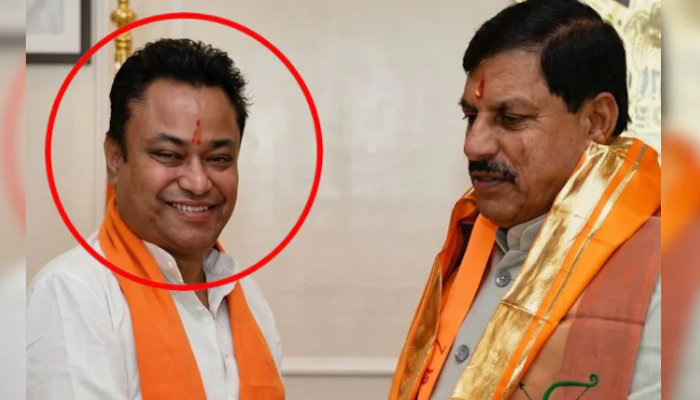
Case Summary
In Indore, Santosh Sharma, a Hindu leader associated with the Vishwa Hindu Parishad, received explicit death and sar tan se juda (beheading threats) following reports of a fatwa being issued against him by members of a Muslim organisation. He was targeted in connection with his public positions on religious conversions and for opposing the religious conversion of Hindus. The fatwa issued by a Muslim organisation contained highly objectionable and provocative language, including phrases calling for “separating the head from the body” (sar tan se juda). The emergence of this claim created an atmosphere of tension and concern in the city. Santosh Sharma stated that he had faced threats earlier as well, particularly in connection with his public positions on matter concerning Hindu society and statements on issues related to religious conversion. He described the present development as a significant escalation, stating that the issuance of a fatwa marked a more serious and direct threat to his life compared to previous instances. Following these developments, Santosh Sharma wrote a letter to Narendra Modi, requesting immediate security protection. In his communication, he referred to the history of threats he had received and expressed concern that the current situation posed a grave danger to his safety. He also appealed to the Madhya Pradesh government and local administrative authorities to take urgent steps to ensure his protection and maintain law and order. Authorities initiated an inquiry to verify the authenticity of the document and to identify the individuals or groups responsible for issuing or circulating it.
Why it is Hate Crime ?
This case has been added to the tracker under the primary category- Hate Speech against Hindus. The selected subcategory is Violent Threats. Violent threats, explicit, implicit or implied, are the most dangerous form of hate speech since it goes beyond discriminatory and prejudicial language to express the intent of causing harm to an individual or a group of people based on their religious identity and faith. There could be several different kinds of threats that are issued to Hindus based on religious animosity. An explicit threat would mean the direct threat of violence towards an individual Hindu, a group of Hindus or Hindus at large. Physical violence, death threats, threats of destruction of property belonging to Hindus and threats of genocide would mean explicit threats against Hindus for their religious identity. Implicit threats may not be a direct threat but implied through the use of symbols of actions – for example, in the Nupur Sharma case, other than explicit threats, there were also implicit threats when Islamists took to the streets to burn and beat her effigies. It implies that they want to do the same to Nupur Sharma, which is considered an implicit threat. Violent threats can be delivered in person, through letters, phone calls, graffiti, or increasingly through social media and other online platforms. It would be important to understand that a threat – explicit or implicit, online or offline – to an individual who happens to be a Hindu does not qualify as a religiously motivated threat. Such a threat, while vile and dangerous, could be owing to non-religious reasons and/or personal animosity. To qualify as a religiously motivated threat, it would need to exhibit an indication that the individual is being targeted for religious reasons and/or owing to his/her religious identity as a Hindu. Another primary category selected here is - Attack not resulting in death. Within it, the sub-category selected is - Attacked for opposing radicals and trying to save the victim. In several cases, Hindus are attacked for opposing religiously motivated crimes being committed against a fellow Hindu or simply for voicing an opinion opposing radical elements, who either have in the past or continue to persecute Hindus. In such cases, the initial attack against the victim, against which the Hindu was trying to defend the victim, would also need to be classified as a religiously motivated hate crime. Since the initial crime itself was religiously motivated and the subsequent crime of attempting to save the victim or speaking against the radical elements ends up inviting a violent attack, it would also be classified as a religiously motivated hate crime under this category. This case qualified as a religiously motivated hate crime because a Hindu leader, was targeted through the issuance of a fatwa containing explicit calls for beheading. The trigger in this instance was not a personal dispute or private conflict. Still, his public role and positions are associated with the Vishwa Hindu Parishad and his engagement with issues concerning Hindu society. The fact that such extreme language calling for “separating the head from the body” was invoked indicated that the hostility directed at him stemmed from religious animosity rather than any ordinary disagreement. Even though the authenticity of the fatwa remained under investigation, the circulation of such claims itself created a credible atmosphere of threat and intimidation centred on his Hindu identity. The pattern of targeting further reinforced this conclusion. Santosh Sharma had faced threats earlier as well, particularly in relation to his views on religious conversion and community issues. This demonstrated that the present incident was not isolated but part of a continuing trajectory where a Hindu individual was repeatedly singled out for his stance. The escalation from prior threats to the reported issuance of a fatwa marked a significant intensification, moving from verbal hostility to the invocation of religious sanction for violence. This progression showed a deepening level of animosity, where disagreement with a Hindu voice translated into attempts to silence him through fear and potential harm. The nature of the threat itself carried strong religious overtones. The call for beheading mirrored a pattern of extremist rhetoric that has been used in multiple instances to target individuals perceived as opposing or challenging certain interpretations within Islam. Such language was not merely symbolic; it functioned as a direct incitement to violence and conveyed a message that dissent, particularly from a Hindu figure, would be met with the most severe consequences. The fact that this rhetoric was reportedly formalised through the concept of a fatwa amplified its seriousness, as it attempted to cloak the threat in religious legitimacy. The Hinduphobia Tracker alone has documented more than one thousand cases of such targeting of Hindu women between 1 January 2023 and 1 May 2026, where Hindu women were targeted by Muslim men under the pretext of love and romantic relationships, only to be forcibly converted, sexually exploited, or compelled to consume beef and adopt Islamic practices against their will. The fact that Santosh Sharma, the Hindu victim in this case, was targeted for his public positions and vocal engagement on issues concerning religious conversion and the protection of Hindu society, shows that the animosity directed at him stemmed directly from his Hindu identity and from his efforts to protect members of his own community. The threats against him were not for any personal dispute but for his stance on matters rooted in anti-Hindu targeting, where the victims’ Hindu identity itself becomes the basis of their vulnerability. Santosh Sharma was also targeted for opposing forced religious conversions of Hindus, which have occurred repeatedly across the country through a variety of coercive and manipulative methods. There have been multiple incidences of Hindus being forcibly converted to Islam and Christianity under the pretext of financial inducements, such as offers of money or other material benefits, as well as through psychological pressure, including brainwashing, manipulation, physical force, harassment, threats, and subtle indoctrination. The Hinduphobia Tracker alone has documented more than 1,600 cases of forced conversions, also described as predatory proselytisation, between 1 January 2023 and 1 May 2026, highlighting an alarming pattern of Hindus being targeted with the intention of forcibly changing their faith. The fact that the Hindu leader was specifically threatened in the present case showcases the deep-seated religious animosity of the perpetrators toward him, his Hindu identity, and his determination to protect his community from such coercive religious targeting. The victim was also targeted in the context of his broader positions aligned with commonly held Hindu values, including opposition to practices such as cow slaughter, which is regarded in Hinduism as a sacred and virtuous principle. The cow holds a central place in Hindu religious consciousness as a symbol of life and purity, and opposing its slaughter reflects a deeply rooted civilisational ethos. By targeting him in connection with these positions, the perpetrators demonstrated hostility not only towards his activism but towards the Hindu religious worldview itself. The combination of threats issued in response to his positions on coercive conversions and broader Hindu concerns revealed that the attack on him was not incidental but a response to his defence of core Hindu beliefs and practices. Furthermore, the act of invoking beheading through the language attributed to the fatwa further underscored the severity of the violence and the depth of the religious hatred the perpetrators harboured. Such threats were directed at him simply for standing up for the rights of the Hindu community and defending vulnerable Hindus from coercive religious targeting. The fact that he was threatened with beheading confirmed that the hostility was religiously motivated rather than political or personal. The threats were a direct response to his defence of Hindu sentiments and practices, which the perpetrators viewed as an affront to their own religious worldview. Additionally, the use of “Sar Tan Se Juda”-style rhetoric constituted an explicit and religiously motivated threat directed at Hindus. This is a threat that the Hindu victim in this case received through the language, calling for “separating the head from the body.” Gustakh-e-Rasool ki Ek hi saza, sar tan se Juda, sar tan se Juda”, which translates to “There is only one punishment for being disrespectful to Rasool (Prophet Muhammad), their head separated from their torso, their head separated from the torso”, is an Islamist clarion call, that has become a staple feature of violent protests that have so far claimed the lives of at least 6 Hindus, including Kanhaiya Lal in Udaipur and Umesh Kolhe in Amravati, after Muslim fundamentalists, egged on by the dog-whistling of Alt News co-founder Mohammed Zubair against former BJP spokesperson Nupur Sharma, resorted to violence for what they perceived as ‘blasphemy’ against Prophet Muhammad. From Kanpur in India’s northern plains to Bengaluru in the south, from Kolkata in the east to Hyderabad, protests in the name of blasphemy have erupted across regions where Islamists have taken to the streets shouting “Sar Tan Se Juda” chants over perceived offences. Though a radical Muslim outfit in Pakistan coined this slogan, it has gained popularity among Islamists beyond its geographical origins. Over the years, large crowds have been seen invoking this slogan, which constitutes a direct incitement to violence against Hindus and has been linked to murders carried out in the name of blasphemy. The radicalised outcry is not merely a statement of disapproval; it is a call for the execution of an individual through beheading based on their religious identity. When this slogan is raised, it sends a clear and terrifying message not just to the individual targeted but also to anyone else who might share similar views or dare to express them. This tactic of intimidation aims to silence dissent and suppress freedom of expression, particularly in religious discourse, while instilling fear in the broader community. It is often used to settle personal or ideological scores with non-Muslims, particularly Hindus, by levelling accusations that provoke outrage and place targets at risk. The underlying hostility toward non-Muslims, especially Hindus, drives this pattern, where such rhetoric becomes a tool for subjugation and intimidation. Additionally, the impact extended beyond the individual to the wider Hindu community. When a prominent Hindu leader was threatened in this manner, it created a chilling effect on others who might wish to speak on similar issues. The message was clear: voicing concerns tied to Hindu identity or community interests could invite violent reprisals. This form of intimidation sought not only to silence Santosh Sharma but also to deter broader community expression, thereby reinforcing an environment of fear. Overall, the incident met multiple indicators of a hate crime: the targeting of a Hindu individual for his identity and public stance, the escalation to explicit and religiously framed threats of violence, and the broader context of repeated intimidation linked to his role in defending community concerns. These elements, taken together, established that the act was rooted in religious hostility and aimed at suppressing a Hindu voice through coercion and fear. Disclaimer: The Hinduphobia Tracker records incident dates based on when the victim's ordeal began, rather than when the media reported it. In this case, the report does not mention when the victim's ordeal began; therefore, the date when the report was published has been recorded as the indicative incident date for documentation purposes.
Victim Details
Total Victim
1
Deceased
0
Gender
- Male 1
- Female 0
- Third Gender 0
- Unknown 0
Caste
- SC/ST 0
- OBC 0
- General 0
- Unknown 1
Age Group
- Minor 0
- Adult 1
- Senior Citizen 0
- Unknown 0


Case Status
Complaint filed


Perpetrators Details
Perpetrators
Muslim Extremists
Perpetrators Range
Unknown
Perpetrators Gender
unknown
 Sources




