Hindu woman lured with false promises, sexually assaulted, confined and pressured to convert to Islam; her family threatened by Muslim perpetrator
 Pilibhit, Uttar Pradesh, India
  21 April, 2026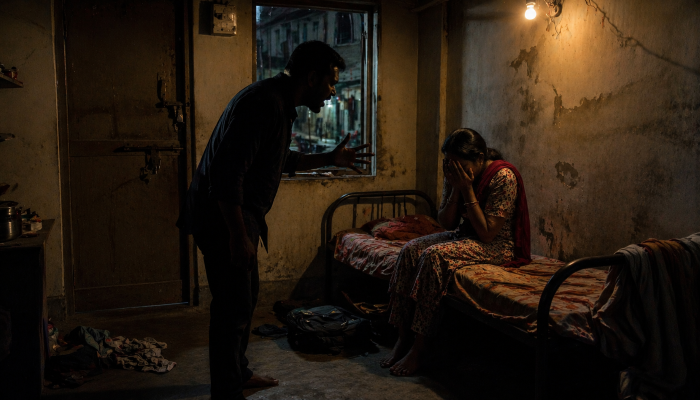
Case Summary
A Hindu woman was lured away from her home in Pilibhit district, Uttar Pradesh, and taken to another location under false promises by a Muslim man. She was then subjected to repeated sexual assault and pressure to abandon her faith. The events unfolded across multiple days and locations, leaving her isolated and under coercion. The Hindu woman, a married resident of the Jehanabad police station area in Pilibhit district, was approached by a Muslim man identified as Irshad Ansari, also known as Nanhe, a resident of Kukrikheda village. On 22nd April 2026, he persuaded her to accompany him by offering three bighas of land. He took her to a rented house located in Gangwar Colony, Nawabganj, Bareilly district. At that location, he forcibly established physical relations with her, sexually abused her, and confined her within the premises. From 22nd April 2026 to 28th April 2026, the Hindu woman was repeatedly subjected to sexual assault inside the rented house. During this period, the perpetrator continuously pressured her to separate from her Hindu husband, convert to Islam, and marry him. The coercion was persistent and accompanied by threats. He demanded that she abandon her existing marriage and religious identity while remaining under his control. When the Hindu woman refused to convert, the perpetrator threatened to kill her husband and children. She remained in fear and intimidation until she managed to escape from the location. After her family was informed of the coercion, the sexual violence, and the repeated pressure to convert her religion and remarry under the perpetrator’s terms. Following this, the Hindu woman approached the Jehanabad police station and lodged a formal complaint detailing the sequence of events, including the inducement through land, the confinement, the sexual assault, and the threats issued upon her refusal to convert. The complaint named Irshad Ansari, alias Nanhe, as the perpetrator and specified the locations and dates of the incidents occurring between 22nd April 2026 and 28th April 2026. Initial delays were reported in the police station's handling of the complaint. The Hindu woman then approached senior officials and presented her case before higher authorities to seek action. Following this escalation, a case was registered under relevant legal provisions, including sections pertaining to sexual exploitation and the prohibition of religious conversion. Assistant Superintendent of Police Natasha Goyal stated that action had been taken on the complaint. Police teams were constituted to locate and apprehend the perpetrator. Irshad Ansari was subsequently arrested by the police based on the information gathered during the investigation. The perpetrator was produced before the court and sent to jail. The investigation into the case remained ongoing, with authorities continuing to examine the circumstances surrounding the inducement, the confinement, the assault, and the coercion to convert.
Why it is Hate Crime ?
This case has been added to the tracker under the primary category - Crimes against women in relationships and other sexual crimes. Within this, the subcategory selected is - Brainwashed and/ or groomed. Under this, the tertiary categories selected are - Rape and sexual assault/ harassment, and Victim says she was brainwashed/ groomed. In our database, we have not added incidents where women have converted to another religion of their free will and no allegations of forced/involuntary conversion have been made. However, there are certain cases of conversion where the consent itself is a result of the brainwashing or grooming of a minor by the non-Hindu perpetrator trying to victimise a woman for her Hindu religious identity. The phenomenon of grooming points to non-Hindu perpetrators identifying their Hindu victims’ vulnerabilities and exploiting them over months and sometimes years, to extract the supposed ‘consent’ in order to convert their religion. In most cases of grooming, the victims are minors or the grooming started when the victim was a minor. In other cases of grooming, the non-Hindu perpetrator brainwashes and grooms a minor victim to extract their trust and then proceeds to rape them repeatedly with the intent of converting them to their faith. It is pertinent to understand here that when the victim is a minor, the ‘consent’ to convert or enter into a romantic relationship with an adult itself is redundant – addressed by POCSO. While every case of conversion of a minor and incidents of establishing a physical relationship with a minor by an adult is a crime, for the purpose of this database, a case would be considered a hate crime only if there is a distinct religious angle to the grooming. For example, in the UK, if a Hindu minor is targeted by Pakistani grooming gangs, it would be considered a hate crime because the victims are specifically targeted owing to their non-Muslim religious identity with the perpetrators being Muslim. In other cases, if a Hindu minor is brainwashed into entering a physical relationship with the non-Hindu adult perpetrator and the family alleges grooming/brainwashing of the minor to convert her religion, it would form a part of this database. If the victim is a Hindu adult, the case would form a part of this database only if the victim herself says that she was brainwashed/groomed to convert her religion. However, if the victim is deceased (murdered or otherwise), the case would form a part of this database if her family/friends provided testimony that the victim was brainwashed/groomed to convert her religion. Since these crimes have a distinct religious angle where the victim is being targeted owing to her Hindu religious identity, these cases are considered a hate crime. The other sub-category selected for this case is - Forced conversion before marriage. In such cases, a non-Hindu man is in a relationship with a Hindu woman when the pressure to convert her religion begins to manifest. In such cases, typically, two patterns emerge. First, when the relationship is consensual, and the religious identity of the perpetrator is known to the Hindu woman in the relationship, however, at some point during the relationship, the non-Hindu man starts to force the victim to convert her religion and give up her Hindu religious identity. The second is when the woman gets into a marriage with the man pretending to share her faith. Later, when the truth is revealed, the man starts pressuring the woman to convert her religion and give up her religious identity. In both situations, the methods used to force the victim to convert her religion often revolve around force-feeding beef, forcing her to wear hijab, forcing her to read the Kalma or even pressurising the victim to do ‘Nikah’, which is marriage under Islamic law, with a prerequisite being conversion to Islam. Cases where a Hindu woman consensually converts to Islam in a relationship will be left out of the hate crime database, even though it could be argued in several cases that the conversion was a result of religious brainwashing. Another sub-category selected for this case is - Assault or threat upon refusal to convert. When Hindu women are in a relationship with non-Hindu men, there are cases where the woman faces threats or assault after she refuses to convert and change her religious identity owing to pressure/force by the non-Hindu man. Such relationships may be consensual with the religious identity of the non-Hindu man known to the victim. Somewhere along the relationship, the non-Hindu man starts pressurizing the Hindu woman to convert to Islam and upon her refusal, assaults or threatens the victim. Such cases are driven by specific religious motivations and against the religious identity of the victim and are therefore qualified as hate crimes. Cases where the Hindu woman converts to Islam and does not file a complaint about the force or threat, are not considered a part of the hate tracker, even though, it may be argued that the woman was brainwashed or threatened to convert to Islam. Another sub-category selected for this case is - Torture of family to force woman to convert. When Hindu women are in a relationship with non-Hindu men, there are cases where the woman is forced to convert her religion. Several methods are used for such forced conversion. The non-Hindu man is often documented to issue threats and even employ violence. One of the ways used by such perpetrators is threatening and/or torturing the family members of the Hindu woman to pressure her to convert. The perpetrators in such cases issue threats to harm or torture the family of the woman. In some cases, there is also violence directed towards the family to force the Hindu woman to convert. Such crimes aim to blackmail the victim into changing her religion by inducing fear of harm to her family. Such cases are driven by specific religious motivations and against the religious identity of the victim and are therefore qualified as hate crimes. This case qualified as a religiously motivated hate crime because a Hindu woman was targeted, isolated, sexually assaulted, and repeatedly pressured to abandon her religion and existing family structure by a Muslim man. The perpetrator did not act randomly; he tied every stage of control to demands for religious conversion and marriage. The violence, coercion, and threats were consistently linked to forcing the Hindu woman to change her faith. This shows that her Hindu identity was central to the harm inflicted on her. The first religious marker was the grooming of the Hindu woman through deception and inducement. The perpetrator approached her with the promise of three bighas of land and used this assurance to gain her trust and secure her movement away from her home. For the Hindu woman, this created a false sense of opportunity and security. The perpetrator chose this method deliberately, using a material inducement to draw her into a controlled environment where she could be isolated. This reveals intent, as the inducement was not an end in itself but a calculated step to place the Hindu woman in a position where pressure to abandon her religion could be applied without resistance. The second religious marker was the confinement and sexual assault carried out within a rented house. The Hindu woman was taken to a separate location and kept within that space, where repeated sexual violence occurred between 22nd April 2026 and 28th April 2026. For the Hindu woman, this represented both physical violation and the stripping of autonomy within an unfamiliar setting. The perpetrator deliberately removed her from her social and familial environment to ensure control. This reveals intent, as confinement was used as a tool to break resistance and create conditions where coercion tied to religious conversion could be enforced. The third religious marker was the explicit demand that the Hindu woman convert to Islam and marry the perpetrator while abandoning her existing husband and child. She was repeatedly told to dissolve her marriage and accept a new religious identity as a condition for continuing the relationship. For the Hindu woman, this directly targeted her religious identity and familial structure, both of which are deeply rooted in her personal and cultural life. The perpetrator chose to link marriage and continued association with a change in religion, demonstrating that conversion was not optional but central to his demands. This reveals intent, as the objective was not merely a relationship but the replacement of her Hindu identity through coercion. The fourth religious marker was the use of threats and violence upon her refusal to convert. When the Hindu woman resisted, the perpetrator threatened to kill her, escalating the coercion from pressure to explicit danger. For the Hindu woman, this transformed the situation into one of immediate fear for her life. The perpetrator deliberately escalated to threats when persuasion failed, showing that compliance was to be forced if not obtained willingly. This reveals intent, as violence was used as a direct mechanism to compel religious conversion. The fifth religious marker was the use of threats against her family to compel compliance. The perpetrator threatened to kill her husband and children if she did not agree to convert and marry him. For the Hindu woman, her family represented both emotional support and responsibility, making these threats deeply coercive. The perpetrator chose to extend the pressure beyond her individual safety to the safety of her immediate family, increasing the stakes of refusal. This reveals intent, as the targeting of her family was a deliberate escalation designed to break her resistance and force her to abandon her religion and accept conversion under threat of harm to those closest to her. This incident is not an isolated case but part of a broader pattern where Hindu women are deliberately targeted through deception and coercion for religious conversion and sexual exploitation. In this case, the perpetrator used the promise of land to gain her trust, isolated her in a separate location, and subjected her to repeated sexual violence while pressuring her to abandon her Hindu faith and existing family ties. The coercion was continuous and escalated through threats to her life and to her husband and children when she refused to convert. This stems from inherent hostility towards the victim's professed faith since Abrahamic faiths believe that any non-adherent to the faith is subject to being dehumanised till they convert. Such predatory actions stem from doctrinal animosity towards the Hindu faith and its adherents. Given that this case met the parameters of a religiously motivated hate crime, it was added to the hate crime database of the tracker.
Victim Details
Total Victim
1
Deceased
0
Gender
- Male 0
- Female 1
- Third Gender 0
- Unknown 0
Caste
- SC/ST 0
- OBC 0
- General 0
- Unknown 1
Age Group
- Minor 0
- Adult 1
- Senior Citizen 0
- Unknown 0


Case Status
Arrested


Perpetrators Details
Perpetrators
Muslim Extremists
Perpetrators Range
One Person
Perpetrators Gender
male
 Sources




