Hindu woman trainee targeted with sexual exploitation and coercion to change faith by Muslim workplace manager
 Delhi, Delhi, India
  1 May, 2026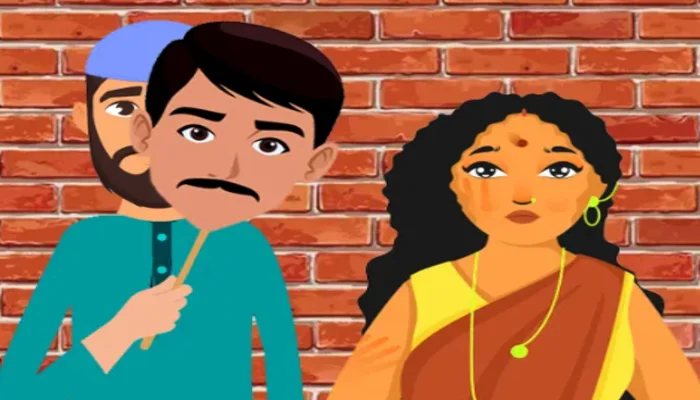
Case Summary
A Hindu 18 year old trainee from the SC/ST background in Delhi was subjected to sexual exploitation, coercion, and threats by a Muslim man she trusted at her workplace over a period of time. The abuse unfolded within a clinical setting where she had joined as a trainee. The situation escalated over time, leaving her trapped and unable to disengage. The young Hindu woman, aged 18, had joined a clinic in Delhi as an unpaid trainee shortly after completing school. The clinic was owned by a Hindu doctor, and the day-to-day operations were managed by Mohd Shehzad, a Muslim man aged 45. Mohd Shehzad introduced himself to her as “Shabbu Kumar,” concealing his religious identity. He gradually built trust with the Hindu girl by behaving in a caring manner, addressing her affectionately and purchasing clothes for her, presenting these acts as support for her unpaid work. Over time, this behaviour changed and turned into sexual exploitation. As the nature of his conduct changed, the Hindu victim was drawn into a relationship where the power imbalance between a senior manager and a young trainee became evident. She later discovered that the man was already married and had two children. During this period, she became pregnant. As the situation progressed, the Hindu woman learned his true identity as a Muslim man. He proposed marriage to her as a second wife. Following this, he continued to maintain control over the Hindu girl and did not allow her to disengage from the situation. When she attempted to distance herself and cut off contact, he escalated his actions. He threatened to release private photographs and videos that he had recorded of her. He used these threats to pressure her and prevent her from leaving. Alongside these threats, he pressured the Hindu woman to convert to Islam. The coercion continued despite her attempts to withdraw from the relationship. The threats and pressure created a sustained environment of fear and control, affecting her ability to act independently. The Hindu woman remained under sustained pressure during this period, with repeated threats and coercion continuing until she sought intervention. The sequence of events reflected prolonged control over her in both the workplace and personal spheres. The victim approached the police with assistance from an individual named Preet and filed a complaint at the Badli Police Station in Delhi. Following the complaint filed at Badli Police Station, the police authorities initiated legal action against Mohd Shehzad. He was taken into custody and later remanded to judicial custody. Statements were recorded, and further inquiry into the incident was initiated. The matter remained under investigation, with authorities examining the circumstances surrounding the exploitation, threats, and coercion. The Hindu woman continued to receive support as the case progressed.
Why it is Hate Crime ?
This case has been added to the tracker under the primary category - Crimes against women in relationships and other sexual crimes. Within this, the subcategory selected is - Man pretends to be Hindu. Under this, the tertiary category selected is - Name changed. When a non-Hindu man pretends to be a Hindu to deceive a Hindu woman into a relationship, the act is seen as triggered by malafide intentions. In some cases, the woman eventually accepts the man’s original religious identity and converts after the man’s identity is revealed. These cases could be argued as cases of religious brainwashing and a result of the pressure a woman feels after getting into a relationship with a man. The woman, it can be argued, also changed her religious identity because of the stigma she believes she might face if she chooses to walk out of a deceptive relationship. However, for the purpose of documenting hate crimes, the cases in this subcategory are limited to those where there is explicit violence aimed at religious conversion against the wishes of the victim (force-feeding beef, blackmailing with intimate videos, rape on refusal to convert, etc), or if the woman herself complains of the man’s religious deception. In such cases, it is established that the deception of the non-Hindu man had a specific aim of religious conversion or targeting of the victim due to her Hindu religious identity, therefore, making it a religiously motivated hate crime. The other sub-category selected for this case is - Brainwashed and/or groomed. Under this, the tertiary categories selected are - Rape and sexual assault/harassment, and Victim says she was brainwashed/groomed. In our database, we have not added incidents where women have converted to another religion of their free will and no allegations of forced/involuntary conversion have been made. However, there are certain cases of conversion where the consent itself is a result of the brainwashing or grooming of a minor by the non-Hindu perpetrator trying to victimise a woman for her Hindu religious identity. The phenomenon of grooming points to non-Hindu perpetrators identifying their Hindu victims’ vulnerabilities and exploiting them over months and sometimes years, to extract the supposed ‘consent’ in order to convert their religion. In most cases of grooming, the victims are minors or the grooming started when the victim was a minor. In other cases of grooming, the non-Hindu perpetrator brainwashes and grooms a minor victim to extract their trust and then proceeds to rape them repeatedly with the intent of converting them to their faith. It is pertinent to understand here that when the victim is a minor, the ‘consent’ to convert or enter into a romantic relationship with an adult itself is redundant – addressed by POCSO. While every case of conversion of a minor and incidents of establishing a physical relationship with a minor by an adult is a crime, for the purpose of this database, a case would be considered a hate crime only if there is a distinct religious angle to the grooming. For example, in the UK, if a Hindu minor is targeted by Pakistani grooming gangs, it would be considered a hate crime because the victims are specifically targeted owing to their non-Muslim religious identity with the perpetrators being Muslim. In other cases, if a Hindu minor is brainwashed into entering a physical relationship with the non-Hindu adult perpetrator and the family alleges grooming/brainwashing of the minor to convert her religion, it would form a part of this database. If the victim is a Hindu adult, the case would form a part of this database only if the victim herself says that she was brainwashed/groomed to convert her religion. However, if the victim is deceased (murdered or otherwise), the case would form a part of this database if her family/friends provided testimony that the victim was brainwashed/groomed to convert her religion. Since these crimes have a distinct religious angle where the victim is being targeted owing to her Hindu religious identity, these cases are considered a hate crime. Another sub-category selected for this case is - Blackmailed to convert. When Hindu women are in a relationship with non-Hindu men, there are cases where the woman is blackmailed to convert her religion, owing to her religious identity of being a Hindu. Such relationships may be consensual with the religious identity of the non-Hindu man known to the victim, however, there could be cases where the relationship is not consensual and the non-Hindu man starts blackmailing a Hindu woman to convert her religion. In these cases, it is often seen that the Hindu woman is blackmailed with intimate photos and/or videos, threats of harm to her or her family, threats of violence etc. Such cases are driven by specific religious motivations and against the religious identity of the victim and are therefore qualified as hate crimes. Another sub-category selected for this case is - Assault or threat upon refusal to convert. When Hindu women are in a relationship with non-Hindu men, there are cases where the woman faces threats or assault after she refuses to convert and change her religious identity owing to pressure/force by the non-Hindu man. Such relationships may be consensual with the religious identity of the non-Hindu man known to the victim. Somewhere along the relationship, the non-Hindu man starts pressurizing the Hindu woman to convert to Islam and upon her refusal, assaults or threatens the victim. Such cases are driven by specific religious motivations and against the religious identity of the victim and are therefore qualified as hate crimes. Cases where the Hindu woman converts to Islam and does not file a complaint about the force or threat, are not considered a part of the hate tracker, even though, it may be argued that the woman was brainwashed or threatened to convert to Islam. This case qualified as a religiously motivated hate crime because a Muslim man deliberately targeted a young Hindu woman in Delhi targeted through deception, sexual exploitation, coercion, and threats that were directly tied to her religious identity. The perpetrator, Mohd Shehzad, concealed his identity, established control over her, and later used violence, blackmail, and intimidation to pressure her to convert to Islam. The acts were not isolated but formed a pattern of manipulation and coercion centred on altering her identity. Religion was central because each stage of harm was directed at weakening and overriding the Hindu girl’s autonomy as a Hindu individual. The primary religious marker was the deliberate concealment of identity and adoption of a Hindu name. The perpetrator introduced himself as “Shabbu Kumar,” presenting himself as a Hindu man to the Hindu woman. For the Hindu woman, shared religious identity creates familiarity and trust, especially in a workplace environment where she was new and vulnerable. By choosing a Hindu name, the perpetrator removed barriers that would otherwise exist and gained her confidence. This was not incidental but a calculated decision to align himself with her religious identity to make access easier. This choice shows that he understood the importance of religious identity in establishing trust and deliberately misused it. It reveals intent to target her as a Hindu woman by first masking his identity to lower her guard and facilitate deeper control. The second religious marker was the grooming and manipulation of a young Hindu woman in a position of vulnerability. The victim had just completed school and joined the clinic as an unpaid trainee, placing her in a position with no authority and limited independence. She also belonged to a Scheduled Caste community, which further heightened her vulnerability within social and professional hierarchies. The perpetrator, as a senior manager, exercised control over her work environment and gradually built influence over her through acts presented as care and support. For the Hindu woman, this created dependency within a professional setting where she relied on him for validation and stability. He used this imbalance deliberately, choosing a young Hindu woman who was newly exposed to a workplace and easier to influence. This demonstrates that he identified her vulnerability and exploited it to establish control over her, with the intent of shaping her choices and actions, including pressuring her to abandon her Hindu identity. The third religious marker was the sexual exploitation that resulted in pregnancy. The perpetrator engaged in sustained sexual relations with the Hindu woman after establishing control over her. For the Hindu woman, this was not a relationship between equals but one shaped by authority, deception, and dependence. The exploitation led to her becoming pregnant, further increasing her vulnerability and reducing her ability to leave the situation. The perpetrator used this condition to deepen control, offering marriage under terms that aligned with his own circumstances. This shows that he deliberately escalated the level of control over her body and personal life. This choice reveals intent to bind her more tightly to him, making it more difficult for her to retain her autonomy as a Hindu woman and increasing pressure to accept a change in identity. The fourth religious marker was the Hindu woman's own account that she had been groomed and manipulated. She approached the police with the assistance of Preet and provided a statement detailing the sequence of events. For the Hindu woman, the act of approaching the police and describing the sequence of events established that she recognised the pattern of control and coercion imposed on her. She detailed how the relationship progressed from trust to exploitation and pressure. This reflects that the influence exercised over her was not incidental but sustained and structured. The perpetrator maintained this control over time, indicating that he chose to build and use that influence deliberately. This reveals intent to manipulate her circumstances in a way that would ultimately pressure her to abandon her Hindu identity. The fifth religious marker was the use of blackmail to enforce conversion. When the Hindu woman attempted to distance herself, the perpetrator threatened to release explicit photographs and videos that he had recorded of her. These materials were created during the period of exploitation and were later used as tools of control. For the Hindu woman, such threats directly affected her dignity, safety, and social standing. The perpetrator chose to use these recordings at the moment she resisted, showing that he preserved them for coercive use. This demonstrates that he deliberately weaponised her vulnerability to force compliance. This choice reveals intent to compel her to convert by creating fear and removing her ability to refuse without consequences. The sixth religious marker was the use of threats upon her refusal to convert. As the Hindu woman attempted to leave, the perpetrator increased pressure by issuing threats and demanding that she convert to Islam. These threats were accompanied by continued intimidation and the use of blackmail material to reinforce compliance. For the Hindu woman, this created a sustained environment where refusal carried immediate personal risk. The perpetrator chose to escalate at the point of resistance, showing that conversion was not incidental but a central objective he continued to pursue. This demonstrates that he deliberately used fear and coercion to override her refusal. This choice reveals intent to force a change in her religious identity by targeting her specifically as a Hindu girl who resisted conversion. Given that this case met the parameters of a religiously motivated hate crime, it was added to the hate crime database of the tracker. This incident was not an isolated act but part of a broader pattern where vulnerable Hindu women, including those from Scheduled Caste communities, were targeted through deception, emotional manipulation, and coercion. The perpetrator concealed his identity, built trust within a workplace setting, and then used that proximity to exert control over the Hindu woman. The subsequent sexual exploitation, blackmail, and threats were used to pressure her into abandoning her religious identity. The targeting of a young Hindu Scheduled Caste woman in a position of limited authority shows a deliberate choice to exploit layered vulnerabilities, using fear, dependency, and coercion to impose religious conversion and cause sustained harm because of her identity. Disclaimer: The exact date of the incident was not specified in the available sources. There was no clear information on when the initial contact between the Hindu woman and the Muslim perpetrator began, nor the precise timeline of the subsequent acts. The sequence of events appeared to have occurred over an extended period without clearly defined dates. Therefore, 2nd May 2026, the publication date of the report, was used as the indicative incident date for documentation purposes only.
Victim Details
Total Victim
1
Deceased
0
Gender
- Male 0
- Female 1
- Third Gender 0
- Unknown 0
Caste
- SC/ST 1
- OBC 0
- General 0
- Unknown 0
Age Group
- Minor 0
- Adult 1
- Senior Citizen 0
- Unknown 0


Case Status
Arrested


Perpetrators Details
Perpetrators
Muslim Extremists
Perpetrators Range
One Person
Perpetrators Gender
male
 Sources




