Hindu community targeted; Ambedkarite Buddhist activist spreads fake news of caste discrimination, vilifying 'upper caste' Hindus on social media
 New Delhi, Delhi, India
  25 April, 2026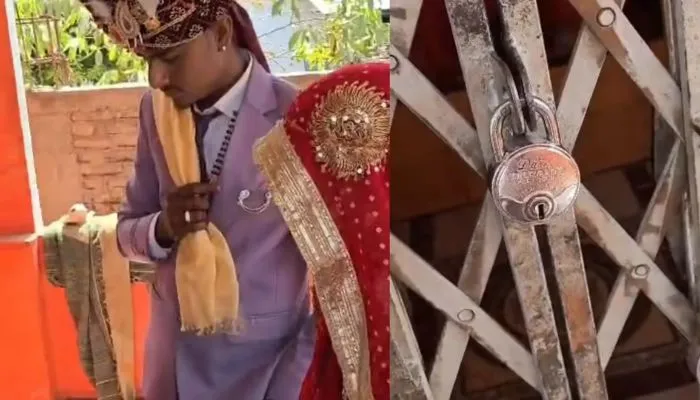
Case Summary
An anti-Hindu fake news was spread on social media by an Ambedkarite Buddhist influencer and activist named Suraj Kumar Baudh. He spread the rumour that a Dalit Hindu groom and bride were not allowed to worship at a Hindu temple in Khargone because of their caste identity. He did so to vilify the entire Hindu community as "casteist and oppressive". This controversy began in the Khargone district of Madhya Pradesh after a newly married Dalit couple stated that they were stopped from entering a Hanuman temple by members of other Hindu castes, mostly from the Other Backwards Classes (OBC) community. The incident took place on Friday, 24 April 2026, when the couple went to the temple to offer prayers. According to the couple, they were not allowed to enter and were asked to pray from outside. “I went to the Hanuman Temple with my wife to offer prayers, but the temple was locked, and we were not allowed entry. We were asked by the people of other castes to offer prayers from outside,” the husband, Nirmal Kanade, said in a video that later surfaced on social media. The situation was later taken up by the police, who held discussions with both sides over the next two days. A local panchayat of other caste groups, including members of the Banjara and Patel communities (Other Backwards Classes community), announced a social boycott of the couple’s family and two other Scheduled Caste families linked to them. Kanade said, “Just a few hours after we entered the temple and offered prayers there, the Panchayat… decided to socially boycott our family and two other families associated with us. No one is doing any transaction with these three families.” He also appealed for support, urging people to share his video to help them get justice. The panchayat warned that anyone interacting with these families or selling goods to them would face a fine of ₹11,000. The announcement created tension in the village and raised concerns about caste-based discrimination. After the police intervention, a senior police officer said, “The issue has been resolved following talks between all sides related to the matter. Restrictions imposed on the three families have been lifted, and normalcy is back.” As the news of this incident spread, Ambedkarite activists, particularly Suraj Kumar Baudh, started demonising the Hindu community, their temples and blamed all Other Backwards Class people as oppressive upper caste Hindus. Suraj Kumar Baudh tweeted on 26 April 2026 saying: "Dalits can't enter Hindu temples.......A Dalit couple was stopped from worship in Madhya Pradesh's Khargone. They could perform a puja only after calling the police. But now, the family are facing social boycott in the village...... Why do Dalits go to temples? For humiliation?" However, contrary to the accused's claims of caste bias and discrimination by upper castes, the reality of the situation was completely different. The local Hindu residents stated that the Hanuman temple usually remained closed during afternoon hours due to past theft incidents and to prevent stray animals from entering. They also said that some members of the affected families had used abusive language during the dispute, which escalated the tensions and led to the panchayat being called. Even some other Dalit families had supported the call to boycott the three Dalit families, particularly as members from those three families used abusive and intimidating language for the other castes’ people. The Other Backwards Classes also said that the groom indulged in abusive language, and that was why the entire trouble, including the boycott, happened, though by then the groom had made a video claiming caste-based discrimination. The Hindu villagers pointed out that another Dalit couple had previously visited the same temple and offered prayers without any issues, as they had come during open hours.
Why it is Hate Crime ?
The primary category selected in this case is- Hate Speech against Hindus. The subcategory selected is- Anti-Hindu subversion and prejudice. The tertiary category selected is- Anti-Hindu fake news or downplaying. Hate speech is defined as any speech, gesture, conduct, writing, or display that is prejudicial against a specific individual and/or group of people, which is leading to or may lead to violence, prejudicial action or hate against that individual and/or group. Media plays a specific and overarching reach in perpetuating prejudicial attitudes towards a community owing to unfair, untrue coverage and/or misrepresentation/misinterpretation, selective coverage and/or omission of facts of/pertaining to issues affecting a specific religious group. This type of bias can dehumanise the victim group, making it easier for others to justify harmful actions against them, which aligns with the objectives of hate speech laws aimed at preventing such harm. It is often observed that the media takes a prejudicial stand against the Hindu community driven by their need to shield the aggressor community which happens to be a numeric minority, however, is the one perpetrating violence against Hindus. For example, the media is often quick to contextualise religiously motivated crimes against Hindus, omit or misrepresent facts that point towards religiously motivated hate crimes, justify and/or downplay religiously motivated hate crimes or simply present fake news to stereotype Hindus. Such media bias leads to the denial of persecution and is often used to dehumanise Hindus, leading to justification for violence against them. For example, the media covered several fake allegations of Hindus targeting Muslims and forcing them to chant Jai Shree Ram. Most of these cases were proved false and fabricated after police investigation. These fake news reports were subsequently never retracted or clarified. Such fake news led to the justification of violence and dehumanisation of Hindus based on the argument that since Hindus targeted Muslims and forced them to chant Jai Shree Ram, the dehumanisation of Hindus and violence against them was par for the course and merely a retaliation. Such media bias leads to prejudicial portrayal of Hindus and offers a justification for violence against them and therefore, is considered hate speech under this category. This case served as a clear example of a religiously motivated hate crime as the Ambedkarite Buddhist activist Suraj Kumar Baudh spread fake news of caste-based discrimination with the deliberate aim to vilify and demonise the entire Hindu community and their faith. He twisted a minor local dispute into a narrative that portrayed Hinduism itself as inherently oppressive, directly inciting hatred against Hindus by questioning why Dalits would enter temples only for humiliation. This targeted the core of Hindu religious practice, making it a textbook religiously motivated offence designed to erode faith and sow division within the Hindu community. In reality, no hint of caste discrimination existed in the said incident. The Dalit groom, bride, and their three families were not barred from the temple due to their caste identity. They faced resistance because they used abusive and intimidating language towards people of other castes while trying to enter the temple during the closed afternoon hours, a standard practice at the Hanuman temple in Khargone to prevent theft and stray animals. The activist spun this factual incident into false rhetoric that upper-caste Hindus denied Dalits worship rights, fuelling anti-Hindu animosity to depict Hinduism and its communities as regressive oppressors of Dalits. Villagers confirmed that other Dalit grooms and brides had entered and prayed at the same temple without issue during open hours. Even the police resolved the matter amicably, and other Dalit Hindu villagers endorsed this version, noting the denial stemmed from the abusive behaviour and forced entry, not caste. This consensus exposed the fabrication, yet the activist's tweet on 26 April 2026 provoked outrage, urging Dalits to shun temples and deepening rifts within Hindu society. Such acts are a result of deep-seated animosity towards Hinduism and its adherents, making it a hate-driven offence. Such fake news aims to demonise the Hindu community as a whole by perpetuating the narrative that ‘upper caste’ Hindus are tyrannical towards disadvantaged sections of the Hindu society, Dalits. Acts of spreading such false rhetoric are essentially anti-Hindu in nature owing to the intention behind spreading disinformation of this nature. It is often claimed that even such disinformation cannot be termed anti-Hindu in nature since both the purported victim and aggressor are from the Hindu community; however, the disinformation is spread with the specific intention of discrediting the Hindu society and its faith by branding it oppressive and tyrannical. The intent of spreading such disinformation is to signal that Sanatan Dharma (Hinduism) itself is discriminatory in nature and that it is a faith that is only meant for the practice of a specific class of Hindus who are considered ‘upper caste’. Such a false narrative is perpetuated in order to discredit and delegitimise the faith and dehumanise its followers. The direct consequence of the creation of such false ‘atrocity literature/rhetoric’ is an increase in violence against specific sections of Hindus and the exertion of pressure on another section of Hindus to alienate themselves from their professed faith, as it seeks to convince them that the faith itself discriminates against them. It is overall done to fracture Hindu unity and make Hindus fight among themselves on the basis of caste. Since such narratives attack the core of the Hindu faith with the intention of delegitimising, dehumanising and alienating Hindus, it is considered a hate crime against Hindus and the faith they profess. The fact that the accused was an Ambedkarite Buddhist made his ideological animosity behind spreading such fake news even clearer. Ambedkarism as a political ideology, under the garb of fighting casteism, consistently spreads anti-Hindu bigotry. Ambedkarites often abuse Hindu deities, desecrate Hindu scriptures and symbols, vandalise temples, insult Hindu gods and goddesses, target the Hindu community, and seek to divide it along caste lines through false atrocity literature and fabricated caste oppression rhetoric. In many cases, Ambedkarites have physically attacked Hindus and threatened them with violence. All this showcases deep-seated religious animosity, fabricated under the pretext of fighting casteism. The accused's association with Ambedkarism, a political ideology built on anti-Hindu hatred, underscored the religiously driven intent to spread such fake news, making it a clear case of a hate crime. Given that this case meets the parameters of an anti-Hindu hate crime, it is added to the hate crime database of the Hinduphobia Tracker.


Case Status
Unknown


Perpetrators Details
Perpetrators
Others
Perpetrators Range
One Person
Perpetrators Gender
male
 Sources




