Hindu community maligned and vilified; Muslim man poses as Hindu saint and abuses deities of other faiths
 Rishikesh, Uttarakhand, India
  17 April, 2026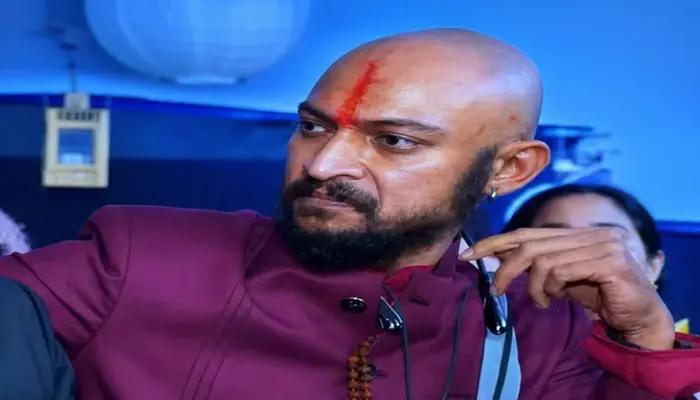
Case Summary
The Hindu community was maligned, vilified and portrayed in a negative light after a Muslim man named Saniur Rahman pretended to be a Hindu sadhu and abused other religions. On 18 April 2026, during a verification drive under Operation Prahar in Rishikesh, Uttarakhand Police apprehended the accused, who had been living under a false Hindu identity as “Satyanishtha Arya”. Upon interrogation, his real identity was established as Saniur Rahman, a Bangladeshi national from Baisadi Madhukhali in Faridpur district. He had entered India through Nepal and had been residing in the country without valid documentation since around 2016. He was found in possession of an expired Bangladeshi passport, which had lapsed in 2018, and had also procured an Aadhaar card using a Ghaziabad address to conceal his identity and continue his stay undetected. Rahman had adopted the appearance of a Hindu religious practitioner/sadhu, including wearing a tilak, and participated in programmes organised by Hindu groups while presenting himself as a preacher. He maintained an active presence on social media under the alias “Satyanishtha Arya”, where his videos attracted significant viewership. During this period, he made objectionable remarks targeting multiple religious communities, including comments on the Prophet Muhammad and Mother Mary, which led to controversy. In December 2025, he had entered a church in Ghaziabad on Christmas Day and misbehaved with a pastor, an incident that was captured on video and circulated widely. Investigations further revealed that Rahman had moved across several locations, including Delhi, Ghaziabad, West Bengal, and the Laxman Jhula area of Rishikesh, where he had arrived shortly before his arrest. He sustained himself by collecting donations through digital payment platforms such as UPI. Police registered a case against him under relevant provisions of the Bharatiya Nyaya Sanhita and the Immigration and Foreigners Act, 2025, for illegal stay, identity concealment, and use of forged documents. As of the date of writing this report, authorities continued to examine his activities, financial transactions, and network of contacts to determine the full extent of his operations within India.
Why it is Hate Crime ?
This case has been added to the tracker under the primary category of - Hate speech against Hindus. The sub-category selected here is- Anti-Hindu subversion and prejudice. Hate speech is defined as any speech, gesture, conduct, writing, or display that is prejudicial against a specific individual and/or group of people, which leads to or may lead to violence, prejudicial action or hate against that individual and/or group. Media plays a specific and overarching role in perpetuating prejudicial attitudes towards a community owing to unfair, untrue coverage and/or misrepresentation/misinterpretation, selective coverage and/or omission of facts of/about issues affecting a specific religious group. This type of bias can dehumanise the victim group, making it easier for others to justify harmful actions against them, which aligns with the objectives of hate speech laws aimed at preventing such harm. It is often observed that the media takes a prejudicial stand against the Hindu community, driven by their need to shield the aggressor community, which happens to be a numeric minority; however, that is the one perpetrating violence against Hindus. For example, the media is often quick to contextualise religiously motivated crimes against Hindus, omit or misrepresent facts that point towards religiously motivated hate crimes, justify and/or downplay religiously motivated hate crimes, or present fake news to stereotype Hindus. Such media bias leads to the denial of persecution and is often used to dehumanise Hindus, leading to justification for violence against them. For example, the media covered several fake allegations of Hindus targeting Muslims and forcing them to chant Jai Shree Ram. Most of these cases were proved false and fabricated after police investigation. These fake news reports were subsequently never retracted or clarified. Such fake news led to the justification of violence and dehumanisation of Hindus based on the argument that since Hindus targeted Muslims and forced them to chant Jai Shree Ram, the dehumanisation of Hindus and violence against them was par for the course and merely a retaliation. Such media bias leads to prejudicial portrayals of Hindus and offers a justification for violence against them and, therefore, is considered hate speech under this category. The other primary category selected here is - Attack on Hindu religious representations. The sub-category selected under this is: Defiling religious customs. Sanatan Dharma is not a religion of one book, which is to say that while it has religious scriptures that form the central tenets of the faith, there are several traditions followed through thousands of years, mostly passed from generation to generation orally. There are several such customs and traditions that are followed by various Hindus and Hindu sects. Defiling of these traditions and customs is a breach of an individual or group’s religious practices. Such practices can range from dietary restrictions like not eating non-vegetarian food for a certain period of the year, not eating non-vegetarian food at all, not eating beef since the cow is considered holy in Hinduism, the sanctity of religious customs followed in the house (like many ISCKON devotees), etc. Any malicious action leading to the breach of such traditions or defilement of these traditions owing to animosity towards the faith or for the sake of activism stems not only from the lack of faith in the religion itself but also from disregard for the faith of the devotees who follow the customs/traditions and implicit bias against the faith, the tradition itself. Since these specific traditions are central to the faith of the devotees of that specific sect of Hindus, any non-compliance with these traditional rules would be considered a religiously motivated hate crime The case has been added to the tracker because the accused, Saniur Rahman, a Bangladeshi national living in Rishikesh under the false identity of “Satyanishtha Arya”, presented himself as a Hindu sadhu and adopted visible markers of Hindu religiosity such as wearing a tilak. While operating under this fabricated Hindu persona, he made objectionable and inflammatory remarks about deities and figures of other faiths, thereby misusing the identity to disseminate provocative content. By posing as a sadhu and making derogatory statements against other religions, the accused created a false impression that such views were representative of Hindu sadhus and preachers. This act did not merely involve personal misconduct but actively contributed to the vilification and maligning of the Hindu community by associating it with intolerance and disrespect towards other faiths. The misuse of a Hindu identity in this manner risked shaping public perception in a way that maligned Hindus collectively. Such actions had the effect of portraying Hindus as inherently hostile towards other religious communities, thereby fostering mistrust, animosity and even violence against them. When offensive statements are made under the guise of a religious identity, they can inflame communal tensions and potentially incite hostility or retaliatory sentiment against that community. In this case, the deliberate misrepresentation amplified the likelihood of Hindus being unfairly targeted or blamed for remarks they neither endorsed nor made. Furthermore, the accused’s conduct also undermined and discredited the sadhu community, which holds a position of spiritual significance within Hindu society. Sadhus are traditionally regarded as renunciates devoted to spiritual discipline, moral guidance, and the preservation of religious knowledge. By impersonating such a figure and engaging in provocative and abusive behaviour, the accused damaged the credibility of this respected institution and eroded the trust that devotees place in religious practitioners. Moreover, his fraudulent assumption of a Hindu identity amounts to the defiling of Hindu religious customs. Hinduism does not require rigid theological allegiance but demands honesty of spirit and a sincere adherence to its ritual integrity. For a Muslim man to appropriate the outward appearance and duties of a Hindu saint without belief in the presiding deities or fidelity to the tradition is a calculated affront to the religious sensibilities of the Hindu community. It reduces their sacred symbols, practices, and rituals to props in a deceitful performance, carried out under the guise of devotion but with no intention of reverence. This deliberate disguise reflects sheer disdain for Hindu traditions, as it treats the sanctity of Hindu customs as something that can be faked, manipulated, and profaned for personal gain. Such impersonation is rooted in a deeper contempt for the Hindu religion, reducing its rituals and symbols to props in an elaborate fraud, thereby violating the spiritual trust of devotees and displaying a mentality that fundamentally disrespects Hindu beliefs and institutions. For these reasons, this incident warrants inclusion in the Hinduphobia Tracker. For these reasons, the incident met the criteria of a hate crime, as it involved the intentional misuse of a religious identity to malign a community, incite hostility, and undermine its institutions. Therefore, it has been added to the hate crime database. Disclaimer: The Hinduphobia Tracker records incidents based on when an event occurred or when the victim's ordeal began. It is important to clarify that none of the media sources covering this case has specified the exact date when the accused began pretending to be a sadhu. Therefore, for documentation purposes, we have recorded the date based on when the accused was arrested, 18 April 2026.


Case Status
Arrested


Perpetrators Details
Perpetrators
Muslim Extremists
Perpetrators Range
One Person
Perpetrators Gender
male
 Sources




