Minor Hindu girl lured into relationship, groomed, pressured to convert to Islam, and blackmailed by Muslim man in Fatehpur
 Fatehpur, Uttar Pradesh, India
  24 October, 2024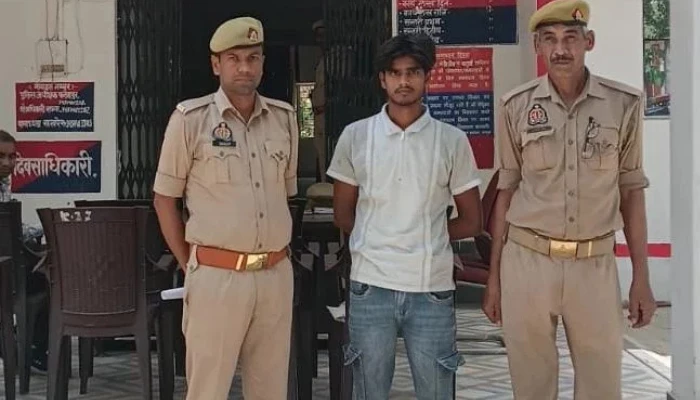
Case Summary
In Fatehpur, Uttar Pradesh, a minor Hindu girl was lured into a relationship, groomed, sexually exploited, and pressured to convert to Islam by a Muslim man. When the victim refused conversion, the accused threatened to release her obscene videos and murder her family members. According to media reports, the incident occurred when the victim was 17 years old. However, this incident came to light when the victim was discovered crying at her house by her mother on 25 April 2026. The victim at this time was 19 years old, an adult. The victim hails from a village within the Khakhreru police station area of Fatehpur district. She was targeted by a Muslim man, identified as Mansoor Ahmad, who established contact with her when she was a minor by presenting a romantic relationship. He lured her into a love affair under false pretences and, during the course of this interaction, established sexual relations with her. During this period, Mansoor Ahmad captured objectionable photographs and videos of the Hindu girl. Using these materials, he began blackmailing her and subjected her to sustained sexual exploitation over a period of approximately one and a half years. The control exerted through these recordings allowed him to continue the exploitation without resistance. Over time, the accused escalated his actions by pressuring the Hindu girl to convert to his religion. When she refused to comply, he threatened to make the objectionable videos viral. He also issued threats to kill her family if she did not submit to his conversion demands. The threats created a situation of coercion, where the victim was placed under continuous fear and intimidation. On the morning of 25 April 2026, the Hindu victim was found at home in a distressed state, crying. Upon being questioned by her family, she disclosed the entire sequence of events, including the relationship, blackmail, sexual exploitation, and the pressure to convert. Her father was away from home for labour work at the time of the incident. Following the disclosure, the victim’s mother approached the police station and submitted a written complaint detailing the actions of the accused. Based on this complaint, the police registered a case against Mansoor Ahmad under the provisions of the Information Technology Act and sections related to religious conversion. Police subsequently arrested the accused from the vicinity of Pauli Gate, Malihabad, and produced him before the court. He was then sent to judicial custody as per court orders. Station House Officer Vidya Prakash Singh confirmed that the case had been registered on the basis of the complaint and that further investigation into the matter was ongoing.
Why it is Hate Crime ?
This case is being added to the tracker under the primary category- Predatory Proselytisation. Under this, the subcategory selected is- Proselytisation by grooming, brainwashing, manipulation or subtle indoctrination. Under this, the tertiary categories are- "Conversion of minor", "Victim says was brainwashed/groomed" and "Rape and sexual harassment/assault". Religious brainwashing essentially means the often subtle and forcible indoctrination to induce someone to give up their religious beliefs to accept contrasting, regimented ideas. Religious grooming or brainwashing also involves propaganda and manipulation. It involves the systematic effort, driven by religious malice and indoctrination, to persuade “non-believers’ to accept allegiance, command, or doctrine to and of a contrasting faith. Cases of such grooming or brainwashing are far more nuanced than direct threats, coercion, inducement and violence. In such cases, it is often seen that there is repeated, subtle and continual manipulation of the victim to induce disaffection towards their own faith and acceptance of the contrasting faith of the perpetrator. While subtle indoctrination is widely acknowledged as predatory, an element which is often understated in such conversions or the attempts of such conversion is the role of loyalty and trust which might develop between the perpetrator and the victim. Fiduciary relationships are often abused to affect such religious conversion. For example, an educator transmitting religious doctrine of a competing faith to a Hindu student. The Hindu student is likely to accept what the teacher is transmitting owing to the existence of the fiduciary relationship. The exploitation of the fiduciary relationship to religiously indoctrinate victims would also be included in this category. Since the underlying animosity towards the victim’s faith forms the basis of predatory proselytisation, such cases are considered religiously motivated hate crimes. The other subcategory selected is- Harassment, threats, coercion for conversion. Harassment covers a wide range of behaviours of an offensive nature. It is commonly understood as behaviour that demeans, humiliates, and intimidates a person, including threats and coercion. Harassment and threats, in this case, find their root on discriminatory grounds, which has the effect of nullifying a person’s rights or infringing upon his freedom to exercise his right specifically owing to the victim’s religious identity. Verbal and physical threats and psychological or physical harassment are often used against Hindu victims because they choose to practice their professed religion. Religious harassment also includes forced and involuntary conversions by harassment, threats or coercion. Coercion includes intimidatory tactics like force-feeding a Hindu victim beef to convert to another religion, forceful circumcision, etc. In several cases documented, non-Hindu perpetrators or those who harbour specific animosity towards Hinduism, harass victims simply based on their religious identity. Such cases often also include harassment to ensure the Hindu victim abandons his/her professed religion and adopts the religion of the perpetrator. Such cases, where Hindu victims are harassed to convert to the perpetrator’s religion, are rooted in animosity towards the victim’s religious identity and are therefore documented as religiously motivated hate crimes. Another primary category selected is- Crimes against women in relationships or other sexual crimes. The subcategory selected is- Brainwashed and/or Groomed. The tertiary category selected is - ''Rape and sexual assault/harassment, "Victim says she was brainwashed/groomed", "Conversion of minor". In our database, we have not added incidents where women have converted to another religion of their free will, and no allegations of forced/involuntary conversion have been made. However, there are certain cases of conversion where the consent itself is a result of the brainwashing or grooming of a minor by the non-Hindu perpetrator trying to victimise a woman for her Hindu religious identity. The phenomenon of grooming points to non-Hindu perpetrators identifying their Hindu victims’ vulnerabilities and exploiting them over months and sometimes years, to extract the supposed ‘consent’ to convert their religion. In most cases of grooming, the victims are minors, or the grooming started when the victim was a minor. In other cases of grooming, the non-Hindu perpetrator brainwashes and grooms a minor victim to extract their trust and then proceeds to rape them repeatedly with the intent of converting them to their faith. It is pertinent to understand here that when the victim is a minor, the ‘consent’ to convert or enter into a romantic relationship with an adult itself is redundant – addressed by POCSO. While every case of conversion of a minor and incidents of establishing a physical relationship with a minor by an adult are crimes, for this database, a case would be considered a hate crime only if there is a distinct religious angle to the grooming. For example, in the UK, if a Hindu minor is targeted by Pakistani grooming gangs, it would be considered a hate crime because the victims are specifically targeted owing to their non-Muslim religious identity, with the perpetrators being Muslim. In other cases, if a Hindu minor is brainwashed into entering a physical relationship with the non-Hindu adult perpetrator and the family alleges grooming/brainwashing of the minor to convert her religion, it would form a part of this database. If the victim is a Hindu adult, the case would form a part of this database only if the victim herself says that she was brainwashed/groomed to convert her religion. However, if the victim is deceased (murdered or otherwise), the case would form a part of this database if her family/friends provided testimony that the victim was brainwashed/groomed to convert her religion. Since these crimes have a distinct religious angle where the victim is being targeted owing to her Hindu religious identity, these cases are considered hate crimes. The other subcategory selected is- Blackmailed to convert. When Hindu women are in a relationship with non-Hindu men, there are cases where the woman is blackmailed to convert to another religion, owing to her religious identity as a Hindu. Such relationships may be consensual with the religious identity of the non-Hindu man known to the victim; however, there could be cases where the relationship is not consensual, and the non-Hindu man starts blackmailing a Hindu woman to convert her religion. In these cases, it is often seen that the Hindu woman is blackmailed with intimate photos and/or videos, threats of harm to her or her family, threats of violence, etc. Such cases are driven by specific religious motivations and against the religious identity of the victim and are therefore qualified as hate crimes. The other subcategory selected is- Assault or threat upon refusal to convert. When Hindu women are in a relationship with non-Hindu men, there are cases where the woman faces threats or assault after she refuses to convert and change her religious identity owing to pressure/force by the non-Hindu man. Such relationships may be consensual with the religious identity of the non-Hindu man known to the victim. Somewhere along the relationship, the non-Hindu man starts pressurising the Hindu woman to convert to Islam and upon her refusal, assaults or threatens the victim. Such cases are driven by specific religious motivations and against the religious identity of the victim and are therefore qualified as hate crimes. Cases where the Hindu woman converts to Islam and does not file a complaint about the force or threat are not considered a part of the hate tracker, even though it may be argued that the woman was brainwashed or threatened to convert to Islam. This case is a clear example of a religiously motivated hate crime, as a minor Hindu girl was lured into a relationship, sexually assaulted, groomed over a period of one and a half years and pressured to convert to Islam. When she refused to convert, she was threatened with the public distribution of her obscene videos as well as with death threats against her family. All of these elements, targeting a Hindu minor, prolonged sexual exploitation, the use of rape, the attempt to strip her of her Hindu faith and the brutal threats made against her and her family, combine into a coordinated pattern of religiously targeted violence. This makes it a clear case of a religiously motivated hate crime, rooted in hostility towards her Hindu identity and aimed at the subjugation and humiliation of both the individual and her community. It is important to state that the victim was a minor when she was sexually assaulted, groomed and pressured for conversion. This means that the element of genuine consent and a free change of conscience was missing ab initio. Minors, due to their young age, are especially vulnerable to manipulation and coercion, and they do not fully understand the long‑term consequences of entering a relationship with an adult, let alone the far‑reaching implications of religious conversion. The accused exploited this age‑related vulnerability of the minor to carry out both sexual exploitation and coercion into conversion. By using psychological pressure, sexual control and threats to force her away from Hinduism, the perpetrator turned the entire process into a religiously motivated campaign to violate her body and her faith, making this a clear case of a religiously motivated hate crime. Although the Muslim perpetrator did not hide his religious identity, the way he trapped the victim in a relationship shows that he deliberately made her believe that her Hindu religious identity would not be a barrier to their romantic relationship. He used the lure of a romantic relationship to gain access to her and then sexually exploited her. In this context, the sexual exploitation and rape were not committed solely for sexual gratification; they were also tools to humiliate a Hindu woman and to assert dominance over her. The use of sexual violence served to degrade her not only as an individual but as a representative of a Hindu family and community. In effect, the crime was also meant to humiliate the Hindu community by signalling that a Hindu minor girl could be sexually exploited at any time by a Muslim man, thereby reinforcing a sense of powerlessness and fear. This amounts to a clear case of religiously motivated sexual violence, where the exploitation was carried out with the intent to humiliate and violate a Hindu girl due to animosity towards her Hindu identity. The fact that the accused recorded obscene videos of the victim and then used them to blackmail her showcases the predatory and calculated nature of his actions. By holding the videos over her head, he was forcing her to comply with all his demands, including sexual submission and pressure to convert, under the threat of public exposure. This blackmail was not incidental; it was a central mechanism of control, turning intimate moments into weapons against the victim. The use of recorded material to coerce a Hindu girl into compliance with the perpetrator’s religious and sexual demands makes this a clear case of a religiously motivated hate crime, where the digital weaponisation of her videos was aimed at breaking her will and stripping her of dignity. The fact that the grooming and sexual exploitation continued for a prolonged period of one and a half years further highlights the sustained, religiously informed intent behind the crime. The intensity of the exploitation, combined with the religious zeal of the Muslim perpetrator to keep the Hindu victim under his control, shows that this was not a passing opportunistic act but a prolonged campaign to strip her of her Hindu dignity and autonomy. The longer duration and the repeated cycles of abuse, blackmail and pressure to convert point to a pattern of religiously driven hostility, making this a clear case of a religiously motivated hate crime. The way the victim was pressured to convert to Islam also underscores the religiously motivated nature of the crime. Attempting to force someone to convert to another faith is by definition a violation of religious autonomy and fundamental human rights, including the right to freely profess, practise and maintain one’s religion. When such pressure is directed at a Hindu minor girl, it becomes an act of religious animosity aimed at erasing her Hindu identity. The perpetrator did not seek her voluntary choice; he sought to replace her Hindu faith with Islam through coercion, force, confusion and fear. This forced conversion process is not spiritual guidance but spiritual violence, an attempt to strip her of her Hindu faith and replace it with an imposed belief system. In this context, the act of pressing for conversion becomes a hate crime because it is rooted in hostility towards her Hindu identity and aimed at the destruction of her Hindu religious self. When the victim refused to convert to Islam, she was blackmailed with the threat that her obscene videos would be circulated online if she did not submit. This blackmail technique was explicitly used to arm‑twist the victim into complying with the perpetrator’s demands and surrendering her religious identity. The perpetrator also threatened to murder her entire family if she refused to convert, turning her loved ones into hostages in his campaign of religious domination. The family was used as a tool, and the victim’s sense of safety was a bargaining chip to force her away from Hinduism. Both the blackmailing and the threats were designed to break the victim’s spirit, undermine her resistance and make her an easy prey for forced proselytisation. When coercion, threats and blackmail are used systematically as tools to strip a Hindu victim of her faith and identity, it showcases the deep‑seated religious animosity of the perpetrator and makes this a clear case of a religiously motivated hate crime. Given that this case meets multiple parameters of a religiously motivated hate crime, it is added to the hate crime database of the tracker. Disclaimer: The Hinduphobia Tracker records the dates of incidents based on when the crime occurs rather than when it is reported by the media. In this case, media reports have not stated the exact date when the victim’s ordeal began. They only state that she revealed her ordeal on 25 April 2026. The only other time frame referred to is that she was groomed for one and a half years. Based on both these pieces of information, an indicative incident date of 25 October 2024 has been selected as the indicative incident date. This date is recorded for documentation purposes only.
Victim Details
Total Victim
1
Deceased
0
Gender
- Male 0
- Female 1
- Third Gender 0
- Unknown 0
Caste
- SC/ST 0
- OBC 0
- General 0
- Unknown 1
Age Group
- Minor 1
- Adult 0
- Senior Citizen 0
- Unknown 0


Case Status
Arrested


Perpetrators Details
Perpetrators
Muslim Extremists
Perpetrators Range
One Person
Perpetrators Gender
male
 Sources




