Hindu guards brutally stabbed after being identified by religion and refusing to recite Kalma, accused asked “Are you Hindu?” before attacking
 Mumbai, Maharashtra, India
  25 April, 2026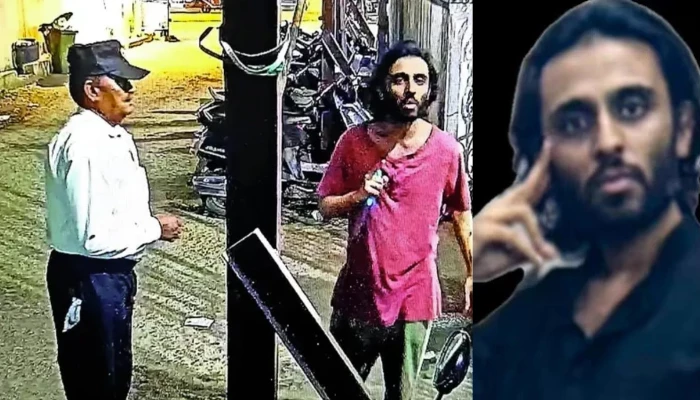
Case Summary
In Mumbai, Maharashtra, two Hindu security guards were brutally attacked and stabbed with a knife by a Muslim man. He attacked the guards upon discovering that they were unable to read ‘Kalma’. According to the victims, the accused asked them whether they were Hindus before stabbing them brutally. On 26 April 2026, at around 4:00 am, two security guards, Rajkumar Mishra and Subroto Ramesh Sen, were on duty at an under-construction building in the Mira Road East area near Mumbai. At that time, a 31-year-old Muslim man, identified as Jaib Zubair Ansari, approached them. Ansari asked the guards their names and religion. After receiving their responses, he asked whether they could recite the Kalma. When both guards stated that they could not, Ansari became aggressive, produced a knife, and attacked them repeatedly. Rajkumar Mishra sustained serious injuries, including damage to his intestines, while Subroto Sen suffered a minor injury to his back. Sen managed to escape and hid inside a security cabin, thereby saving his life. The victim stated that at around 03:00 AM, an unknown person came to me and asked, “Is there a mosque ahead?” I told him, “Yes, there is a mosque on the right side ahead.” After that, he asked me, “What is the name of the mosque?” I replied, “I don’t know the name.” Then he asked me, “Are you a Hindu?” I answered, “Yes.” After this, he left, but I saw him roaming on the road. At around 04:00 AM, I went to have tea at an Iranian tea stall near Rasaj Cinema. At that time, I saw the same person there as well. After having tea, I returned to my duty location at around 04:30 AM. During that time, the same person again came to me and said, “You are Hindu, right?”, grabbed my right hand and attacked me with a knife he was holding. I tried to avoid the attack, but the knife hit my back. Somehow, I managed to escape from his grip and ran towards the supervisor’s cabin. I went inside the main iron entrance gate and reached the supervisor’s cabin. The person who attacked me also reached there. He said to Supervisor Mishra, “You are also Hindu, right? If not, then recite the Kalma.” When Mishra ji could not recite the Kalma, the person attacked him with a knife as well. Out of fear, I ran away from there and hid behind the building. After about 5 to 7 minutes, when I did not notice any movement, I called Mishra sir. At that time, he was crying and saying, “I will die, I will die.” After that, I again went near the supervisor’s cabin, where Hari Singh and two other persons were present. Then Hari Singh told me that the same person who attacked me had also asked Mishra, sir, about his religion and attacked him. He was then taken to the hospital for treatment. Following the attack, Ansari fled the scene. Subroto Sen alerted the police, after which both injured guards were taken to Wockhardt Hospital for treatment. Medical authorities confirmed that both individuals were in stable condition and continued to receive care. Police teams reached the location shortly after receiving information about the incident. Using CCTV footage, investigators identified Ansari and tracked him to his rented residence in the Naya Nagar area of Mira Road East. He was arrested within approximately 90 minutes of the attack. A case was registered at Naya Nagar Police Station based on Sen’s complaint. During the investigation, police examined Ansari’s digital activity and found that he had been regularly watching ISIS-related propaganda videos. Searches conducted at his residence led to the recovery of multiple incriminating materials, including a ‘Tahrir’ letter associated with ISIS/Daesh that contained content on lone wolf attacks, the Kalma, methods to establish a Khilafat, and references to religious justifications for such actions. Additionally, three Qurani Nuskhe and other related items were seized. Further background checks revealed that Ansari had studied in the United States until 2019 and had returned to India thereafter. He had been working as a teacher at a coaching centre, teaching chemistry and mathematics, for three to four months before the incident. At the time of the attack, he was living alone in a rented accommodation, and his landlord had asked him to vacate the premises by 5 May 2026. Given the nature of the materials recovered and his online activity, the Maharashtra Anti-Terrorism Squad (ATS) joined the investigation. The probe was thereafter conducted jointly by the Naya Nagar Police and the ATS to examine potential ideological or extremist links and to determine whether the attack formed part of a larger design. Based on this, a case has been registered at Nayanagar Police Station under Sections 109, 118(2), 196(1) of Bharatiya Nyaya Sanhita. The accused was remanded for eight days till May 4, 2026. This attack follows a familiar pattern where victims are identified by religion and targeted after refusal to comply with religious demands, like the 2025 Hindu massacre in Pahalgam, Jammu and Kashmir, where 26 Hindu tourists were gunned down after Pakistani terrorists confirmed they were not Muslims. The Pahalgam attack had unfolded on 22nd April, 2025, at the popular Baisaran Valley. It was a typical afternoon filled with tourists enjoying the scenery until a group of Pakistani terrorists, belonging to the TRF (The Resistance Front), ambushed a group of unarmed visitors. According to survivors and eyewitnesses, the assailants didn’t just open fire randomly; they conducted a “religious screening.” The terrorists forced them to prove their faith. They were asked to recite the Islamic Kalma, and also the terrorists pulled their pants to confirm their religious identity through circumcision markers. Those identified as Hindus were executed at point-blank range while their wives and children were forced to watch.
Why it is Hate Crime ?
This case has been added to the tracker under two primary categories. The first primary category selected here is - 'Attack not resulting in death', and within it, the sub-category selected is - 'Attacked for Hindu identity'. In several cases, Hindus are attacked merely for their Hindu identity without any perceived provocation. A classic example of this category of religiously motivated hate crime is a murder in 2016. 7 ISIS terrorists were convicted for shooting a school principal in Kanpur because they got ‘triggered’ seeing the Kalava on his wrist and the tilak that he had put. In this, the Hindu victim had offered no provocation except for his Hindu religious identity. The motivation for the murder was purely religious, driven by religious supremacy. Such cases where Hindus are targeted merely for their religious identity would be documented as a hate crime under this category. This case was added to the tracker because the violence was directed at Hindu men after their religious identity was ascertained and tested. The Muslim perpetrator first asked the guards their names and religion. After confirming their identity, he asked them to recite the Kalma. When they could not do so, he immediately escalated to a knife attack. The sequence was clear and deliberate. The victims were not engaged in any dispute. They were performing routine duty. There was no provocation except the fact of their being Hindu which infuriated the Muslim perpetrator. The only trigger was their inability to comply with a religious demand, to recite the Kalma. This established that the attack was rooted in identity and not circumstance. The absence of any provocation, combined with the deliberate questioning of identity before the assault, demonstrated that the violence was not random. It was directed specifically at individuals identified by their religion. In the primary marker, the violence involved a deliberate physical assault that caused serious harm. The attack took place in an isolated early-morning setting, which increased vulnerability and reduced the possibility of immediate help. The use of a knife, combined with the direct targeting of both individuals, showed that the accused had come prepared and with a clear intent. The nature of the questioning was itself significant. The perpetrator did not act impulsively. He initiated an interaction designed to identify and then test the religious identity of the victims. The demand to recite the Kalma functioned as a gatekeeping mechanism. Failure to comply became the basis for violence. This mirrored a pattern where religious affirmation is used as a test of belonging, and non-compliance is treated as justification for attack. The act of forcing such a declaration before assault transformed the incident from a simple act of violence into one of ideological targeting. Further, the investigation revealed that the perpetrator had been regularly consuming extremist propaganda content linked to ISIS and possessed material detailing lone wolf attacks and the establishment of a Khilafat. These materials indicated prior exposure to radical ideological frameworks that justify violence against non-believers. This was not an isolated outburst. It reflected conditioning and alignment with a broader violent doctrine. The presence of such material strengthened the inference that the attack was motivated by a belief system that legitimised violence against individuals identified as outsiders to that belief. The incident also carried disturbing parallels to past acts of targeted violence, including the killing of innocent tourists in Pahalgam on 22nd April, 2025. Innocent Hindus were singled out and attacked after their religious identity became known. In that incident, terrorists systematically identified victims by asking their names and religion, inspecting identity documents, coercing them to recite the Kalma, and even checking physical markers to distinguish them. Once identified, the victims were shot at close range, resulting in multiple deaths and severe injuries. This memory underscored a chilling pattern. The act of first identifying the victim and then proceeding to violence created a sense of premeditated selection rather than accidental harm. It reinforced the perception that such attacks were not isolated but part of a recurring method where identity alone became sufficient cause for violence. Such incidents also produced a deeper psychological impact on the Hindu community. They reinforced a perception that merely identifying as Hindu could invite hostility or violence. The use of religious tests, such as the recitation of the Kalma, created an atmosphere where individuals could feel compelled to learn or perform religious expressions not their own as a means of self-preservation. This fostered fear, insecurity, and a sense of conditional safety, where survival appeared to depend on the ability to navigate or mimic another religious framework. Given these elements, this case satisfied the criteria of a targeted attack driven by religious identity. It was therefore recorded under the category of physical assault not resulting in death, where individuals were attacked specifically because of their religious identity.
Victim Details
Total Victim
2
Deceased
0
Gender
- Male 2
- Female 0
- Third Gender 0
- Unknown 0
Caste
- SC/ST 0
- OBC 0
- General 0
- Unknown 2
Age Group
- Minor 0
- Adult 2
- Senior Citizen 0
- Unknown 0


Case Status
Arrested


Perpetrators Details
Perpetrators
Muslim Extremists
Perpetrators Range
One Person
Perpetrators Gender
male
 Sources




