Hindu patients tortured, forced to eat beef and convert to Islam at illegal Assam rehabilitation centre
 Dhubri, Assam, India
  23 April, 2026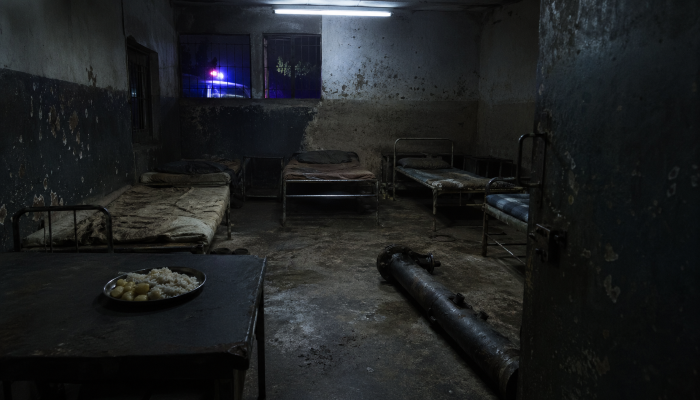
Case Summary
In Gauripur, Dhubri district, Assam, five Hindu patients at the Nibaran rehabilitation centre were driven to jump from the top floor of the facility to escape sustained torture, forced conversion to Islam, forced consumption of beef, and brutal physical violence at the hands of the centre's staff and management. Three of the five sustained critical injuries in the fall. Police conducted a late-night raid, rescued nine patients, and detained six employees. The prime accused, Zahirul Sheikh, fled from the scene and remained at large at the time of documenting this incident. According to reports, Hindu patients admitted to the Nibaran rehabilitation centre were subjected to a systematic campaign of religious coercion and physical torture by the staff and management. They were pressured to convert to Islam under the guise of better treatment, with the accused staff explicitly telling them that if they changed their religion and adopted Islam, they would be offered jobs at the rehabilitation centre. When they refused, they were beaten on the soles of their feet with large motor pipes and iron rods. They were also coerced into eating beef [cow meat, the consumption of which is among the most profound religious transgressions for a devout Hindu, given the cow's sacred status in the Hindu tradition]. Refusal to eat beef resulted in further beatings. The physical and religious abuse was compounded by systematic exploitation. The Hindu patients were forced to perform manual labour, clean toilets, and wash the clothes of the staff and the centre's owner. The management charged their families 12,000 rupees per month while spending only approximately 2,000 rupees on their care. When patients developed skin conditions, including scabies, they were denied medical treatment and told to eat boiled potatoes and rice without salt instead. One of the victims described the ordeal directly, stating that staff had told them to change their religion and convert to their faith in exchange for better treatment, and that they had been beaten on the soles of their feet with large motor pipes when they sought medicine for their skin infections. The centre had been operating illegally without a valid registration for three years. After the five patients jumped from the top floor to escape the torture, police were informed, and a raid was conducted at approximately 11 PM on 24 April 2026. Nine patients were rescued, and six employees were detained. The prime accused, Zahirul Sheikh, fled and remained at large as of the source date. Local residents demanded strict action against what they described as "rehab jihad," a pattern of rehabilitation centres being used to force Hindu inmates to convert to Islam.
Why it is Hate Crime ?
The primary category for this case is "Predatory Proselytisation". The sub-category for this case is "Conversion/attempts to convert by inducement". Predatory Proselytisation is not just limited to threat, harassment, force and violence, but it also has contours of stealth. In several cases, the Hindu victim is exploited to convert, with non-Hindus taking advantage of their poverty. In such cases, the Hindu victim who is suffering financially is offered monetary benefits, including lucrative offers for jobs, health treatment, education, etc, to induce the victim into changing his/her religion. In such cases, the religious identity of the victim and the aim to disenfranchise him from his faith form the heart of the crime. Also, taking advantage of and exploiting an individual’s economic vulnerabilities is widely acknowledged as exploitation, forms of which are often penalised by law. Such cases therefore are considered religiously motivated hate crimes since the victim’s religious identity forms the very heart of the crime itself. Another sub-category for this case is "Harassment, threats, coercion for conversion". Harassment covers a wide range of behaviours of an offensive nature. It is commonly understood as behaviour that demeans, humiliates, and intimidates a person, including threats and coercion. Harassment and threats, in this case, find their root on discriminatory grounds which has the effect of nullifying a person’s rights or infringing upon his freedom to exercise his right specifically owing to the victim’s religious identity. Verbal and physical threats and psychological or physical harassment are often used against Hindu victims because they choose to practice their professed religion. Religious harassment also includes forced and involuntary conversions by harassment, threats or coercion. Coercion includes intimidatory tactics like force-feeding a Hindu victim beef to convert to another religion, forceful circumcision etc. In several cases documented, non-Hindu perpetrators or those who harbour specific animosity towards Hinduism, harass victims simply based on their religious identity. Such cases often also include harassment to ensure the Hindu victim abandons his/her professed religion and adopts the religion of the perpetrator. Such cases, where Hindu victims are harassed to convert to the perpetrator’s religion, are rooted in animosity towards the victim’s religious identity and are therefore documented as religiously motivated hate crimes. Another primary category for this case is "Attack not resulting in death". The sub-category here is "Attacked for refusal to convert". When there is pressure, threat or coercion employed upon the Hindu victim to convert to a different religion, in several cases, the victim refuses to succumb to the pressure/threats. Once the victim refuses, the perpetrator proceeds to attack/assault the victim owing to his/her refusal to convert. In such cases, the pressure/threat/intimidation/coercion/violence itself is driven by animosity towards the victim’s Hindu faith. The violence, then, is another hate crime driven by the victim’s refusal to abandon his professed faith, Hinduism, and convert to the religion of a non-Hindu perpetrator. Since the victim’s faith is at the heart of the pressure to convert and the ensuing violence towards the victim, such cases are considered religiously motivated hate crimes. This case qualifies as a religiously motivated hate crime in which Hindu patients at the Nibaran rehabilitation centre in Gauripur, Dhubri district, Assam were subjected to a systematic campaign of forced conversion to Islam, physical torture, forced consumption of beef, denial of medical treatment, and forced labour. The centre was operating as an instrument of religious coercion disguised as a healthcare facility, using the vulnerability of patients seeking treatment as the mechanism through which their resistance to conversion could be most effectively broken. The use of a rehabilitation centre as a vehicle for predatory religious targeting is the primary religious marker of this case. A rehabilitation centre is a place of healing where individuals in physical and mental vulnerability place their trust in the institution and its staff for care and treatment. The patients admitted to Nibaran were not there by choice in any meaningful sense. They were in a condition of dependency, separated from their families, and entirely reliant on the centre's staff for their basic needs. The management of Nibaran identified this condition of total institutional dependency deliberately and exploited it as the most effective mechanism available for overcoming the resistance of Hindu patients to conversion. They chose to operate a rehabilitation centre specifically because the vulnerability of patients made them the most susceptible targets for sustained religious coercion, with the least capacity for resistance or escape. The offer of better treatment and staff employment as inducements to conversion is the second religious marker. Staff explicitly told Hindu patients that if they converted to Islam and came to their faith, they would be kept on as staff members and receive better treatment. This offer was made to patients who were being denied medicine for skin conditions and fed boiled potatoes and rice without salt. The deliberate withholding of basic medical care was not merely neglect. It was a calculated instrument of inducement, designed to make the promise of better treatment as compelling as possible by deliberately keeping the baseline of care as low as possible. The perpetrators chose to combine the withholding of care with the promise of better treatment specifically because the contrast between the two would be most effective in breaking the resistance of Hindu patients who were suffering from untreated medical conditions. The forced consumption of beef as a direct act of religious violation is the third religious marker. The cow holds a position of unique and irreplaceable sanctity in the Hindu religious tradition. It is revered as a symbol of motherhood, abundance, and the divine, and its protection is a deeply held religious obligation for devout Hindus. The forced consumption of beef [cow meat] is therefore not merely a dietary imposition. It is a targeted act of religious desecration directed at the most fundamental sensibility of a Hindu person's faith. The perpetrators chose to force Hindu patients to eat beef specifically because they understood that doing so would constitute the most severe possible violation of Hindu religious identity, simultaneously desecrating the victim's body and their faith. The beatings administered to those who refused confirmed that the beef consumption was not a casual dietary matter but a deliberate religious weapon deployed to compel submission and break Hindu resistance. The physical torture as punishment for refusing to convert is the fourth religious marker. Hindu patients who refused to convert to Islam or refused to eat beef were beaten on the soles of their feet with large motor pipes and iron rods. The beating of the soles of the feet is a specific and particularly cruel form of torture that causes severe pain and injury while leaving the victim unable to walk or flee. The perpetrators chose this specific form of torture deliberately because it was both maximally painful and maximally disabling, ensuring that the victims could not escape the facility while simultaneously communicating through physical suffering the consequences of continued resistance to conversion. The torture was not random violence. It was a calculated instrument of religious coercion, administered specifically in response to the refusal of Hindu patients to abandon their faith. The systematic exploitation and dehumanisation of Hindu patients is the fifth religious marker. Hindu patients were forced to perform manual labour, clean toilets, and wash the clothes of the staff and owner, while their families were charged twelve thousand rupees per month and only approximately two thousand rupees was spent on their care. The dehumanisation of Hindu patients through forced menial labour and financial exploitation was not separate from the religious coercion. It was part of the same strategy of total domination over vulnerable Hindu individuals, designed to break their sense of dignity and self-worth to the point where conversion would feel like the only available path to relief. The perpetrators chose to combine religious coercion with financial exploitation and forced degradation because each element reinforced the others, creating a totalising environment of suffering from which conversion appeared to be the only exit. To sum it up, the conduct of Zahirul Sheikh and the staff of Nibaran rehabilitation centre reflected more than the criminal mismanagement of a healthcare facility. By operating an illegal rehabilitation centre as a vehicle for the systematic religious coercion of vulnerable Hindu patients, forcing them to eat beef, beating them when they refused to convert, denying them medical treatment, and exploiting them financially and physically, their actions demonstrated a clear and deliberate disregard for the Hindu religious identity of every patient in their care. The Hindu patients were targeted specifically because they were Hindu, and every instrument of coercion deployed against them was chosen because it would be most effective in breaking the resistance of a Hindu person to religious transformation. This reflects an underlying hostility toward Hindu religious identity that cannot be characterised as anything other than religiously motivated. Given that this case met the parameters of a religiously motivated hate crime, it was added to the hate crime database of the tracker. Disclaimer: The Hinduphobia Tracker records incident dates based on when the crime occurred, not when it was reported or published. The source confirms the police raid and the jumping of five Hindu patients from the top floor of the facility took place on 24 April 2026, making this the most acute and documentable incident date. The abuse of Hindu patients had been ongoing for an extended period prior to this date, given the centre's three years of illegal operation, but no specific start date is confirmed in the source. As no specific date suggesting when the patient's ordeal began is clearly specified, the earliest available date, that is, 24 April 2026, has been used as the primary incident date for documentation purposes. This was recorded for documentation purposes only.
Victim Details
Total Victim
9
Deceased
0
Gender
- Male 0
- Female 0
- Third Gender 0
- Unknown 9
Caste
- SC/ST 0
- OBC 0
- General 0
- Unknown 9
Age Group
- Minor 0
- Adult 0
- Senior Citizen 0
- Unknown 9


Case Status
Arrested


Perpetrators Details
Perpetrators
Muslim Extremists
Perpetrators Range
One Person
Perpetrators Gender
male
 Sources




