Hindus and their deities mocked in viral video in Raebareli
 Raebareli, Uttar Pradesh, India
  21 April, 2026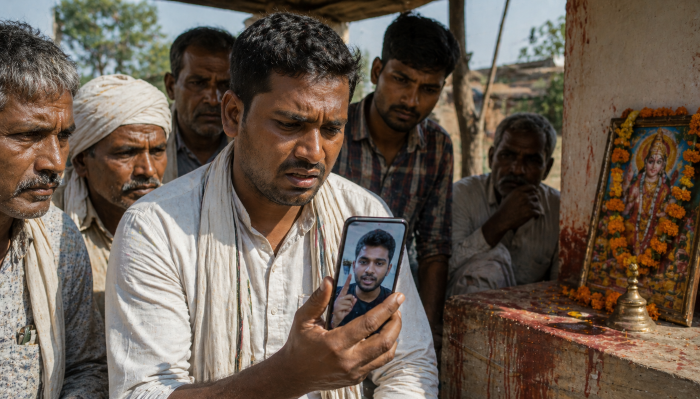
Case Summary
A young man named Sarwan from Mau Garvi village, Chandapur police station area, Raebareli district, Uttar Pradesh, posted a video on social media containing offensive and derogatory comments against Hindu gods and goddesses and the Brahmin community. The video went viral on 22 April 2026, triggering widespread anger across the area. A case was registered against him on 24 April 2026, and the police launched an active search for his arrest. Sarwan, son of Bharat Raidas, a resident of Tola Chamarhi, Mau Garvi village, posted a video on social media in which he made deliberately insulting and derogatory remarks against Hindu gods and goddesses and the Brahmin and Kshatriya communities. The video was designed to spread communal animosity, break social cohesion, and hurt the religious sentiments of Hindu communities through abusive language targeting their faith and their community identity. The video spread rapidly on social media and caused immediate outrage across the area. Complainant Umanath Singh, son of the late Anoop Singh, a resident of Mau Garvi, filed a formal complaint with Chandapur police on 24 April 2026, accusing Sarwan of deliberately spreading caste-based hatred and using insulting language against the Brahmin and Kshatriya communities to hurt religious and social sentiments. Chandapur police registered a case against Sarwan under section 353(1)(c) of the Bharatiya Nyaya Sanhita [BNS, the Indian Penal Code replacement legislation]. At the time of documenting this incident, Chandapur Station House Officer [SHO] Arvind Singh confirmed that a case had been registered on the basis of the viral video and that police were actively searching for the accused.
Why it is Hate Crime ?
The primary category for this case is "Hate speech against Hindus". The sub-category here is "Anti-Hindu slurs, mocking faith". Anti-Hindu slurs and the deliberate mocking of the Hindu faith owing to religious animosity involve the usage of derogatory terms, stereotypes, or offensive references to religious practices, symbols, or figures. One of the common anti-Hindu slurs used against Hindus is “cow-worshipper” and “cow piss drinker”. The intention of using this term is to demean and mock Hindus as a group and their religious beliefs since Hindus consider the cow holy. Additionally, some symbols and the slurs attached to them have a historical context that exacerbates the insult, hate, stereotyping, dehumanisation and oppression against Hindus. Cow worship has been used for centuries to denigrate Hindus, insult their faith and oppress Hindus specifically as a religious group. There has been overwhelming documentation about how cow slaughter has been used to persecute Hindus with cow meat being thrown in temples and places of worship. There has also been overwhelming documentation where cow meat (beef) has been force-fed to Hindus to either forcefully convert them to Islam or denigrate their faith. Apart from cow worship, the Swastika – which holds deep religious significance for the Hindus – has also been misinterpreted and distorted to use as a slur against Hindus. Similarly, the worship of the Shivling has been used by supremacist ideologies and religions to denigrate Hindus owing to religious animosity. Such slurs and denigration stem from inherent animosity and hate towards Hindus and their faith; therefore, it is categorised as hate speech targeted at Hindus specifically owing to their religious identity. This case qualifies as a religiously motivated hate speech incident in which a young man named Sarwan in Raebareli district, Uttar Pradesh, deliberately posted a video on social media containing offensive and insulting remarks directed at Hindu gods and goddesses and the Brahmin and Kshatriya communities. The video was not a casual or impulsive act of personal expression. It was a deliberate public broadcast of contempt for Hindu religious identity and specific Hindu communities, posted on a platform designed to reach the widest possible audience. The deliberate targeting of Hindu gods and goddesses through offensive language is the primary religious marker of this case. Hindu gods and goddesses are not abstract theological concepts. They are living objects of devotion for millions of Hindus, deeply embedded in daily worship, cultural identity, and collective consciousness across regions and communities. An attack on them through abusive or insulting language is therefore not a neutral act of expression. It is a direct assault on the most sacred dimension of Hindu religious identity, chosen precisely because it guarantees maximum emotional and religious injury. Sarwan’s choice of target reflects a clear awareness that attacking deities would hurt the widest possible section of the Hindu community. The targeting of Brahmin and Kshatriya communities is the second religious marker. While such abuse may appear to be directed at caste identities, it cannot be viewed in isolation from the broader religious framework. In Abrahamic contexts, micro identities such as caste, region, or language are secondary, with religious identity remaining the primary axis of hostility. The Brahmin community, as custodians of ritual and scriptural traditions, and the Kshatriya community, historically associated with the protection of the social order, are both inseparable from the Hindu religious structure. The use of abusive language against these groups, therefore, reflects more than caste hostility. It is an attack on Hindu religious identity expressed through its internal social framework. Even where caste-specific insults are used, the underlying animosity is directed at Hindus as a religious collective, making the targeting religious in nature rather than merely intra-community. The deliberate use of social media to amplify harm is the third religious marker. Sarwan did not make these remarks in a private or incidental context. He recorded and publicly disseminated them, ensuring the offensive content would reach a wide audience. This reflects a clear intent to scale the impact of the insult beyond an individual or local setting and inflict broader communal injury. The subsequent spread of the video and the strong reactions it generated demonstrate that the harm was neither accidental nor contained, but rather a calculated attempt to provoke and offend Hindus collectively. Given that this case met the criteria for a religiously motivated hate speech incident, it was added to the tracker's hate speech database.


Case Status
Complaint filed


Perpetrators Details
Perpetrators
Others
Perpetrators Range
One Person
Perpetrators Gender
male
 Sources




