Hindu man dies by suicide for being coerced into converting to Islam and severing family ties
 Bareilly, Uttar Pradesh, India
  17 April, 2022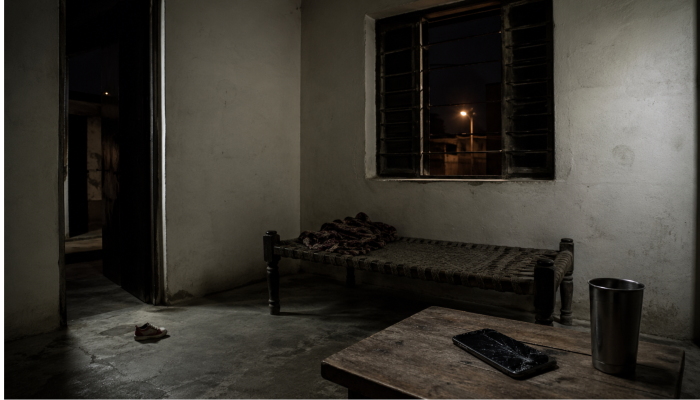
Case Summary
A 25-year-old Hindu man named Vinay, son of Shankar Lal Prajapati, was found dead in his rented room in Naktiya, Cantt police station area of Bareilly district, Uttar Pradesh, having taken his own life. In his final phone call to his mother, he said that converting to Islam and severing ties with his family for the sake of his wife Muskan had been the biggest mistake of his life. He left behind two young daughters aged three and one. Vinay had fallen in love with Muskan, a Muslim woman, approximately four years before his death. The couple initially married at a temple. After the marriage, Muskan stayed with Vinay's family for approximately five days before her family began applying pressure. Under this pressure, Vinay converted to Islam and changed his name to Imran. Following his conversion, his own family's relationship with him effectively ended. Out of social shame, his family left Bareilly and relocated to Bilaspur in Rampur district. The couple settled in a rented room near the Maria Meat Factory in Naktiya, Bareilly. Vinay, now living as Imran, worked as an auto-rickshaw driver to support his family. He was separated from his Hindu family, living in unfamiliar surroundings, and bearing the weight of a religious transformation that had cost him everything he had known. On the day of his death, a serious argument broke out between Vinay and Muskan. The dispute escalated and Vinay physically assaulted Muskan, injuring her head. He then left the house with his auto-rickshaw while Muskan went to her mother's home in Bichpuri. Later that day, a phone call between the two failed to resolve the tension and the argument escalated further. Muskan told him to only work during the day and stay home at night. Vinay responded that with two young daughters growing up, he needed to earn more money and would have to work nights. The argument ended when Vinay cut the call. Vinay called his mother. His brother Ajay recounted that during the call, Vinay broke down and told her that converting to Islam and cutting ties with his family for Muskan's sake had been a terrible mistake. It was the last conversation of his life. When Muskan later tried to call him back, his phone was switched off. Fearing the worst, she returned to the room with her mother and both daughters. Inside, they found Vinay hanging from a hook in the ceiling of the room, suspended by a rope and a dupatta. The room door had not been bolted from the inside, leaving open the possibility of another person having been present. Police arrived at the scene, took the body into custody, and sent it for post-mortem examination. Superintendent of Police City Manush Pareek confirmed that the investigation was underway and that the cause of death would be established after the post-mortem report. Vinay's mother, when contacted, stated that she no longer had any connection with her son. Muskan's family proceeded to make arrangements to bury Vinay according to Islamic rites. His brother Ajay arrived at the scene and confirmed the account of the pressure applied by Muskan's family that had led to the conversion four years earlier.
Why it is Hate Crime ?
The primary category for this case is "Men attacked for being associated with non-Hindu women". The sub-category here is "Brainwashed and/or groomed". Within this, the tertiary category selected is- "Family/friends of deceased victim says he was brainwashed/groomed" In our database, we have not added incidents where men have converted to another religion of their free will and no allegations of forced/involuntary conversion have been made. However, there are certain cases of conversion where the consent itself is a result of the brainwashing or grooming of a minor by the non-Hindu perpetrator trying to victimise a man for his Hindu religious identity. The phenomenon of grooming points to non-Hindu perpetrators identifying their Hindu victims’ vulnerabilities and exploiting them over months and sometimes years, to extract the supposed ‘consent’ in order to convert their religion. In most cases of grooming, the victims are minors or the grooming started when the victim was a minor. In other cases of grooming, the non-Hindu perpetrator brainwashes and grooms a minor victim to extract their trust and then proceeds to rape them repeatedly with the intent of converting them to their faith. It is pertinent to understand here that when the victim is a minor, the ‘consent’ to convert or enter into a romantic relationship with an adult itself is redundant – addressed by POCSO. While every case of conversion of a minor and incident of establishing a physical relationship with a minor by an adult is a crime, for the purpose of this database, a case would be considered a hate crime only if there is a distinct religious angle to the grooming. For example, in the UK, if a Hindu minor is targeted by Pakistani grooming gangs, it would be considered a hate crime because the victims are specifically targeted owing to their non-Muslim religious identity with the perpetrators being Muslim. In other cases, if a Hindu minor is brainwashed into entering a physical relationship with the non-Hindu adult perpetrator and the family alleges grooming/brainwashing of the minor to convert her religion, it would form a part of this database. If the victim is a Hindu adult, the case would form a part of this database only if the victim himself says that he was brainwashed/groomed to convert his religion. However, if the victim is deceased (murdered or otherwise), the case would form a part of this database if his family/friends provided testimony that the victim was brainwashed/groomed to convert his religion. Since these crimes have a distinct religious angle where the victim is being targeted owing to his Hindu religious identity, these cases are considered hate crimes. The other sub-category selected is "Threatened to convert by family of partner". When Hindu men are in a relationship with non-Hindu women, there are cases where the man faces threats to convert and change his religious identity by the non-Hindu woman or her family. Such relationships may be consensual with the religious identity of the non-Hindu woman known to the victim. Somewhere along the relationship, the non-Hindu woman or her family starts forcing/pressurizing the Hindu man to convert to Islam and also assaults the victim to force him to convert. Such cases are driven by specific religious motivations and against the religious identity of the victim and are therefore qualified as hate crimes. Cases where the Hindu man converts to Islam and does not file a complaint about the force or threat, are not considered a part of the hate tracker, even though, it may be argued that the man was brainwashed or threatened to convert to Islam. Another sub-category for this case is "Forced to convert after marriage" In such cases, a non-Hindu woman marries a Hindu man and the force/pressure against the Hindu man to convert to Islam begins after marriage. In such cases, the marriage is consensual in most cases and often, there is no element of the non-Hindu woman hiding her religious identity. The marriage could be under the Special Marriages Act where neither parties are required to convert their religion for the marriage to be considered legitimate. While the victim in such cases enters matrimony assuming that religious identity is not a barrier, the non-Hindu woman starts to pressure the Hindu man to convert to Islam after marriage. In such cases, there is application of force/pressure by the perpetrator, including, denial of the man’s religious rights. Some of the means by which the man is forced/pressured to convert include forcing/pressurizing the man to involuntarily consume beef, pressurizing/forcing to read the Kalma, forced circumcision, forced to go to the mosque, etc. There are several instances where after marriage, the man voluntarily converts to Islam. Such cases are often argued to be a result of religious brainwashing, however, for the purpose of documenting religiously motivated hate crimes, in the absence of the victim complaining of forced conversion, such cases do not form a part of the database. One other sub-category for this case is "Suicide after pressure to convert". When there is pressure, threat or coercion employed upon the Hindu victim to convert to a different religion, in several cases, owing to the humiliation or pressure/threat, the victim commits suicide. In such cases, the pressure/threat/intimidation/coercion/violence itself is driven by animosity towards the victim’s Hindu faith. The pressure/threat that is employed leads to the Hindu victim taking his own life. Since the victim’s faith is at the heart of the pressure to convert and the ensuing suicide by the victim, such cases are considered religiously motivated hate crimes. This case qualifies as a religiously motivated hate crime in which a Hindu man named Vinay in Bareilly, Uttar Pradesh, was pressured by his Muslim wife's family to convert to Islam, change his name, and sever all ties with his Hindu family following their temple marriage. Four years after the conversion, Vinay died by suicide. His final words to his mother confirmed that the forced abandonment of his Hindu faith and the destruction of his family relationships were the cause of his despair. This case reflects the devastating human cost of sustained religious coercion directed at a Hindu man who loved a woman but was made to pay for that love with his identity, his family, and ultimately his life. The sustained pressure applied by Muskan's Muslim family to force Vinay's conversion is the primary religious marker of this case. Vinay and Muskan were initially married at a Hindu temple. This act obviously made the Hindu man assume that his religious identities would not be a hindrance in their married life; however, Muskan's family refused to accept this marriage unless Vinay converted to Islam. In the Islamic faith, a marriage is deemed illegitimate if the non-Muslim partner does not convert to Islam. For those who practice the faith, when their child marries a Hindu without converting to Islam, the difference in religions followed becomes the main point of disapproval for the Muslim family. This outlook, shaped by a belief in the supremacy of Islam, often leads to pressure on the non Muslim partner to abandon their existing faith and adopt an Islamic identity. Under the sustained pressure of Muskan's family, Vinay converted to Islam and changed his name from Vinay to Imran. A name is not merely a label. It is the most immediate and intimate expression of a person's identity, community, and religious belonging. Vinay was a Hindu name, carrying within it the identity of a man born into a Hindu family with Hindu religious roots. The forced replacement of Vinay with a Muslim name Imran was not a casual personal choice. It was a deliberate act of religious identity substitution imposed on a Hindu man by his Muslim in-laws, designed to erase the most visible marker of his Hindu identity and replace it with an Islamic one. The perpetrators demanded this name change specifically because they understood that a man who carries a Hindu name within a Muslim household retains a visible assertion of his Hindu identity that they were unwilling to tolerate. The severing of Vinay's ties with his Hindu family as a consequence of the conversion is the third religious marker. Following the conversion, Vinay's relationship with his own Hindu family effectively ended. His family, unable to bear the social shame of a member who had converted to Islam, left Bareilly entirely and relocated to another district. The conversion did not merely change Vinay's religious identity. It destroyed his family. It removed him from the network of love, support, and belonging that his Hindu family represented and left him isolated in a rented room in an unfamiliar neighbourhood, living under an unfamiliar name, working to support a family that had replaced his own. The perpetrators demanded the conversion, knowing that it would sever Vinay from his Hindu family, because the complete isolation of a Hindu convert from his original community is the most effective means of consolidating the religious transformation and preventing its reversal. The proselytisation through the gradual manufacture of romantic dependency is the fourth religious marker. Vinay did not arrive at conversion through a sudden demand. He was first drawn into a relationship with Muskan, then married her at a Hindu temple, and only then subjected to the sustained family pressure that produced the conversion. This sequence reflects a structured process of religious entrapment in which a Hindu man's genuine romantic love was used as the instrument through which his resistance to conversion was progressively overcome. By the time the conversion demand was made, Vinay was already emotionally committed to Muskan, already married to her, and already facing the social consequences of the relationship. His love for Muskan was the leverage that made the conversion demand effective, and it was deployed deliberately by her family as the instrument through which a Hindu man was drawn into Islamic religious identity. Suicide as the direct consequence of sustained religious coercion is the fifth and most devastating religious marker. In his final call to his mother on the night of his death, Vinay explicitly identified the conversion and the severing of his family ties as the cause of his despair, telling her that changing his religion and cutting off his family for Muskan's sake had been the biggest mistake of his life. These were not the words of a man in a temporary domestic crisis. They were the words of a man who had spent four years living with the consequences of a religiously coerced decision and had reached the end of his capacity to bear those consequences. The conversion demanded by Muskan's family did not merely change Vinay's name and religious identity. It took from him his family, his community, his sense of self, and ultimately his will to live. His death was the final cost of a sustained campaign of religious coercion that began on the day his Muslim in-laws refused to accept a Hindu man as a member of their family on his own terms. Given that this case met the parameters of a religiously motivated hate crime, the conduct of Muskan's family reflected more than a family's preference for religious homogeneity within their household. By refusing to accept Vinay's Hindu identity, applying sustained pressure to compel his conversion, demanding the erasure of his Hindu name, and forcing the severing of his ties with his Hindu family, they demonstrated a clear and deliberate hostility toward his Hindu religious identity that destroyed him over four years and ultimately cost him his life. Vinay was targeted specifically because he was Hindu, and every instrument of pressure applied to him was chosen because it would be most effective in compelling a Hindu man to abandon his faith and his family. Such targeted victimisation based on religion not only demonstrates a fundamental disregard for Hinduism but also exposes a deeper animosity toward Hindus and their beliefs. This is why this case has been included in the tracker, as it exemplifies a clear instance of religiously motivated hate and exploitation. Disclaimer: The exact date of when Vinay converted to Islam under pressure from Muskan's family following their temple marriage was not specified in the available sources. However, the month and year of initial contact is indicated as April 2022. The tracker records incident dates based on when the crime occurred rather than when it was reported or published. In this case, 18th April 2022 has been used as the indicative incident date, derived by aligning the known year with the article publication date of 18th April 2026. This date has been recorded for documentation purposes only.
Victim Details
Total Victim
1
Deceased
1
Gender
- Male 1
- Female 0
- Third Gender 0
- Unknown 0
Caste
- SC/ST 0
- OBC 0
- General 0
- Unknown 1
Age Group
- Minor 0
- Adult 1
- Senior Citizen 0
- Unknown 0


Case Status
Complaint not filed


Perpetrators Details
Perpetrators
Muslim Extremists
Perpetrators Range
From 2 To 5
Perpetrators Gender
both
 Sources




