Hindu student hounded and attacked for opposing derogatory remarks against Hindu deities in Bilaspur, Chhatisgarh
 Bilaspur, Chhattisgarh, India
  25 April, 2026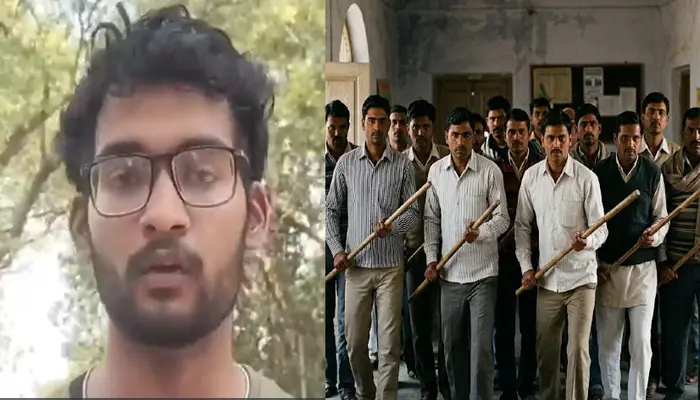
Case Summary
At Guru Ghasidas Central University in Bilaspur, Chhattisgarh, a Hindu student named Priyanshu Singh was hounded and attacked by a group of students after he opposed objectionable remarks targeting Hindu deities made by another student, identified as Toofan Chandra Nayak. According to the victim, the accused, Toofan Chandra Nayak, a fellow law student at the Guru Ghasidas Central University, had been persistently making objectionable remarks targeting Hindu deities, including Lord Shri Ram and Lord Parshuram, as well as political figures such as B. R. Ambedkar. The remarks were made verbally and through Instagram chats, screenshots of which circulated widely on social media, intensifying tensions on campus. The comments provoked strong reactions among students, particularly among a Hindu student named Priyanshu Singh, who opposed the remarks. When he confronted the accused and opposed his actions, the situation escalated, during which Toofan Chandra Nayak, along with 20-25 of his associates, attempted to physically assault Priyanshu Singh, further aggravating the situation and creating an atmosphere of fear and hostility within the university premises. However, administrative action was taken in which Priyanshu Singh and other students involved in opposing the remarks were removed from the hostel premises late at night, just before the commencement of examinations scheduled from 27 April 2026. The affected students were denied access to their accommodation and essential belongings, leading to further distress and disruption of their academic activities. The university administration claimed that it did not act unilaterally and announced the formation of an internal inquiry committee to examine the sequence of events and determine accountability. However, the handling of the situation drew criticism from students and observers, who questioned the fairness, timing, and proportionality of the action taken. The incident also triggered outrage among Hindu organisations, with members of Bajrang Dal reaching the university gates and staging protests. The activists demanded the registration of a formal police complaint against Toofan Chandra Nayak and called for strict disciplinary action, including expulsion. In the course of the protest, demonstrators locked the university gate, disrupting normal functioning and drawing wider public attention to the issue.
Why it is Hate Crime ?
This case has been added to the tracker under the primary category of - Hate speech against Hindus. Within it, the sub-category selected is - Anti-Hindu slurs, mocking faith. Anti-Hindu slurs and the deliberate mocking of the Hindu faith owing to religious animosity involve the usage of derogatory terms, stereotypes, or offensive references to religious practices, symbols, or figures. One of the common anti-Hindu slurs used against Hindus is “cow-worshipper” and “cow piss drinker”. The intention of using this term is to demean and mock Hindus as a group and their religious beliefs since Hindus consider the cow holy. Additionally, some symbols and the slurs attached to them have a historical context that exacerbates the insult, hate, stereotyping, dehumanisation and oppression against Hindus. Cow worship has been used for centuries to denigrate Hindus, insult their faith and oppress Hindus specifically as a religious group. There has been overwhelming documentation about how cow slaughter has been used to persecute Hindus with cow meat being thrown in temples and places of worship. There has also been overwhelming documentation where cow meat (beef) has been force-fed to Hindus to either forcefully convert them to Islam or denigrate their faith. Apart from cow worship, the Swastika – which holds deep religious significance for the Hindus – has also been misinterpreted and distorted to use as a slur against Hindus. Similarly, the worship of the Shivling has been used by supremacist ideologies and religions to denigrate Hindus owing to religious animosity. Such slurs and denigration stem out of inherent animosity and hate towards Hindus and their faith, therefore, it is categorised as hate speech targeted at Hindus specifically owing to their religious identity. The other sub-category selected here is - Attack not resulting in death. Within it, the sub-category selected is - Attacked for opposing radicals and trying to save victim. In several cases, Hindus are attacked for opposing religiously motivated crimes being committed against a fellow Hindu or simply for voicing an opinion opposing radical elements, who either have in the past or continue to persecute Hindus. In such cases, the initial attack against the victim, against which the Hindu was trying to defend the victim, would also need to be classified as a religiously motivated hate crime. Since the initial crime itself was religiously motivated and the subsequent crime of attempting to save the victim or speaking against the radical elements ends up inviting a violent attack, it would also be classified as a religiously motivated hate crime under this category. This case has been added to the tracker because a Hindu student named Priyanshu Singh was hounded and attacked by a group of students after he opposed objectionable remarks targeting Hindu deities made by another student, identified as Toofan Chandra Nayak. Firstly, the accused persistently making objectionable remarks against Hindu deities, including Lord Shri Ram and Lord Parshuram. Lord Shri Ram and Lord Parshuram hold profound reverence among Hindus as embodiments of dharma, righteousness, and divine justice within the Hindu tradition; they are venerated through prayers, scriptures, and religious observances across the country. Lord Ram, as the central figure of the Ramayana, symbolises ideal conduct and moral order, while Lord Parshuram is revered as a warrior sage and an incarnation of Vishnu who upholds justice. For Hindus, their deities stand central to the religion and command profound reverence. Any attempt to mock or abuse them reflects outright religious animosity towards Hinduism. In this case, the derogatory speech against Hindu deities mounted a direct assault on the sanctity of the Hindu faith. This stood not as a spontaneous or misguided act, but as a calculated and premeditated effort to denigrate Hinduism and the wider Hindu community. Such actions are not isolated instances; rather, they belong to a persistent pattern aimed at disrespecting the Hindu faith, propelled by entrenched hostility and contempt for Hindus and their beliefs. Acts of this nature qualify as hate speech because they extend far beyond legitimate criticism or debate, seeking instead to demean a religious group and its sacred symbols. The abuse and denigration of Hindu deities arose from deep-rooted religious animosity towards Hindus and their faith, making it a religiously motivated offence. Secondly, when a Hindu student, Priyanshu Singh, opposed the actions of the accused, the situation escalated sharply, during which the accused, along with 20–25 of his associates, attempted to physically assault him. This was not a random act of violence, but a targeted act intended to instil fear among other students, signalling that anyone who challenged or resisted such behaviour would face similar consequences. Priyanshu Singh was specifically targeted because he spoke out against the derogatory remarks, and the attack followed directly from his opposition. The violence reflected a deliberate attempt to silence dissent and discourage others from defending their religious beliefs. The nature and context of the assault indicated that it was rooted in religious animosity, with the victim singled out for standing in defence of Hindu deities and the broader Hindu faith. Taken together, the sequence of events demonstrated a clear pattern of religious animosity where derogatory remarks targeting Hindu deities were followed by intimidation and violence against a student who resisted such conduct. The progression from verbal denigration to physical aggression underscored a hostile environment where the expression of Hindu identity and defence of religious beliefs invited retaliation. Since such actions stem from religious animosity, this case has been added to the tracker. Disclaimer: The Hinduphobia Tracker records incidents based on when an event occurred or when the victim's ordeal began. It is important to clarify that none of the media sources covering this case has specified the exact date when the accused made derogatory statements against Hindu deities. Therefore, for documentation purposes, we have recorded the date based on when the incident was reported in the media, 26 April 2026.
Victim Details
Total Victim
1
Deceased
0
Gender
- Male 1
- Female 0
- Third Gender 0
- Unknown 0
Caste
- SC/ST 0
- OBC 0
- General 1
- Unknown 0
Age Group
- Minor 0
- Adult 1
- Senior Citizen 0
- Unknown 0


Case Status
Unknown


Perpetrators Details
Perpetrators
Others
Perpetrators Range
From 10 to 100
Perpetrators Gender
male
 Sources




