Hindu woman lured, forcibly converted to Islam and compelled to do nikah by Muslim man posing as Hindu; accused similarly targeted several Hindu women
 Jalandhar, Punjab, India
  21 March, 2022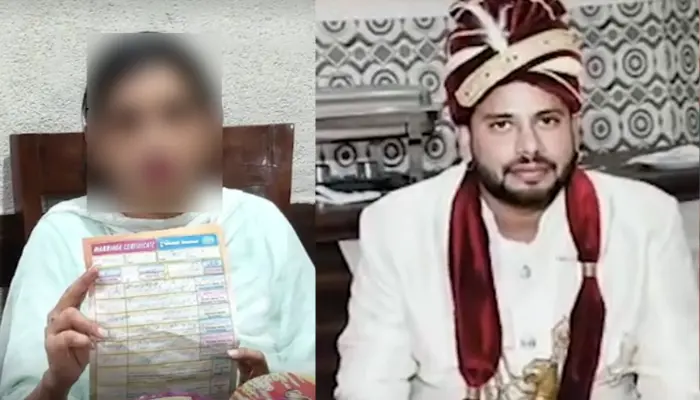
Case Summary
In Jalandhar, Punjab, a Hindu woman, a Punjabi singer by profession, was lured into a relationship by a Muslim man named Ishrat Ali, who pretended to be a Hindu. The victim was later forcibly converted to Islam and made to undergo a nikah, an Islamic marriage, by the accused. The victim was subsequently abandoned by Ishrat, and she revealed that he had similarly targeted five other Hindu women for marriage and conversion. The accused, Ishrat Ali, posing as a Hindu, lured the Hindu woman, a Punjabi singer, into a relationship and married her. They had an 18-month-old son, and the woman was four months pregnant when she spoke about her ordeal and sought justice. The victim stated that she began talking to Ishrat on Facebook four years ago (2022). He performed Qawwali while the Hindu woman sang at weddings. She said Ishrat trapped her by posing as a Hindu man and began pressuring her to marry him by threatening to cut off his arm. Their marriage was arranged within a month. On the wedding day, when the barat (wedding procession) arrived at the door, Ishrat announced that a nikah would take place. This was when the victim learned that he was a Muslim. The victim was then pressured and converted to Islam and forcibly made to undergo a nikah with the accused. Six months after the wedding, she discovered that Ishrat had already married five times and had targeted other Hindu women. The victim explained that he divorced his Hindu wives. He also started trapping Sikh women and having children with them. When the victim confronted Ishrat, he coerced her into silence. They subsequently had a son, now 18 months old. The victim was four months pregnant. Despite this, Ishrat Ali left her and entered into a live-in relationship with a Hindu woman in Himachal Pradesh who was the mother of two children. The victim stated that the entire family of the perpetrator was involved with Ishrat Ali. She said that Ishrat had also threatened to kill her, her 18-month-old child, and her unborn child if she did not accept 5 lakh rupees and divorce him. The victim requested police protection and strict action against the accused. Station House Officer Sukhwinder Pal stated that the investigation in the case was not yet complete. A case was registered against the accused on 22 March 2026.
Why it is Hate Crime ?
This case is being added to the tracker under the primary category- Crimes against women in relationships and other sexual crimes. The subcategory selected is- Man pretends to be Hindu. When a non-Hindu man pretends to be a Hindu to deceive a Hindu woman into a relationship, the act is seen as triggered by malafide intentions. In some cases, the woman eventually accepts the man’s original religious identity and converts after the man’s identity is revealed. These cases could be argued as cases of religious brainwashing and a result of the pressure a woman feels after getting into a relationship with a man. The woman, it can be argued, also changed her religious identity because of the stigma she believes she might face if she chooses to walk out of a deceptive relationship. However, for the purpose of documenting hate crimes, the cases in this subcategory are limited to those where there is explicit violence aimed at religious conversion against the wishes of the victim (force-feeding beef, blackmailing with intimate videos, rape on refusal to convert, etc), or if the woman herself complains of the man’s religious deception. In such cases, it is established that the deception of the non-Hindu man had a specific aim of religious conversion or targeting of the victim due to her Hindu religious identity, therefore, making it a religiously motivated hate crime. The other subcategory selected is- Forced conversion before marriage. The tertiary category selected is- Forced to do Nikah. In such cases, a non-Hindu man is in a relationship with a Hindu woman when the pressure to convert her religion begins to manifest. In such cases, typically, two patterns emerge. First, when the relationship is consensual, and the religious identity of the perpetrator is known to the Hindu woman in the relationship, however, at some point during the relationship, the non-Hindu man starts to force the victim to convert her religion and give up her Hindu religious identity. The second is when the woman gets into a marriage with the man pretending to share her faith. Later, when the truth is revealed, the man starts pressuring the woman to convert her religion and give up her religious identity. In both the situations, the methods used to force the victim to convert her religion often revolve around force-feeding beef, forcing her to wear hijab, forcing her to read the Kalma or even pressurizing the victim to do ‘Nikah’, which is marriage under Islamic law, with a prerequisite being conversion to Islam. Cases where a Hindu woman consensually converts to Islam in a relationship will be left out of the hate crime database, even though it could be argued in several cases that the conversion was a result of religious brainwashing. In this case, the Hindu woman was deceived into a relationship by a Muslim man posing as a Hindu. Following this, she was pressured to convert to Islam to undergo a nikah. This premeditated strategy to single out a Hindu woman for conversion to Islam reveals a clear intent to dismantle her religious identity, confirming the incident as an act driven by deep-seated religious hostility. Firstly, the perpetrator’s act of deception by posing as a Hindu demonstrates clear bias and malicious intent towards the victim’s religion. By concealing his true identity, the Muslim man manipulated the woman’s trust and targeted her under false pretences, indicating a premeditated effort to exploit her based on her religious background. Thus, the perpetrator’s deliberate decision to hide his religious identity underscores the religious motive behind this crime. In such instances, identity concealment is not merely a deceptive tactic for personal gain but a calculated strategy rooted in religious profiling and targeting. The accused was aware that the victim, being a Hindu, would likely refuse his advances if she knew his real identity, and he circumvented this by lying, which directly points to a religiously driven intent. This deception reflects a larger pattern where Hindu women are specifically singled out using false identities by Muslim men, often with the objective of forced religious conversion in mind. Such targeted victimisation based on religion demonstrates a fundamental disregard for Hinduism and exposes a deep-seated animosity toward the Hindu community and their beliefs, making it a religiously motivated crime. Secondly, on the day of the wedding, when the victim discovered the perpetrator’s true identity, she found herself in a state of extreme confusion and vulnerability. It was during this moment of crisis that she was pressured into religious conversion and forced to undergo a nikah ceremony. In accordance with Islamic practices, a nikah between a Muslim man and a non-Muslim woman cannot be solemnised without the prior conversion of the non-Muslim partner. Consequently, the victim was subjected to forced conversion to satisfy the requirements of the ceremony, which renders the religious motivation behind this entire ordeal unambiguous. The act of forcibly converting a Hindu woman to Islam after first trapping her in a relationship under a fabricated Hindu identity, and then pushing her towards a nikah, showcases the deep-seated religious and predatory nature of the perpetrator. He systematically sought to strip the victim of her Hindu identity, using deception as a vehicle to force marriage and conversion. Such acts violate the religious autonomy of the victim and serve as a direct insult to her faith, confirming this as a clear instance of a religiously motivated hate crime. Furthermore, the marriage was established to assert religious dominance over her and to facilitate her sexual exploitation. Every action, from the initial deception to the forced marriage, conversion, and the subsequent birth of their children, illustrates a calculated exploitation of a Hindu woman based on her faith. The fact that the perpetrator abandoned the victim and subsequently entered into a live-in relationship with another Hindu woman demonstrates that he never valued her as a partner. Instead, she was treated as a sexual object and a target for religious conversion, discarded once the perpetrator’s objectives were met. This abandonment of the victim, leaving her to face the consequences of his actions alone, highlights the predatory nature of his behaviour and provides further evidence of the religiously motivated nature of the crime, as he moved from one Hindu victim to the next to continue his cycle of exploitation. The perpetrator targeted multiple Hindu women, with evidence indicating at least five other victims, which exposes a distinct pattern where he viewed Hindu women as objects for sexual exploitation and forced conversion. By specifically singling out women based on their Hindu identity, he demonstrated that his actions were not spontaneous but part of a wider, systematic agenda. This behaviour confirms that the perpetrator viewed these women through the lens of their religious identity, targeting them specifically for their faith, which establishes this as an undeniable hate crime. The victim stated that she was subjected to threats from the perpetrator, a tactic used to intimidate her, break her spirit, and ensure her silence. This coercive environment was designed to prevent her from seeking justice and to maintain control over her life even after his abandonment. The use of threats to silence a victim of religious exploitation is a hallmark of hate crimes, as it aims to destroy the victim's sense of security and autonomy based on the perpetrator’s religious dominance. The involvement of the perpetrator’s entire family in these acts reveals that this was not an isolated incident but a well-coordinated and calculated effort to strip the victim of her faith and identity. The family’s participation indicates institutional support for these predatory practices, reinforcing the intent to trap the victim for her religious background. This collective involvement confirms that the crime was a calculated move to subjugate the Hindu victim, making it a clear case of a religiously motivated hate crime. Given that this case satisfies several parameters of a hate crime, including the systemic targeting of Hindu women, forced conversion, and the orchestrated destruction of faith identity, it has been officially added to the hate crime database of the Hinduphobia Tracker. Disclaimer: The Hinduphobia Tracker records the date of the incident based on when the crime occurred or when the victim's ordeal began, rather than when it was reported by the media. As media reports did not state the exact commencement date of the victim’s ordeal, but confirmed it began in 2022, and noting that the formal complaint was registered on 22 March 2026, 22 March 2022 has been selected as the indicative incident date. This date is recorded for documentation purposes only. Furthermore, while the perpetrator’s family was involved in the crime, the specific total number of individuals has not been fully specified; henceforth, Ishrat Ali is the primary perpetrator identified. The perpetrator count has been recorded as '1', which is a conservative estimate recorded for documentation purposes only. In this case, although the one Hindu woman who was a Punjabi singer served as the main target, she also revealed that five other Hindu women were targeted by the accused. Henceforth, a total of six victims have been recorded for the victim count.
Victim Details
Total Victim
6
Deceased
0
Gender
- Male 0
- Female 6
- Third Gender 0
- Unknown 0
Caste
- SC/ST 0
- OBC 0
- General 0
- Unknown 6
Age Group
- Minor 0
- Adult 6
- Senior Citizen 0
- Unknown 0


Case Status
Complaint registered


Perpetrators Details
Perpetrators
Muslim Extremists
Perpetrators Range
One Person
Perpetrators Gender
male
 Sources




