Hindu faith targeted: Bihar police selectively bans Hindu cops from wearing their religious symbols, but imposes no such restrictions on other faiths
 Bihar, India
  25 April, 2026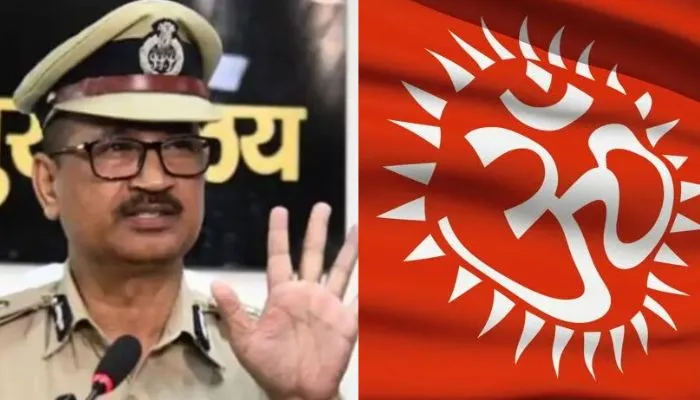
Case Summary
In Bihar, an anti-Hindu administrative decision was made by the Bihar police, barring Hindu cops from wearing their religious symbols under the pretext of "maintaining discipline". However, there were no such restrictions imposed on cops of other religions. According to media reports, this incident came to light on 26 April 2026 as the state’s Director General of Police, Vinay Kumar, directed that Hindu police personnel should not wear religious accessories like mangalsutras, chandan tilak, etc. while in uniform. The move triggered political and social reactions across the state. The police headquarters took strict steps to improve discipline within the force. Around 40 to 50 police personnel were suspended for misusing social media while in uniform. Along with this, fresh instructions were issued stressing strict adherence to the dress code during duty. As per the directive, Hindu police personnel were not allowed to display religious symbols such as chandan tilak while on duty. Similarly, Hindu female constables were barred from wearing visible jewellery or make-up while in uniform. According to the order, women personnel must refrain from wearing churis, kangans, mangalsutras, nose rings, or jhumkas that are visible over their uniforms. Hindu cops were also prevented from wearing rings on all 10 fingers. The guideline said that the cops must wear the proper uniform while on duty, along with the allotted police cap and belt. Notably, unlike the Indian Army, there were no clearly defined or uniform nationwide rules in the Indian police system that explicitly banned religious symbols while in uniform, which added to the ongoing debate. However, the order sparked criticism, with several Hindu groups calling it unnecessary and hurtful to religious sentiments. There was also confusion, as detailed written guidelines had not been made public yet. Following this, a lot of people questioned the rationale behind linking Hindu religious symbols with discipline and forcing officials to suppress their religiosity, while no such explicit bars were imposed on police personnel belonging to other religions. Many local Hindu rights groups registered a protest and called the move unnecessary, unfair and discriminatory. Bharatiya Janata Party leader and former Member of the Legislative Assembly Haribhushan Thakur Bachaul strongly objected to the directive and accused the administration of bias. In a video statement, he said, “The Director General of Police has said that no one should come on duty wearing chandan. Then no one should come wearing a burqa, shaving moustaches or keeping long beards either. That is the real demand of democracy.” He further added, “The policy of appeasement has already harmed this country a lot. If this is the intention, then it is not right in any way.” He also questioned why such rules were not being applied equally to all communities and said, “Discipline is important, but it should not become a tool to target any one religion.” The Vishwamitra Sena also opposed the move, calling it against religious freedom. Its national convenor, Rajkumar Chaubey, said that the chandan tilak was an important part of Hindu tradition and cultural identity. He stated that banning it in the name of uniform rules was “unfair and discriminatory” and added that India’s Constitution gave every citizen the right to follow their religion. The organisation demanded that the state government clarify its position and ensure that Hindu religious sentiments are not hurt.
Why it is Hate Crime ?
The primary category selected in this case is- Restriction/ban on Hindu practices. The subcategory selected is- Restriction on expression of Hindu identity. An example of the state-affected prejudicial and targeted orders against the Hindu community would be a government denying the right of a Hindu or a group of Hindus to hold a religious procession owing to the animosity of non-Hindu groups. Denial of the religious right of the Hindus to assuage the non-Hindu group which harbours animosity to a point where it could lead to violence against Hindus is not only a failure of law and order but is a prejudicial order against Hindus, denying them their fundamental rights to express their religious identity. An example of a hate crime against Hindus by a non-Hindu would be a non-Hindu institution forcing its Hindu employees to abandon religious symbols that a Hindu would wear as an expression of faith owing to inherent prejudice against the faith professed by the victim or a non-Hindu group of people restricting a Hindu group from constructing a place of worship simply because the demography of the area in which the temple is being built is dominated by non-Hindus. Such actions are driven by religious animosity and/or prejudice against Hindus and their faith and would therefore be categorized as a hate crime. The other subcategory selected is- Administration restricts religious practice. In several cases, it is seen that the administration/state disallows a religious practice owing to prejudicial orders and concerns, targeted specifically against the Hindu community. Such restriction/prohibition would be considered documented as a hate crime because the orders are often a result of pressure by groups that harbour animosity towards Hinduism and Hindus. Often, the restriction by the authorities is driven by bias, hostility, or prejudice against the specific community being stopped from holding a religious practice, by pressure groups that harbour animosity towards Hindus, intrinsic to their faith. Since practices are intrinsic to the faith of the Hindus, such prejudicial restriction is considered a curtailing of the fundamental rights of the Hindu community. In several cases, for example, the authorities ban a Hindu religious practice due to pressure from groups opposed to the religion. In other instances the prohibition is selectively enforced against one religious group (Hindus) while others are allowed to proceed. There are still other cases where the authorities preemptively restrict a religious practice by Hindus because those who hold animosity towards Hindus may get “provoked” leading to them being violent, thereby assuaging the sentiments of those who hold animosity towards Hindus by curtailing the religious rights of Hindus. Such acts and orders are prejudiced, indicating discriminatory motives owing to the capitulation to groups that harbour animosity towards Hindus and therefore, would be categorized as a religiously motivated hate crime since the original pressure leading to the order itself is a result of hatred/bias/prejudice/religious hate against Hindus. In this case, the Bihar police department's directive banning Hindu officers from wearing sacred religious symbols like chandan tilak, mangalsutras, churis, and kangans exemplifies a clear case of religiously motivated hate crime rooted in deep-seated animosity towards Hindu faith identity. These sacred symbols carry immense spiritual and religious significance for Hindus: chandan tilak, a mark on the forehead, invokes divine protection and purity, connecting the wearer to ancient Vedic rituals and deities such as Lord Shiva; mangalsutras signify unbreakable marital bonds blessed by Hindu gods, while churis and kangans complete this sacred adornment, embodying a woman's cultural and religious essence. By forcibly stripping Hindu cops of these religious expressions, the administration assaulted their core religious autonomy, compelling them to hide their faith identity under the flimsy guise of "maintaining discipline." This selective prohibition, absent for other faiths, exposes raw prejudice, turning everyday police duty into a battleground where Hindu officers must suppress their religious beliefs to serve, marking it unequivocally as a crime rooted in religious bias and hatred. The Director General of Police issued a compulsory administrative order applicable to all police officers, explicitly prohibiting Hindu officers from displaying religious symbols such as chandan tilak and mangalsutras while in uniform. This top-down directive created direct pressure on Hindu officers to suppress their religious identity, as non-compliance risked disciplinary action, including suspension. By enforcing the removal of these faith-specific symbols through official policy, the administration compelled Hindu personnel to conceal core elements of their religious expression during duty hours. Such institutional coercion targeting Hindu practices constitutes a religiously motivated hate crime. Such restrictions make Hindu cops feel their faith is inferior, pressuring them to conceal their religious identity just to remain in service, and forcing a choice between duty and devotion. This coercion stripped them of religious autonomy, turning workplaces into zones of enforced secularism that only Hindus endured. If they wished to continue working, they had no option but to suppress and hide their faith expressions, creating invisible chains that bound their identity. This coercion, demanding concealment under threat of penalty, underscores the religiously motivated nature of the crime, as it weaponised employment against Hindu religiosity alone. Most critically, Hindu symbols like chandan tilak and mangalsutras faced explicit bans, while outward religious expressions of other faiths worn by cops went unrestricted, showcasing the Bihar police administration's blatant bias and prejudice against Hindu identity under the false pretext of discipline. Beards symbolising Sikh piety, skullcaps for Muslim devotion, or crucifixes remained untouched, yet a simple tilak and mangalsutra became a disciplinary offence. This glaring selectivity proved the directive targeted Hinduism deliberately, not uniformity, allowing other faiths to flourish visibly while Hindus cowered in hiding. Such discriminatory enforcement revealed institutional contempt for Hindu practices, framing "discipline" as a veil for faith-based vendetta. By permitting diverse symbols from other religions but eradicating Hindu ones, the administration broadcast its prejudice, solidifying this as a textbook religiously motivated hate crime. Given that this case meets every parameter of a hate crime, selective targeting of Hindus, coercion to suppress faith identity, institutional bias, and psychological harm inflicted on victims, it has been added to the hate crime database of the Hinduphobia Tracker. Disclaimer: In this case, the Bihar Police administration issued a directive banning Hindu officers from wearing religious symbols while on duty. This order was issued by the Bihar Director General of Police, Vinay Kumar. Consequently, the perpetrator count is set as "1", referring specifically to Vinay Kumar.


Case Status
Unknown


Perpetrators Details
Perpetrators
State and Establishment
Perpetrators Range
One Person
Perpetrators Gender
male
 Sources




