Hindus targeted with abusive remarks against their gods and goddesses, offensive video circulated online
 Deogarh, Jharkhand, India
  21 April, 2026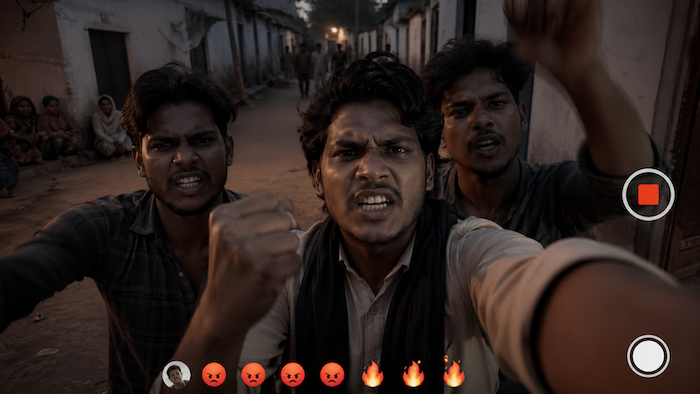
Case Summary
Hindu devotees in Deoghar, Jharkhand, were subjected to abusive and derogatory remarks directed at their gods and goddesses. The offensive content surfaced through a viral social media video. The incident caused distress and anger within the Hindu community. The incident unfolded in the Pathrol police station area of Deoghar, Jharkhand. A video circulated widely on social media showing a youth, identified as Kundan Yadav, using abusive language against Hindu gods and goddesses. The video directly targeted sacred religious figures, who hold deep spiritual significance for Hindu devotees. The language used in the video was explicit and insulting, aimed at demeaning the religious beliefs of Hindus. On 22nd April 2026, Hindu residents of the area came across the video and were deeply affected by its contents. The video showed Kundan Yadav, along with Sonu Yadav and Monu Yadav, all residents of Khamarwad in the Pathrol police station area, engaging in the act. The individuals were seen using abusive language not only against Hindu deities but also making offensive remarks involving mothers and sisters, further intensifying the insult directed at the Hindu community. As the video spread, it amplified distress among Hindu devotees and led to widespread outrage. The deliberate act of recording and sharing the video ensured that the offensive content reached a wider audience, thereby increasing the scale of harm caused to Hindu religious sentiments. The targeting of Hindu gods and goddesses in a public and shareable format indicated a conscious act that extended beyond a private remark. Following the video's circulation, Hindu individuals, including Sagar Kumar Jaiswal, Kartik Kumar, and Sudama Yadav, submitted a written complaint to the Pathrol police station. They informed authorities about the incident and sought action against those responsible for insulting Hindu religious beliefs. Acting on the complaint, the police initiated an investigation. Kundan Yadav was taken into custody and subsequently arrested. Officials confirmed that action was taken in response to a complaint submitted by members of a Hindu organisation. The investigation into the incident remained ongoing.
Why it is Hate Crime ?
This case has been added to the tracker under the primary category - Hate speech against Hindus. Within this, the subcategory selected is - Anti-Hindu slurs, mocking faith. Anti-Hindu slurs and the deliberate mocking of the Hindu faith owing to religious animosity involve the usage of derogatory terms, stereotypes, or offensive references to religious practices, symbols, or figures. One of the common anti-Hindu slurs used against Hindus is “cow-worshipper” and “cow piss drinker”. The intention of using this term is to demean and mock Hindus as a group and their religious beliefs since Hindus consider the cow holy. Additionally, some symbols and the slurs attached to them have a historical context that exacerbates the insult, hate, stereotyping, dehumanisation and oppression against Hindus. Cow worship has been used for centuries to denigrate Hindus, insult their faith and oppress Hindus specifically as a religious group. There has been overwhelming documentation about how cow slaughter has been used to persecute Hindus with cow meat being thrown in temples and places of worship. There has also been overwhelming documentation where cow meat (beef) has been force-fed to Hindus to either forcefully convert them to Islam or denigrate their faith. Apart from cow worship, the Swastika – which holds deep religious significance for the Hindus – has also been misinterpreted and distorted to use as a slur against Hindus. Similarly, the worship of the Shivling has been used by supremacist ideologies and religions to denigrate Hindus owing to religious animosity. Such slurs and denigration stem out of inherent animosity and hate towards Hindus and their faith, therefore, it is categorised as hate speech targeted at Hindus specifically owing to their religious identity. The Hindu community in Deoghar was directly targeted through the use of abusive language against their gods and goddesses. The perpetrators created and circulated a video that insulted sacred Hindu deities and extended that abuse to Hindu women through references to mothers and sisters. The act was carried out publicly on social media, ensuring wide dissemination. Religion was central to the incident because the abuse focused specifically on figures and identities that hold deep religious and cultural significance for Hindus. The primary religious marker was the use of abusive and derogatory language against Hindu gods and goddesses. The perpetrators verbally attacked deities who are central to Hindu worship and belief. These deities are not symbolic figures but objects of devotion, prayer, and identity for Hindu devotees. By choosing to insult these deities, the perpetrators deliberately targeted what is sacred within Hinduism. This was not random speech but a conscious decision to attack revered religious figures. This choice demonstrates a clear intent to harm Hindu devotees by desecrating what they consider divine, showing that the perpetrators aimed to provoke and hurt Hindus specifically because of their religious identity. The second religious marker was the extension of abuse to Hindu women through references to mothers and sisters. The perpetrators used language that insulted familial and feminine figures, which carry deep cultural and moral significance in Hindu society. In Hindu tradition, women, particularly mothers, are often associated with reverence and even divinity. By directing abusive language towards mothers and sisters alongside deities, the perpetrators expanded the scope of the attack from religious symbols to the social and moral fabric of Hindu life. This reflects a deliberate attempt to degrade not just religious belief but the honour and dignity associated with Hindu identity. The perpetrators chose this form of abuse because it compounds emotional harm and maximises humiliation for Hindu victims. Essentially, the deliberate recording and viral dissemination of the video ensured that the abusive content was not confined to a private setting but was broadcast widely on social media. Hindu religious identity is deeply tied to community, shared worship, and collective reverence. By making the video public, the perpetrators managed to amplify the harm beyond individual viewers to the wider Hindu community. This demonstrates a calculated intent to maximise the scale of offence and provoke widespread distress among Hindus. The act of recording and sharing shows that the perpetrators intended the insult to be seen, heard, and reacted to by as many Hindus as possible. The collective nature of the act, involving multiple individuals participating in the abuse, indicates that the act was not impulsive or isolated. It reflects a shared willingness to engage in the denigration of Hindu religious figures. This collective participation reinforces the deliberate nature of the act and suggests that the targeting of Hindu beliefs was intentional and mutually endorsed. The perpetrators chose to act together, strengthening the impact of their actions and reinforcing their intent to insult Hindu identity in a coordinated manner. Therefore, this incident was not an isolated act but part of a broader pattern where Hindu beliefs and identities were deliberately targeted through public insult and humiliation. The abusive language directed at Hindu gods and goddesses, along with references to mothers and sisters, reflected a conscious attempt to degrade what Hindus hold sacred. The deliberate recording and viral dissemination of the video showed an intent to amplify this insult and maximise harm and hostility to Hindu religious sentiments. Such religious mockery underscores the religious animosity driving the crime, making it a clear case of religiously motivated hate. Given that this case met the criteria for a religiously motivated hate speech incident, it was added to the tracker's hate speech database.


Case Status
Case sub-judice


Perpetrators Details
Perpetrators
Others
Perpetrators Range
From 2 To 5
Perpetrators Gender
male
 Sources




