Hindu woman sexually exploited and abused on pretext of marriage, pressured to convert to Islam and threatened with death
 Beed, Maharashtra, India
  19 April, 2024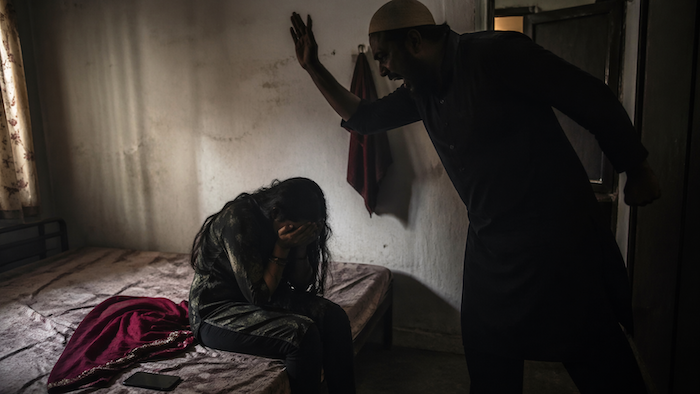
Case Summary
The Hindu woman was subjected to prolonged exploitation in Ambajogai, Beed district, Maharashtra. She was drawn into a relationship under the pretext of marriage and then repeatedly abused over an extended period. What began as a promise of marriage turned into sustained coercion and pressure. The situation escalated further when conditions tied to her religious identity were imposed upon her. The Hindu woman, aged 28, originally from Chakur in Latur district and residing in Ambajogai for work, came into contact with the Muslim perpetrator, Salman Aziz Pathan, around 2024. He initiated contact and developed a relationship with her by promising marriage. Using this assurance, he gained her trust and established a continued association with her. Over the following period of approximately two to two and a half years, the Hindu woman was kept in a live in arrangement. During this time, the perpetrator repeatedly sexually exploited her under the false assurance that he would marry her. The Hindu woman was subjected to prolonged exploitation in Ambajogai, Beed district, Maharashtra. She was drawn into a relationship under the pretext of marriage and then repeatedly abused over an extended period. What began as a promise of marriage turned into sustained coercion and pressure. The situation escalated further when conditions tied to her religious identity were imposed upon her. The Hindu woman continued to remain in the relationship based on the repeated assurances of marriage given by the Muslim perpetrator. During this period, she was subjected to ongoing physical and sexual exploitation. The perpetrator maintained control over her by reinforcing the promise of marriage while continuing the abuse. As the relationship progressed, the Hindu woman raised the issue of formalising the marriage. At this stage, the Muslim perpetrator imposed a condition that he would only marry her if she converted to Islam. This condition was repeatedly communicated to her, placing direct pressure on her religious identity. The Hindu woman refused to convert. Following her refusal, the perpetrator subjected her to verbal abuse and issued threats to kill her. During the course of this period, the Hindu woman was also influenced to distance herself from her existing family. She was persuaded to leave her husband and children and continue living under the control of the perpetrator. This further isolated her and increased her dependence on him. The Hindu woman continued to face sustained threats and coercion as the Muslim perpetrator refused to fulfil his promise of marriage without conversion. Whenever she insisted on marriage without changing her religion, he reiterated the condition and intensified the pressure on her. His conduct remained consistent, linking marriage directly to her abandonment of her Hindu faith. Over time, the Hindu woman realised that the assurances given to her were not being honoured. The repeated refusal to marry her without conversion, combined with continued abuse and threats, led her to understand the nature of the exploitation. She then approached the authorities to seek action against the perpetrator. Based on her complaint, a case was registered against Muslim perpetrator Salman Aziz Pathan at Ambajogai City Police Station under relevant sections of the Indian Penal Code. The accused was reported to be absconding at the time of registration. Police initiated a search operation and deployed teams to locate and apprehend him. The investigation remained ongoing under the supervision of local police officials.
Why it is Hate Crime ?
This case has been added to the tracker under the primary category - Crimes against women in relationships and other sexual crimes. Within this, the subcategory selected is - Brainwashed and/or groomed. Under this, the tertiary categories selected are - Rape and sexual assault/harassment, and Victim says she was brainwashed/groomed. In our database, we have not added incidents where women have converted to another religion of their free will and no allegations of forced/involuntary conversion have been made. However, there are certain cases of conversion where the consent itself is a result of the brainwashing or grooming of a minor by the non-Hindu perpetrator trying to victimise a woman for her Hindu religious identity. The phenomenon of grooming points to non-Hindu perpetrators identifying their Hindu victims’ vulnerabilities and exploiting them over months and sometimes years, to extract the supposed ‘consent’ in order to convert their religion. In most cases of grooming, the victims are minors or the grooming started when the victim was a minor. In other cases of grooming, the non-Hindu perpetrator brainwashes and grooms a minor victim to extract their trust and then proceeds to rape them repeatedly with the intent of converting them to their faith. It is pertinent to understand here that when the victim is a minor, the ‘consent’ to convert or enter into a romantic relationship with an adult itself is redundant – addressed by POCSO. While every case of conversion of a minor and incidents of establishing a physical relationship with a minor by an adult is a crime, for the purpose of this database, a case would be considered a hate crime only if there is a distinct religious angle to the grooming. For example, in the UK, if a Hindu minor is targeted by Pakistani grooming gangs, it would be considered a hate crime because the victims are specifically targeted owing to their non-Muslim religious identity with the perpetrators being Muslim. In other cases, if a Hindu minor is brainwashed into entering a physical relationship with the non-Hindu adult perpetrator and the family alleges grooming/brainwashing of the minor to convert her religion, it would form a part of this database. If the victim is a Hindu adult, the case would form a part of this database only if the victim herself says that she was brainwashed/groomed to convert her religion. However, if the victim is deceased (murdered or otherwise), the case would form a part of this database if her family/friends provided testimony that the victim was brainwashed/groomed to convert her religion. Since these crimes have a distinct religious angle where the victim is being targeted owing to her Hindu religious identity, these cases are considered a hate crime. The other sub-category selected for this case is - Forced conversion before marriage. In such cases, a non-Hindu man is in a relationship with a Hindu woman when the pressure to convert her religion begins to manifest. In such cases, typically, two patterns emerge. First, when the relationship is consensual, and the religious identity of the perpetrator is known to the Hindu woman in the relationship, however, at some point during the relationship, the non-Hindu man starts to force the victim to convert her religion and give up her Hindu religious identity. The second is when the woman gets into a marriage with the man pretending to share her faith. Later, when the truth is revealed, the man starts pressuring the woman to convert her religion and give up her religious identity. In both the situations, the methods used to force the victim to convert her religion often revolve around force-feeding beef, forcing her to wear hijab, forcing her to read the Kalma or even pressurizing the victim to do ‘Nikah’, which is marriage under Islamic law, with a prerequisite being conversion to Islam. Cases where a Hindu woman consensually converts to Islam in a relationship will be left out of the hate crime database, even though it could be argued in several cases that the conversion was a result of religious brainwashing. Another sub-category selected for this case is - Assault or threat upon refusal to convert. When Hindu women are in a relationship with non-Hindu men, there are cases where the woman faces threats or assault after she refuses to convert and change her religious identity owing to pressure/force by the non-Hindu man. Such relationships may be consensual with the religious identity of the non-Hindu man known to the victim. Somewhere along the relationship, the non-Hindu man starts pressurizing the Hindu woman to convert to Islam and upon her refusal, assaults or threatens the victim. Such cases are driven by specific religious motivations and against the religious identity of the victim and are therefore qualified as hate crimes. Cases where the Hindu woman converts to Islam and does not file a complaint about the force or threat, are not considered a part of the hate tracker, even though, it may be argued that the woman was brainwashed or threatened to convert to Islam. This case qualified as a religiously motivated hate crime because a Hindu woman was deliberately targeted, exploited, and coerced within a relationship that was structured around altering her religious identity. The Muslim perpetrator used the promise of marriage to gain access, maintain control, and impose conditions tied directly to religion. The abuse was not incidental. It was sustained, conditional, and explicitly linked to forcing the Hindu woman to abandon her faith. Religion was central to both the method and the objective of the harm inflicted. In the primary religious marker, the Hindu woman was groomed through deception over a prolonged period. The Muslim perpetrator approached her with a promise of marriage and used this assurance to establish trust and emotional dependence. Marriage holds deep social and cultural significance for a Hindu woman, especially within the framework of family and stability. By invoking marriage, the perpetrator deliberately chose a culturally meaningful institution to draw her in. He maintained this false promise over two to two and a half years to ensure her continued presence in the relationship. This was not a momentary deception. It was a sustained strategy to keep her emotionally invested and compliant. The deliberate use of a false marital promise shows that the perpetrator chose a central aspect of Hindu social life to secure control over her. This revealed that he deliberately exploited her trust and cultural expectations around marriage in order to sustain prolonged access and control over a Hindu woman, demonstrating targeted intent rooted in her identity. In the second religious marker, the Hindu woman was subjected to continuous sexual exploitation under the pretext of marriage. The Muslim perpetrator engaged in repeated physical relations with her over an extended period while withholding actual commitment. For a Hindu woman, physical relations within the expectation of marriage carry social, emotional, and moral weight. The perpetrator knowingly used this expectation to justify and continue the exploitation. He did not enter the relationship with the intention of marriage. Instead, he used the promise as a tool to normalise ongoing abuse. This shows that he deliberately created a situation where the Hindu woman’s consent was obtained through deception tied to marriage. The prolonged nature of this exploitation demonstrates calculated intent, where the perpetrator chose to sustain abuse by manipulating a culturally significant expectation. This revealed that the harm inflicted was not incidental but structured, with the Hindu woman’s identity and social conditioning being used to facilitate continued sexual exploitation. In the third religious marker, the Hindu woman herself described being manipulated and controlled within the relationship, reinforcing the pattern of grooming. The Muslim perpetrator isolated her from her existing life by convincing her to leave her husband and children, thereby thereby weakening her social support system and increasing her dependence on him. What happened was a gradual process of control where the Hindu woman was distanced from her family and made reliant on the perpetrator. This is religiously significant because family structure and social ties form a core part of stability and identity for a Hindu woman. The perpetrator deliberately chose to isolate her before escalating pressure, ensuring that resistance would be harder and consequences more severe. This method shows calculated intent, where emotional dependence was engineered to make her more vulnerable to further coercion. This revealed that the perpetrator systematically dismantled her support system to maintain control over her as a Hindu woman. In the fourth religious marker, the Hindu woman was explicitly pressured to abandon her Hindu faith as a condition for marriage. What happened was that the Muslim perpetrator repeatedly told her that he would only marry her if she converted to Islam. This is religiously significant because marriage was made conditional upon the rejection of her existing religious identity. The perpetrator deliberately chose to link a deeply personal and socially important institution to religious conversion, ensuring that the pressure was not indirect but explicit. He did not offer marriage as promised. He transformed it into a tool to force a change in her faith. This revealed that his objective was not simply to maintain the relationship, but to compel the Hindu woman to renounce her religion as a prerequisite for legitimacy within the relationship. In the fifth religious marker, the Hindu woman faced direct threats and violence upon refusing to convert. What happened was that when she resisted the demand to change her religion, the Muslim perpetrator abused her and threatened to kill her. This is religiously significant because the threat was directly tied to her refusal to abandon her Hindu identity. The perpetrator deliberately escalated from coercion to intimidation when persuasion failed, showing that compliance was being enforced through fear rather than consent. The threat of death created an immediate and severe consequence for maintaining her Hindu identity. This was not a general act of intimidation. It was specifically invoked when she refused conversion, making the link between violence and religion explicit. This revealed that the perpetrator was willing to use extreme threats to compel religious change, demonstrating clear intent to target and harm the Hindu woman because she refused to abandon her faith. This incident is not an isolated case but part of a broader pattern where Hindu women are deliberately targeted through deception and emotional blackmail for religious conversion and sexual exploitation. This stems from inherent hostility towards the victim's professed faith since Abrahamic faiths believe that any non-adherent to the faith is subject to being dehumanised till they convert. Such predatory actions stem from doctrinal animosity towards the Hindu faith and its adherents. Given that this case met the parameters of a religiously motivated hate crime, it was added to the hate crime database of the tracker. Disclaimer: The exact date of when the Hindu woman and the Muslim perpetrator first came into contact was not specified in the available sources. However, the year of initial contact was indicated around 2024. The tracker records incident dates based on when the crime occurred rather than when it was reported or published. In this case, 20th April 2024 has been used as the indicative incident date, derived by aligning the known year with the article publication date of 20th April 2026. This date has been recorded for documentation purposes only.
Victim Details
Total Victim
1
Deceased
0
Gender
- Male 0
- Female 1
- Third Gender 0
- Unknown 0
Caste
- SC/ST 0
- OBC 0
- General 0
- Unknown 1
Age Group
- Minor 0
- Adult 1
- Senior Citizen 0
- Unknown 0


Case Status
Complaint filed


Perpetrators Details
Perpetrators
Muslim Extremists
Perpetrators Range
One Person
Perpetrators Gender
male
 Sources




