Hindu religious beliefs mocked: social media influencer cuts sacred thread ‘Kalava’ on camera, claims it "interferes with her aesthetics"
 India
India  18 April, 2026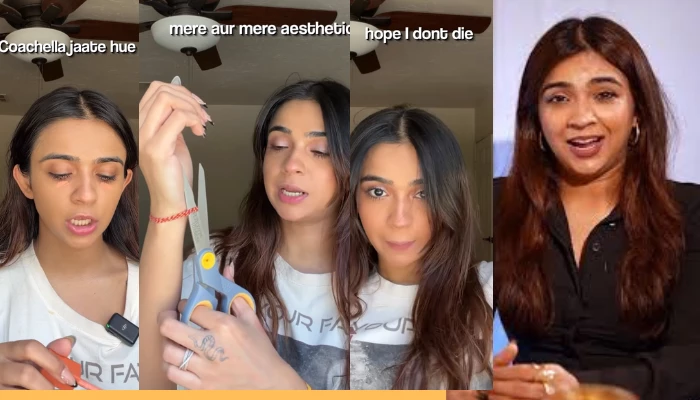
Case Summary
A Hindu religious symbol was deliberately desecrated, and the Hindu religion was mocked online by a social media influencer named Apoorva Mukhija. The incident came to light when the accused Apoora Mukhija posted popularly known online as “The Rebel Kid,” posted a video online. In the video she was seen cutting a kalava (a sacred red thread tied on the wrist as part of Hindu religious practice) before attending the Coachella festival. The act, recorded and uploaded on her social media platforms, quickly gained traction online and triggered widespread backlash, particularly from members of the Hindu community who viewed the gesture as disrespectful towards a sacred religious symbol. In the video, Apoorva Mukhija was deliberately removing and cutting the kalava, an act that holds religious significance in Hindu tradition as the thread is tied during rituals and is considered a symbol of faith and protection. The manner in which the act was performed and presented publicly was perceived by many viewers as dismissive of Hindu customs and beliefs. While cutting the sacred thread on her hand she said "Mere pandit ji ne bola yeh wala dhaaga mat kaatna... but agar mere aesthetic aur Coachella pictures ke beech koi aa sakta hai toh woh sirf main hoon." ("My priest told me not to cut this thread off, but if anything can come between my aesthetic Coachella pictures, it's me and only me.") Further, she added, “ Hope I don’t die” The clip spread rapidly across social media platforms, drawing criticism and sparking debates over cultural sensitivity and religious respect. Following the circulation of the video, several social media users expressed strong objections, accusing the influencer of trivialising and disrespecting Hindu religious practices in the name of aesthetics and lifestyle content. The incident sparked broader online discourse, with some users defending personal choice but mostly emphasising the need to respect religious symbols. Condemning the act, one social media user commented, "No outfit in this world is worth removing my Kalava", "Aesthetic is more than dharma??" asked another user. As of the source report, no formal police complaint or legal action had been confirmed, and the matter remained confined to public reaction and online backlash.
Why it is Hate Crime ?
This case has been added to the tracker under the primary category "Attack on Hindu religious representations". Within this, the selected subcategory is "Desecration of Hindu religious symbol". Icons and symbols, or a religious representation of a spiritual ideal, are widely revered in Hinduism. Iconography is of vital significance in the Hindu milieu. It helps connect people’s spiritual beliefs with the real world. Iconography within the Hindu faith takes several shapes and forms. Murtis are of most significance to Hindus, to which daily rituals, prayers and offerings are done. Besides the murtis, there are several other symbols which have deep significance in the Hindu faith – the Om and Swastika, for example. Since these Hindu religious symbols hold paramount importance in Hinduism, any desecration of symbols, icons, murtis, religious representations and manifestations, is driven by animosity towards the faith itself, which manifests itself through these murtis, icons and symbols. Therefore, any desecration of these Hindu religious symbols and representations is considered a religiously motivated hate crime under this category. Another primary category for this case is "Hate speech against Hindus". The sub-category here for this case is "Anti-Hindu slurs, mocking faith". Anti-Hindu slurs and the deliberate mocking of the Hindu faith owing to religious animosity involve the usage of derogatory terms, stereotypes, or offensive references to religious practices, symbols, or figures. One of the common anti-Hindu slurs used against Hindus is “cow-worshipper” and “cow piss drinker”. The intention of using this term is to demean and mock Hindus as a group and their religious beliefs since Hindus consider the cow holy. Additionally, some symbols and the slurs attached to them have a historical context that exacerbates the insult, hate, stereotyping, dehumanisation and oppression against Hindus. Cow worship has been used for centuries to denigrate Hindus, insult their faith and oppress Hindus specifically as a religious group. There has been overwhelming documentation about how cow slaughter has been used to persecute Hindus, with cow meat being thrown in temples and places of worship. There has also been overwhelming documentation where cow meat (beef) has been force-fed to Hindus to either forcefully convert them to Islam or denigrate their faith. Apart from cow worship, the Swastika – which holds deep religious significance for the Hindus – has also been misinterpreted and distorted to use as a slur against Hindus. Similarly, the worship of the Shivling has been used by supremacist ideologies and religions to denigrate Hindus owing to religious animosity. Such slurs and denigration stem from inherent animosity and hate towards Hindus and their faith; therefore, it is categorised as hate speech targeted at Hindus specifically owing to their religious identity. This case has been added to the tracker as it involved the deliberate public desecration of a Hindu religious symbol by an influencer, coupled with a mocking portrayal of Hindu beliefs. The act of cutting the kalava on camera and broadcasting it to a wide audience was not incidental or private, but a conscious display that invited attention and reaction. In doing so, a sacred element of Hindu practice was reduced to a prop for content, signalling disregard towards its religious value and the sentiments attached to it. The kalava, also known as raksha sutra, holds deep spiritual significance in Hindu tradition. It is tied during religious rituals and prayers as a mark of protection, faith, and a devotee’s connection with the divine. It is not a mere thread or ornament but a symbol imbued with sanctity, often worn with reverence for extended periods. Deliberately cutting and discarding it in a casual and performative manner amounts to a visible act of desecration. Such conduct reflects not only insensitivity but also a conscious trivialisation of a sacred Hindu symbol, which falls squarely within acts that target Hindu religious representations. Further, the manner in which the act was accompanied by commentary implying “hope I don’t die” introduced a layer of ridicule directed at Hindu beliefs. This statement suggested that the practice associated with the kalava is rooted in irrational fear or superstition, thereby portraying Hindu customs as regressive or absurd. Mockery of this nature is not a neutral expression; it reinforces stereotypes that undermine the legitimacy of Hindu religious practices and fosters contempt towards the faith and its followers. Importantly, the act was carried out in a public and influential space, amplifying its impact. When individuals with significant online reach present such actions as casual or aesthetic choices, it normalises disrespect towards Hindu symbols and lowers the threshold for similar conduct. This creates an environment where sacred elements of Hinduism can be openly trivialised without regard for the community’s religious sentiments, contributing to a broader pattern of denigration. Taken together, the deliberate desecration of a sacred thread and the accompanying ridicule of Hindu beliefs demonstrate clear elements of religious disrespect and mockery. The incident was not a private act of personal choice but a public performance that diminished a symbol of faith and portrayed Hindu practices in a derogatory light. This establishes the presence of targeted disrespect towards Hindu religious identity, which is why the case has been included in the tracker.


Case Status
Unknown


Perpetrators Details
Perpetrators
Others
Perpetrators Range
One Person
Perpetrators Gender
female
 Sources




