Hindu businessman shot dead in broad daylight at his shop in Pakistan's Sindh
 Sukkur, Sindh, Pakistan
  23 April, 2026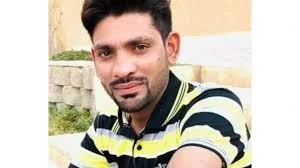
Case Summary
A young Hindu businessman named Vishal Kumar was shot dead in broad daylight at his shop on Station Road in Sukkur, Sindh, Pakistan, in what his family described as a premeditated targeted execution. In what transpired, a group of armed men entered Vishal Kumar's shop on Station Road in broad daylight, opened fire without warning, and shot him at point-blank range in front of horrified witnesses. His killers fled the scene immediately. He sustained critical injuries and died shortly after. Pakistani authorities hastily classified the killing as a robbery gone wrong. His brother rejected this characterisation outright, stating that nothing had been stolen from the shop and that the manner of the shooting, at close range and without any attempt to take anything, was consistent only with a deliberate and premeditated targeted killing. For the Hindu community of Sukkur, the murder was not an isolated criminal act. It was the latest in a pattern of violence that had left Hindu minorities living in constant terror in a city. Parents had become more cautious about their children. Hindu shopkeepers were closing their businesses earlier out of fear. A neighbour captured the community's anguish, asking how anyone could sleep at night knowing that a Hindu businessman had been executed in broad daylight on a busy street without consequence. Voice of Pakistan Minority [VOPM, a Pakistani minority rights organisation] raised the case publicly and demanded that authorities investigate the real motive behind the killing, apprehend the perpetrators, and restore safety for the Hindu minority community of Sukkur. The organisation warned that without swift and transparent justice, the fear consuming the Hindu community would only deepen and the situation would deteriorate further.
Why it is Hate Crime ?
The primary category for this case is "Attack resulting in death". The sub-category for this case is "Attack for Hindu identity". In several cases, Hindus are attacked merely for their Hindu identity without any perceived provocation. A classic example of this category of religiously motivated hate crime is a murder in 2016. 7 ISIS terrorists were convicted for shooting a school principal in Kanpur because they got ‘triggered’ seeing the Kalava on his wrist and tilak that he had put. In this, the Hindu victim had offered no provocation except for his Hindu religious identity. The motivation for the murder was purely religious, driven by religious supremacy. Such cases where Hindus are targeted merely for their religious identity would be documented as a hate crime. Under this category, cases where the attack led to the death of the Hindu victim/s would be documented. This case qualifies as a religiously motivated hate crime in which a young Hindu businessman named Vishal Kumar was shot dead in broad daylight at his shop in Sukkur, Sindh, Pakistan, in what his family confirmed was a premeditated targeted execution rather than a robbery. The killing was directed at a Hindu businessman operating visibly and publicly in a Muslim-majority city, and it fits within a documented and recurring pattern of targeted killings of Hindu minority businessmen and professionals across Muslim-majority regions of South Asia. The targeting of a Hindu businessman operating publicly in a Muslim-majority city is the primary religious marker of this case. Vishal Kumar was not killed in a private dispute or a personal conflict. He was shot at point-blank range at his place of business on a busy public road in broad daylight, in front of witnesses, by a group of armed men who entered his shop specifically to kill him. The manner of the attack, a coordinated entry by multiple armed men, firing at close range, and immediate flight, reflects the hallmarks of a planned targeted execution rather than a spontaneous criminal act. The perpetrators chose Vishal Kumar's shop deliberately. They chose a Hindu businessman operating visibly in a public commercial space, and they chose to kill him in the most public manner possible, in front of witnesses on a busy street, because the visibility of the killing was itself part of its message. The deliberate targeting of Vishal Kumar's Hindu identity as the basis of the attack is the second religious marker. Vishal Kumar's brother explicitly rejected the official robbery narrative, confirming that nothing was taken from the shop and that the manner of the shooting was consistent only with a premeditated targeted execution. The absence of any robbery confirms that the killing was not motivated by financial opportunism. The perpetrators entered the shop, shot the Hindu businessman at point-blank range, and left without taking anything because taking anything was never the objective. The objective was the death of a Hindu man who was visible, established, and publicly identified as a Hindu businessman in a Muslim-majority city. His Hindu identity was the reason he was selected, and his death was the message the perpetrators intended to deliver to the Hindu minority community of Sukkur. The broader pattern of targeted killings of Hindu minority businessmen and professionals in Muslim-majority regions is the third and most significant religious marker of this case. The killing of Vishal Kumar in Sukkur did not occur in isolation. It is part of a documented and recurring pattern of targeted attacks on Hindu minority individuals who have chosen to remain and build their lives in Muslim-majority environments rather than flee. The most direct parallel is the killing of Makhan Lal Bindroo, a 68-year-old Kashmiri Pandit pharmacist who was shot dead at his pharmacy in Iqbal Park, Srinagar, Kashmir, in October 2021 by suspected Islamist terrorists. Bindroo was one of the few Kashmiri Pandits who had refused to leave the Kashmir Valley during the ethnic cleansing of Hindus in the 1990s, when Islamic terrorists had driven the overwhelming majority of the Hindu Pandit community out of the valley through systematic violence and terror. He had stayed, built his business across three generations, earned the trust of the entire community as a pharmacist of impeccable integrity, and was shot dead at his counter for precisely this reason. His daughter's response, that his spirit could not be killed even if his body was, captured the defiance of a Hindu minority community that has refused to be entirely erased from its homeland. This pattern is not confined to isolated incidents but reflects a wider precedent across Muslim-majority countries such as Pakistan and Bangladesh, where Hindu minorities have repeatedly faced targeted violence. In Sindh, cases of abduction and forced conversion of Hindu girls have been widely documented. In Bangladesh, recurring attacks on Hindu homes, temples, and businesses during periods of communal tension have followed a similar logic of targeting visibility and identity. These incidents, like the killing of Vishal Kumar, are marked by selective victim identification, public execution or intimidation, and the intent to instil fear within the broader Hindu community. The consistency of this pattern across regions shows that such acts are not random but rooted in a larger framework of exclusion and hostility towards Hindu presence in Muslim-majority environments. The parallel between Makhan Lal Bindroo and Vishal Kumar is not coincidental. Both were Hindu businessmen operating visibly in Muslim-majority environments. Both were shot at their places of business in broad daylight by armed perpetrators who fled immediately. Both killings were characterised by authorities in ways that minimised their targeted nature. And both killings sent the same message to the Hindu minority communities in which they occurred, that a Hindu who remains visible, successful, and publicly present in a Muslim-majority space does so at the risk of his life. Such acts reveal a disturbing sense of Islamic supremacy harboured by the attackers. In this case, the perpetrators viewed the predominantly Muslim-occupied region as an exclusive zone where non-Muslims, particularly Hindus, were unwelcome. This sense of entitlement and superiority not only reflects deep-seated prejudice but also highlights an attempt to assert religious dominance over public spaces. The assault on the couple was motivated by this supremacist ideology, where Islamists in the area looked down upon Hindus, believing that they had the right to dictate who could move freely through their community. Such acts of killing Hindus for simply working in this space illustrate a dangerous mindset rooted in exclusion, intolerance and religious animosity. Further, this pattern of targeted killings of Hindu minority businessmen who have chosen to remain rather than flee is a form of religiously motivated violence that operates as a mechanism of ethnic and religious cleansing, using the targeted elimination of visible Hindu presence to communicate to the broader Hindu minority community that their continued presence is neither welcome nor safe. The impact of the killing on the Hindu community of Sukkur confirms the religious gravity of the act. Following Vishal Kumar's murder, the Hindu community of Sukkur was gripped by profound fear. Hindu shopkeepers began closing their businesses earlier. Parents became more cautious about their children. The broader Hindu minority community of Sukkur, which had already been living under sustained pressure, was pushed further into a state of terror and self-imposed restriction by the brazenness of the killing. This is precisely the effect that targeted killings of Hindu businessmen are designed to produce. The death of one Hindu businessman communicates to every other Hindu in the community that their visibility, their success, and their continued presence are conditions that carry a lethal risk. Given that this case met the parameters of a religiously motivated hate crime, the killing of Vishal Kumar reflected more than a criminal act in a lawless environment. By entering a Hindu businessman's shop in broad daylight, shooting him at point-blank range in front of witnesses, and fleeing without taking anything, the perpetrators demonstrated a clear and deliberate intent to eliminate a visible Hindu presence from a Muslim-majority commercial space. Vishal Kumar was targeted specifically because he was Hindu, and his death was designed to communicate to the Hindu minority community of Sukkur that their continued visibility and public presence carried a lethal price. This reflects an underlying hostility toward Hindu identity and Hindu presence in Muslim-majority spaces that is consistent with the broader pattern of targeted violence against Hindu minorities documented across Muslim-majority regions of South Asia, from the pharmacies of Kashmir to the shops of Sindh. Given that this case met the parameters of a religionally motivated hate crime, it was added to the hate crime database of the tracker. Disclaimer: The Hinduphobia Tracker records incident dates based on when the crime occurred, not when it was reported or published. The source does not specify the exact date on which Vishal Kumar was killed. The publication date of 22 April 2026 has been used as the indicative incident date for documentation purposes. This was recorded for documentation purposes only.
Victim Details
Total Victim
1
Deceased
1
Gender
- Male 1
- Female 0
- Third Gender 0
- Unknown 0
Caste
- SC/ST 0
- OBC 0
- General 0
- Unknown 1
Age Group
- Minor 0
- Adult 1
- Senior Citizen 0
- Unknown 0


Case Status
Unknown


Perpetrators Details
Perpetrators
Unknown
Perpetrators Range
Unknown
Perpetrators Gender
unknown
 Sources




