Hindu woman sexually exploited for years, blackmailed and pressured for religious conversion to Islam by Muslim rickshaw puller
 Rajkot, Gujarat, India
  22 April, 2022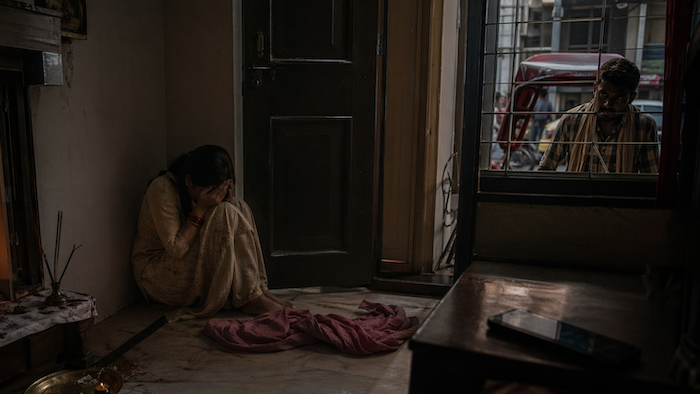
Case Summary
The Hindu woman was subjected to prolonged sexual exploitation and coercion in Rajkot, Gujarat. She was targeted during a routine journey and drawn into repeated abuse inside her own home. What began as a seemingly ordinary interaction escalated into sustained violence and control. The abuse continued over several years, leaving her isolated and fearful. Approximately four years prior to 25th March 2026, the Hindu woman had taken a rickshaw to visit a temple in Rajkot, Gujarat. The Muslim perpetrator, Zubair Qureshi, who was driving the rickshaw, initiated contact with her by stating that he did not take money for temple journeys. Through this statement, he established familiarity and gained her trust. Following this interaction, he identified her residence and began visiting her home. After gaining access to her residence, the Muslim perpetrator began entering her home repeatedly. The Hindu woman was subjected to physical and sexual abuse inside her own house. He forced himself on her and continued to exploit her over an extended period. He also recorded photos and videos during the abuse and used them to threaten her with exposure. Over time, the Muslim perpetrator maintained control over the Hindu woman through intimidation. He threatened to make the recorded material public if she resisted or spoke to anyone. He also restricted her movements and created conditions that made it difficult for her to step outside or maintain a normal life. The Hindu woman stated that she was unable to celebrate Hindu festivals or freely practise her faith due to the continued harassment and fear. During this period, the Muslim perpetrator pressured the Hindu woman to convert her religion. He took her to a shrine and attempted to make her wear amulets associated with his religious practices. He repeatedly told her that she would have to convert to Islam. These actions were carried out alongside continued threats and coercion. At one stage, the Hindu woman approached the police and attempted to file a complaint against the Muslim perpetrator. No formal action was taken at that time, and he was let off after being spoken to. Following this, the abuse continued. The Hindu woman was forced to change her residence multiple times and even changed her mobile number, yet the Muslim perpetrator continued to track and harass her. The Hindu woman also attempted to reach out to the perpetrator’s family, but no resolution was achieved. Throughout this period, he continued to threaten her, stating that no action would be taken against him and that he had influence. He used these threats to maintain control and continue the abuse. As the situation worsened, the Hindu woman eventually sought help through social media and contacted members of Hindu organisations. She was connected to activists who assisted her in escalating the matter. With their support, she approached senior police authorities and presented her complaint. Following this escalation, on 25th March 2026, a formal First Information Report was registered against the Muslim perpetrator, Zubair Qureshi, at Ajidem police station in Rajkot. He was booked under relevant sections of the Indian Penal Code for sexual assault, criminal intimidation, and related offences. Following the registration of the First Information Report, the Muslim perpetrator was formally arrested by the police. Subsequently, the Muslim perpetrator was produced before the court and remanded to judicial custody. He later applied for bail before the Sessions Court, but the application was rejected. He remained in custody at the time of the last update. The case proceeded under investigation, with police recording statements and examining the evidence presented by the Hindu woman. The intervention of members of the Vishwa Hindu Parishad facilitated the formal registration of the complaint after earlier inaction. The matter remained under judicial process while the Hindu woman continued to seek justice.
Why it is Hate Crime ?
This case has been added to the tracker under the primary category - Crimes against women in relationships and other sexual crimes. Within this, the subcategory selected is - Brainwashed and/or groomed. Under this, the tertiary categories selected are - Rape and sexual assault/harassment and Victim says she was brainwashed/groomed. In our database, we have not added incidents where women have converted to another religion of their free will and no allegations of forced/involuntary conversion have been made. However, there are certain cases of conversion where the consent itself is a result of the brainwashing or grooming of a minor by the non-Hindu perpetrator trying to victimise a woman for her Hindu religious identity. The phenomenon of grooming points to non-Hindu perpetrators identifying their Hindu victims’ vulnerabilities and exploiting them over months and sometimes years, to extract the supposed ‘consent’ in order to convert their religion. In most cases of grooming, the victims are minors or the grooming started when the victim was a minor. In other cases of grooming, the non-Hindu perpetrator brainwashes and grooms a minor victim to extract their trust and then proceeds to rape them repeatedly with the intent of converting them to their faith. It is pertinent to understand here that when the victim is a minor, the ‘consent’ to convert or enter into a romantic relationship with an adult itself is redundant – addressed by POCSO. While every case of conversion of a minor and incidents of establishing a physical relationship with a minor by an adult is a crime, for the purpose of this database, a case would be considered a hate crime only if there is a distinct religious angle to the grooming. For example, in the UK, if a Hindu minor is targeted by Pakistani grooming gangs, it would be considered a hate crime because the victims are specifically targeted owing to their non-Muslim religious identity with the perpetrators being Muslim. In other cases, if a Hindu minor is brainwashed into entering a physical relationship with the non-Hindu adult perpetrator and the family alleges grooming/brainwashing of the minor to convert her religion, it would form a part of this database. If the victim is a Hindu adult, the case would form a part of this database only if the victim herself says that she was brainwashed/groomed to convert her religion. However, if the victim is deceased (murdered or otherwise), the case would form a part of this database if her family/friends provided testimony that the victim was brainwashed/groomed to convert her religion. Since these crimes have a distinct religious angle where the victim is being targeted owing to her Hindu religious identity, these cases are considered a hate crime. The other sub-category selected for this case is - Blackmail to convert. When Hindu women are in a relationship with non-Hindu men, there are cases where the woman is blackmailed to convert her religion, owing to her religious identity of being a Hindu. Such relationships may be consensual with the religious identity of the non-Hindu man known to the victim, however, there could be cases where the relationship is not consensual and the non-Hindu man starts blackmailing a Hindu woman to convert her religion. In these cases, it is often seen that the Hindu woman is blackmailed with intimate photos and/or videos, threats of harm to her or her family, threats of violence etc. Such cases are driven by specific religious motivations and against the religious identity of the victim and are therefore qualified as hate crimes. Another sub-category selected for this case is - Assault or threat upon refusal to convert. When Hindu women are in a relationship with non-Hindu men, there are cases where the woman faces threats or assault after she refuses to convert and change her religious identity owing to pressure/force by the non-Hindu man. Such relationships may be consensual with the religious identity of the non-Hindu man known to the victim. Somewhere along the relationship, the non-Hindu man starts pressurizing the Hindu woman to convert to Islam and upon her refusal, assaults or threatens the victim. Such cases are driven by specific religious motivations and against the religious identity of the victim and are therefore qualified as hate crimes. Cases where the Hindu woman converts to Islam and does not file a complaint about the force or threat, are not considered a part of the hate tracker, even though, it may be argued that the woman was brainwashed or threatened to convert to Islam. This case qualified as a religiously motivated hate crime because a Hindu woman was systematically targeted, sexually exploited, and coerced over several years by a Muslim perpetrator who repeatedly invoked religious conversion as an objective. The abuse was not limited to physical violence. It incorporated sustained pressure to abandon her Hindu identity. The pattern of control, coercion, and religious targeting demonstrated that her identity as a Hindu woman was central to the harm inflicted upon her. In the primary religious marker, the Hindu woman was subjected to prolonged sexual exploitation and abuse within the context of a coercive relationship. The abuse began after the Muslim perpetrator deliberately established contact by invoking her temple visit, a moment tied to her Hindu faith. For the Hindu woman, visiting a temple is an act of devotion and religious practice. The perpetrator used this context to gain her trust and access her personal space. He then converted that access into repeated sexual violence over a period of four years. This duration is significant because it shows sustained grooming and conditioning. Over these four years, the Hindu woman was kept in a cycle of fear, dependency, and control. The perpetrator did not rely on a single act of violence. He maintained repeated access, normalised his presence, and gradually entrenched dominance over her life. This prolonged grooming ensured that resistance became increasingly difficult. The deliberate use of a religiously linked moment to initiate contact, followed by sustained exploitation, showed that the perpetrator identified her as a Hindu woman and chose a method that would allow long term control and abuse rooted in that identity. In the second religious marker, the Hindu woman was subjected to rape and continuous sexual harassment within her own home. Her home, which should have been a place of safety, was repeatedly violated. For a Hindu woman, personal dignity, bodily autonomy, and the sanctity of the home are deeply tied to social and cultural values. The perpetrator deliberately invaded this space and carried out repeated acts of sexual violence, ensuring that the abuse was both physical and psychological. This was not an isolated incident but a sustained pattern of assault. The choice to repeatedly target her within her own home showed calculated intent to strip her of safety and control in the most intimate environment. This revealed that the perpetrator’s actions were designed to dominate and degrade her specifically as a Hindu woman, ensuring that the harm extended beyond physical assault into complete psychological subjugation. In the third religious marker, the Hindu woman stated that she was groomed and manipulated over an extended period. The four years of continuous contact, coercion, and abuse created a situation where resistance was systematically weakened. For the Hindu woman, this period was not a voluntary relationship but a controlled environment shaped by fear and repeated violation. The perpetrator ensured that she remained isolated, threatened, and dependent, making it increasingly difficult for her to seek help or break free. This prolonged grooming was deliberate. It demonstrated that the perpetrator chose a method that would allow gradual erosion of her autonomy and loss of faith while maintaining control over her as a Hindu woman, ensuring that the abuse and conversion could continue without interruption. In the fourth religious marker, the Hindu woman was blackmailed and pressured to convert her religion. The perpetrator recorded photos and videos of the abuse and repeatedly threatened to make them public. This created a constant state of fear and vulnerability. For the Hindu woman, such threats carried severe social and personal consequences, affecting her dignity, safety, and standing within her community. The perpetrator used this fear as a tool of control. The use of threats, intimidation, and especially the warning about leaking photos or videos fit a clear pattern of coercion. Blackmail created a sustained environment of fear, which was then used to pressure her into compliance, including demands that she convert to Islam. This demonstrated that the coercion was not incidental but structured. The perpetrator deliberately created leverage through exploitation and then used that leverage to push for religious conversion, showing a clear intent to target and alter her Hindu identity through intimidation. In the fifth religious marker, the Hindu woman faced threats and continued abuse when she resisted the demand to convert. The perpetrator escalated intimidation whenever she attempted to oppose him or disclose the abuse. For the Hindu woman, refusal to abandon her faith placed her at further risk of violence and harassment. The perpetrator reinforced control through repeated threats, including harm to her safety and continued exploitation. This escalation showed that the pressure to convert was not symbolic but enforced through coercion and punishment. The choice to intensify abuse upon refusal demonstrated that the perpetrator specifically targeted her because she remained a Hindu woman and sought to break that identity through sustained intimidation. Given that this case met the parameters of a religiously motivated hate crime, it was added to the hate crime database of the tracker. Disclaimer: The exact date of when the Hindu woman and the Muslim perpetrator first came into contact was not specified in the available sources. However, the year of initial contact was indicated around 2022. The tracker records incident dates based on when the crime occurred rather than when it was reported or published. In this case, 23rd April 2022 has been used as the indicative incident date, derived by aligning the known year with the article publication date of 23rd April 2026. This date has been recorded for documentation purposes only.
Victim Details
Total Victim
1
Deceased
0
Gender
- Male 0
- Female 1
- Third Gender 0
- Unknown 0
Caste
- SC/ST 0
- OBC 0
- General 0
- Unknown 1
Age Group
- Minor 0
- Adult 1
- Senior Citizen 0
- Unknown 0


Case Status
Arrested


Perpetrators Details
Perpetrators
Muslim Extremists
Perpetrators Range
One Person
Perpetrators Gender
male
 Sources




