Revered cow deliberately slaughtered on pious Hindu festival of Holi by Muslim man in Shamli, Uttar Pradesh
 Shamli, Uttar Pradesh, India
  14 March, 2025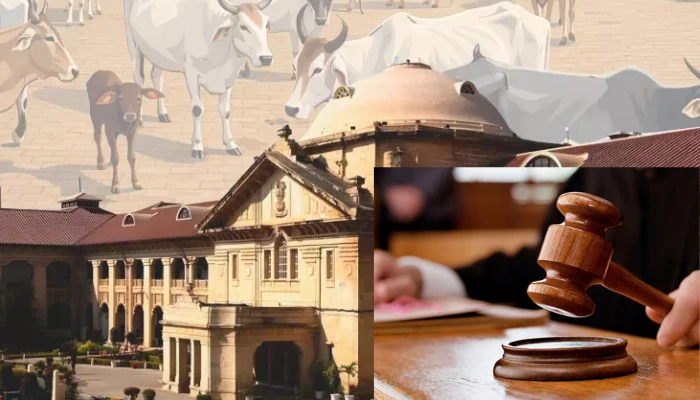
Case Summary
In Shamli, Uttar Pradesh, a holy cow was deliberately slaughtered by Muslim men during the auspicious occasion of the Hindu festival of Holi. On 16 April 2026, the Allahabad High Court upheld the detention of one of the accused, Sameer, under the National Security Act (NSA) in connection with the case. The case pertained to an incident dated 15 March 2025, when a police team recovered the remains of a cow from a field in Lavvadaudpur village in Shamli district, Uttar Pradesh. Following this, an FIR was registered under the relevant provisions of the Uttar Pradesh Prevention of Cow Slaughter Act, 1955. Police investigation identified the involvement of five individuals, including Sameer. The District Magistrate of Shamli subsequently ordered his detention under the NSA on 15 May 2025, citing the seriousness of the offence and its potential impact on public order. The detention was challenged through a habeas corpus petition filed by Sameer through his father, Shamshad. The petitioner argued that the case pertained to a law-and-order issue and did not warrant the invocation of the stringent NSA provisions. The High Court, however, rejected the petition and upheld the detention. The bench of Justices J. J. Munir and Sanjiv Kumar observed that the act of cow slaughter, particularly around the time of the Hindu festival of Holi, had triggered public outrage and affected a large section of the local population. The court noted that cow slaughter leads to strong emotional reactions due to injury to religious beliefs and has the potential to disturb public order. It further observed that such acts have immediate and widespread social repercussions, often resulting in communal tension and disruption of normal life. The bench held that the offence was not an ordinary criminal act affecting individuals but one that impacted the community at large. It concluded that there was no infirmity in the detention order and that preventive detention under the NSA was justified to maintain public order and communal harmony.
Why it is Hate Crime ?
This case has been added to the tracker under the primary category- Attack on Hindu religious representation. The subcategory selected within this is- Desecration of the Hindu religious symbol. Icons and symbols, or a religious representation of a spiritual ideal, are widely revered in Hinduism. Iconography is of vital significance in the Hindu milieu. It helps connect people’s spiritual beliefs with the real world. Iconography within the Hindu faith takes several shapes and forms. Murtis are of most significance to Hindus, to which daily rituals, prayers and offerings are done. Besides the murtis, there are several other symbols which have deep significance in the Hindu faith – the Om and Swastika, for example. Since these Hindu religious symbols hold paramount importance in Hinduism, any desecration of symbols, icons, murtis, religious representations and manifestations, is driven by animosity towards the faith itself, which manifests itself through these murtis, icons and symbols. Therefore, any desecration of these Hindu religious symbols and representations is considered a religiously motivated hate crime under this category. This was not just an illegal act, but one that directly targeted a core Hindu belief. In Hinduism, the cow is considered sacred and is deeply respected as a symbol of life, nourishment, and faith. Harming or killing a cow is seen as an attack on religious values, not just a violation of law. Anyone committing such an act is aware of the hurt and anger it causes within the Hindu community. The timing makes it even more serious. The cow was slaughtered around Holi, one of the most important Hindu festivals. Holi is a time of celebration, devotion, and community bonding. Carrying out such an act during this period increases its impact and appears meant to provoke and hurt religious sentiments at a time when they are strongest. This is not just an interpretation, but something the court itself recognised. The Allahabad High Court clearly stated that cow slaughter, especially around Holi, deeply hurts religious beliefs and can disturb public order because of how strongly people react to it. The court also noted that this was not a simple crime affecting a few individuals but something that impacted the wider community. When you look at all of this together, it becomes clear that this was not an ordinary offence. The choice of target, the timing, and the scale of impact show that it carried a clear element of religious provocation. Such acts are often carried out with a sense of hostility towards the faith itself, reflecting deeper animosity towards Hindu beliefs and practices.


Case Status
Case sub-judice


Perpetrators Details
Perpetrators
Muslim Extremists
Perpetrators Range
From 2 To 5
Perpetrators Gender
male
 Sources




