Hindus brutally attacked, houses and temples vandalised by Muslim mob during celebration of Bengali new year in Dhaka, Bangladesh
 Dhaka District, Bangladesh
  14 April, 2026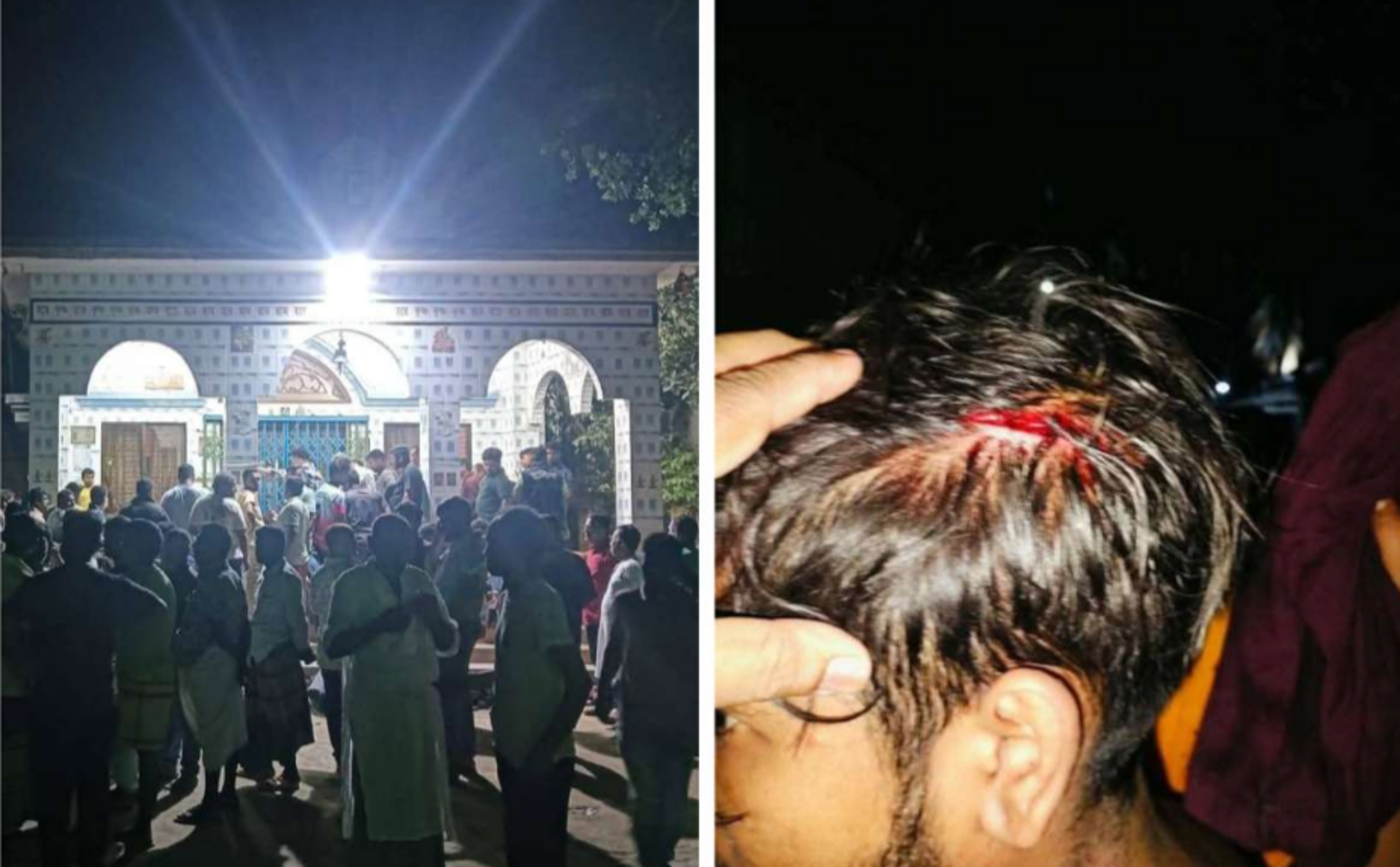
Case Summary
Hindu homes, temples, and properties were targeted and attacked by a Muslim mob in Savar, Bangladesh, during Bengali New Year celebrations. The attacks were carried out by members of the Muslim community who disrupted the festivities and unleashed violence on the Hindu minority in the area. According to reports, on the occasion of Bengali New Year celebrations in Savar, a group of Muslim attackers stormed a Hindu temple where festivities were underway. The attackers vandalised the temple premises, damaged idols, and created chaos among devotees who had gathered to celebrate the festival. The disruption of a cultural and religious event marked the beginning of a broader wave of targeted violence against the local Hindu community. Following the attack on the temple, the mob proceeded towards nearby Hindu homes and carried out widespread vandalism. Houses belonging to Hindu families were attacked and damaged, with property destruction reported across the locality. The nature of the violence showed that the attackers specifically targeted Hindu residences rather than engaging in indiscriminate unrest. Eyewitness accounts described an atmosphere of fear and panic, as Hindu families were forced to flee or remain confined indoors to protect themselves from the mob. The attacks, taking place during a major cultural festival, intensified the sense of vulnerability among the Hindu minority, who were celebrating a traditional occasion when they were targeted. Local authorities responded to the incident, and law enforcement presence in the area was increased following the attacks. However, the violence highlighted the precarious condition of Hindu minorities in Bangladesh, particularly during religious and cultural occasions when they became more visible and, consequently, more vulnerable to targeted aggression. This incident formed part of a continuing pattern of attacks on Hindus in Bangladesh, where religious festivals and gatherings had repeatedly been disrupted by Muslim groups following the 13th National Parliamentary Election 2026. This attack forms part of a recurring pattern of post-poll violence targeting Hindu minorities. Within days of the announcement of results, Hindu families in districts such as Noakhali, Rangpur, Nilphamari, Sylhet, Thakurgaon, and Dinajpur reported coordinated attacks involving arson, looting, assault, and vandalism of temples and homes. In several instances, Hindu homes were selectively targeted, looted, and families were threatened with displacement. This escalation of violence against Hindus in Bangladesh unfolded in three distinct phases: first, following the ouster of Sheikh Hasina’s government in August 2024; second, after the death of Sharif Osman Bin Hadi in December 2025; and third, in the immediate aftermath of the 13th National Parliamentary Election 2026. This electoral violence unfolded against the broader backdrop of sustained anti-Hindu hostility that had persisted since the ouster of the Sheikh Hasina government in August 2024. During that period, multiple reports documented attacks on Hindu homes, temples, and religious institutions, alongside intimidation campaigns, arson, and mob assaults targeting minority neighbourhoods. The Hinduphobia tracker has recorded 336 such incidents against the Hindu minority, underscoring the scale and persistence of anti-Hindu violence during this period. A further escalation occurred following the death of Sharif Osman Bin Hadi, a Muslim political activist and student leader known for his anti-Hindu and anti-India rhetoric. Hadi had been involved in political unrest after the fall of the Hasina government and was killed in Dhaka on 18 December 2025 during clashes. In the aftermath of his death, Hindu communities were blamed and subsequently targeted in retaliatory violence. Hindu homes were selectively set ablaze in multiple localities, forcing families to flee and leaving many displaced. The attacks appeared patterned rather than sporadic, with Muslim mobs focusing on Hindu neighbourhoods, properties, and religious symbols. Among the victims was Dipu Chandra Das, who was lynched to death and his body was set ablaze by a Muslim mob over false blasphemy allegations. The Hinduphobia tracker documented 51 incidents of anti-Hindu violence in the period following Hadi’s death alone. Such incidents underscore the vulnerability of the Hindu minority amid rising communal hostility and the weaponisation of religious accusations. Reports further indicated that posters and written materials calling for the extermination of Hindus were displayed in public spaces, signalling an alarming normalisation of genocidal rhetoric. When combined with acts of arson, vandalism, assault, and targeted intimidation, these developments suggest a coordinated environment of hostility aimed at terrorising the Hindu community and reinforcing majoritarian dominance.
Why it is Hate Crime ?
This case has been added to the tracker under the primary category "Attack not resulting in death". Within this, the selected subcategory is "Attacked to induce migration from a non-Hindu-dominated area." There have been cases where the Hindus living in an area, often with a majority dwelling belonging to non-Hindus or those harbouring animosity towards the Hindu faith, the Hindu residents experience threats and violence. The violence is employed to make the Hindus leave the area and relocate, so the area could be turned into an exclusive ghetto for adherents of the non-Hindu faith or those who harbour animosity towards the Hindu faith. In several cases, the aim of the exodus is explicit. However, in several cases, the demand for the exodus of Hindu residents is not explicit; however, violence by non-Hindu residents leaves the Hindu residents no option but to leave the area, thereby turning the area into an exclusive ghetto of non-Hindu residents. In such cases, there are instances of violence against the Hindu residents explicitly. For example, in the Hauz Qazi case of 2019, the Muslim residents claimed that mob violence against the Hindu residents had been triggered by a parking dispute. However, the violence did turn religious, with a temple being desecrated and directed specifically against the Hindu residents. The Hindu residents of the area were clear that the violence was religiously motivated, and one of the motives was to affect an exodus of the Hindu residents. In such cases, even though the perpetrators have not explicitly expressed the aim of affecting exodus, the given circumstances and violence and precedent point to the intention of exodus and therefore would be categorised under this sub-category. Such crimes are religiously motivated and therefore are hate crimes. The other sub-category selected is- Attacked for Hindu identity. In several cases, Hindus are attacked merely for their Hindu identity without any perceived provocation. A classic example of this category of religiously motivated hate crime is a murder in 2016. 7 ISIS terrorists were convicted for shooting a school principal in Kanpur because they got ‘triggered’ seeing the Kalava on his wrist and the tilak that he had put. In this, the Hindu victim had offered no provocation except for his Hindu religious identity. The motivation for the murder was purely religious, driven by religious supremacy. Such cases where Hindus are targeted merely for their religious identity would be documented as a hate crime under this category. The other subcategory selected is- Attack against Hindu devotees. Hindu devotees are a few of the easiest targets of religiously motivated hate crimes because, during the festival/procession/puja, etc., for non-Hindus, it is easy to profile their victims based on religion. Hindu devotees come under attack on several occasions by individual non-Hindus or mobs of non-Hindus owing to their animosity against Hinduism, its symbols and tradition/practices. There are several instances of Hindu devotees being attacked while they worship in temples or temporary religious structures, during religious processions, doing bhajan/kirtan/puja in their own homes, in the residential society, etc. These attacks are perpetrated by non-Hindus primarily because of their animosity towards Hindus and their faith. In some cases, the trigger for the violence may be non-religious; however, two elements make these hate crimes. First, the Hindus who come under attack are attacked violently while indulging in religious activity. Whether they are in a place of worship or not is immaterial to the crime. When individuals are attacked while indulging in religious practices, the attack in itself is a hindrance to their freedom to practice religion and therefore constitutes a hate crime. Secondly, religious supremacist doctrines and ideologies deem religious practices of Hindus to be offensive ab initio since they are considered “sinful” by these ideologies, worthy to be annihilated by force or coercion. Driven by these religious supremacist ideologies and doctrines, the attacks against Hindu devotees stem from intrinsic animosity towards Hinduism. In some cases, the trigger for the violence may be non-religious; however, it develops into a religiously motivated crime during the course of the violence. Since these attacks stem from animosity towards Hindus and Hinduism, they are considered religiously motivated hate crimes under this category. Another primary category selected in the case is - Attack on Hindu religious representations. The subcategory selected is- Attack on Temples. In Hinduism, a temple is the abode of the Deity. The Deity in the Temple is consecrated, thereby making it a real, breathing entity. Hindus believe that not just the Deity but the temple premises itself are sacred to Hindus since Hindus hold the faith that the entire Temple space is an amalgamation of the divine energy of the deity. Given the central significance of Temples in Hindu Dharma, any attack against a Hindu Temple or its peripheral premises is an attack on the faith itself and is born out of animosity towards the faith, of which the Temple is a central tenet. Any manner of attack against a Temple and/or its premises would therefore be considered a religiously motivated hate crime. The other subcategory selected is- Desecration of a Hindu religious symbol. Icons and symbols, or a religious representation of a spiritual ideal, are widely revered in Hinduism. Iconography is of vital significance in the Hindu milieu. It helps connect people’s spiritual beliefs with the real world. Iconography within the Hindu faith takes several shapes and forms. Murtis are of most significance to Hindus, to which daily rituals, prayers and offerings are done. Besides the murtis, there are several other symbols which have deep significance in the Hindu faith – the Om and Swastika, for example. Since these Hindu religious symbols hold paramount importance in Hinduism, any desecration of symbols, icons, murtis, religious representations and manifestations, is driven by animosity towards the faith itself, which manifests itself through these murtis, icons and symbols. Therefore, any desecration of these Hindu religious symbols and representations is considered a religiously motivated hate crime under this category. This case was added to the tracker because the violence revealed a clear pattern where both the Hindu community and its religious spaces were deliberately targeted. At the outset, the nature of the acts showed that the intent went beyond momentary unrest. Instead, the aim was to instil fear, assert dominance, remind the victims of their vulnerable position within the locality, and force their removal from it. To begin with, the role of the festival as the immediate trigger of the violence is particularly significant. The Bengali New Year celebration itself was peaceful and customary, yet it became the point at which the attackers chose to act. This indicates that the visibility of Hindu religious and cultural expression was not tolerated. The transition from an innocuous celebration to targeted violence against the temple and nearby Hindu homes suggests that the very act of Hindus gathering and practising their traditions provoked hostility. Such a response reflects an intolerance towards the Hindu faith and its public expression, where celebration becomes a pretext for aggression. It also conveys a broader message to the community that visible assertion of their religious identity may invite repercussions, thereby instilling fear and discouraging future participation in such events. Consequently, the impact was not limited to physical damage but extended to psychological distress, where families were left feeling exposed and uncertain about their continued presence in the area. Further, the selection of victims was not incidental. The attacks were directed at Hindus without any personal trigger or individual dispute. This indicated that identity alone determined who would be targeted. As a result, the intent clearly appeared rooted in religious hostility, where the community was treated as a collective target simply because of its faith. Moreover, the timing of the incident carried its own significance. The victims were engaged in a religious and cultural celebration, which made their identity visible and collective. By striking at that moment, the attackers not only disrupted the event but also interfered with the community’s ability to practise its traditions freely. This created a chilling effect, where future participation in such gatherings could be overshadowed by fear. In addition, the focus on a place of worship reinforced the nature of the hostility. A temple is central to Hindu religious life, and any attack on it carries deep symbolic meaning. Therefore, the intent was not merely to damage a structure but to undermine the faith associated with it. The impact of such an act extended beyond the immediate incident, affecting the community’s sense of spiritual security. Finally, the damage to sacred objects within the premises added another layer of seriousness. These objects hold deep religious value, and their desecration is perceived as a direct insult to the faith. Thus, the act was not just physical destruction but a symbolic assertion of contempt. It conveyed a message that the beliefs and practices of the community could be disrespected without restraint. Taken together, the sequence of actions, the choice of targets, and the timing all pointed towards a deliberate pattern shaped by religious animosity. The incident affected both the physical safety and the dignity of the community. Therefore, its inclusion in the tracker was justified, as it reflected a clear instance of targeted hostility driven by identity and aimed at suppressing religious expression. Disclaimer: The Hinduphobia Tracker records incident dates based on when the victim’s ordeal began, rather than when the media reported it. In this case, the available media report stated 15th April as the date of the incident. Therefore, 15th April has been recorded as the indicative incident date for documentation purposes.


Case Status
Unknown


Perpetrators Details
Perpetrators
Muslim Extremists
Perpetrators Range
From 10 to 100
Perpetrators Gender
unknown
 Sources




