Sacred Hindu scripture and Hindu dieties deliberately mocked and denigrated by an actor at Kerala Literature Festival
 Kerala, India
  15 April, 2026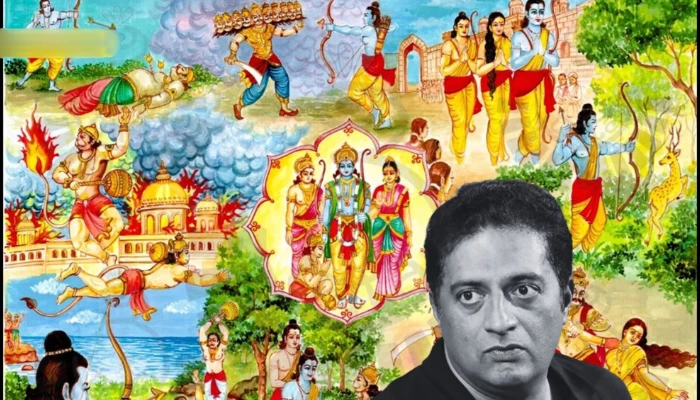
Case Summary
Actor-director Prakash Raj has once again resorted to mocking the Hindu faith. During a public address at the Kerala Literature Festival, the actor denigrated the revered epic, the Ramayan, and mocked the revered Lord Ram by presenting a distorted, insulting retelling of the epic. He also went on to advocate for beef consumption, a significant taboo in Hinduism, primarily because Hindus consider the cow sacred. The remarks triggered widespread outrage after resurfacing online, with many social media users calling them a mockery of a revered epic and accusing the actor of hurting religious sentiments. A formal complaint was filed against him under sections 299, 302, 196, 352, and 353 of the Bharatiya Nyaya Sanhita, along with the IT Act, by Advocate Amita Sachdeva at the South District Cyber Cell of Delhi Police. The speech was delivered in January 2026 as part of a session at the Kerala Literature Festival. Prakash Raj claimed that he was narrating a version of the Ramayan that a children's theatre group had enacted during a creative workshop. In March 2026, video clips from the talk were published on YouTube and began circulating widely on social media, drawing strong reactions. During the speech, actor Prakash Raj mocked Lord Ram and Lakshman to invoke the North-South debate. He called the revered Hindu gods migrant workers from North India who entered a field in South India and ate fruits belonging to Ravan’s land. He further portrayed Ravan as a tribal man from South India and suggested that the dispute later grew into a larger conflict. Raj said that Lord Ram, Lakshman, and Sita were going south. On the way, Lakshman expressed joy upon seeing a forest. To this, Ram said that it was someone's field. Lakshman asked if the fruits growing there could be eaten. Ram replied that they could eat the fruits if they were hungry. He further said that when they started eating the fruits, Surpanakha and Ravana arrived there. Surpanakha objected to this, but Ravana said that they were hungry, let them eat, and they would talk later. He stated, “The children made a play… those kids today, they rewrote Ramayana in the play… all the ants ate one Ramayan, and suddenly Rama, Lakshmana, Sita came.” In his narrative, Lord Ram and Lakshman were shown travelling south. So, they are coming down to the south, and Lakshman says, “Ram, what luck? There is one forest here.” Ram says, “No, it is somebody’s land. It’s somebody’s farm.” “Oh, there are fruits, can we eat?” “Yeah. But is it stealing?” “No, if we are hungry, we can eat.” According to Prakash Raj, after eating the fruits, Ram told Lakshman that some tribals had arrived. To this, Ravan replied that they were the owners. After this, the conversation continued. In another part of the speech, the actor added a reference to GST, which also drew sharp reactions online. Many social media users said the remarks mocked a revered epic and hurt religious sentiments. He said that Ram offered to pay after eating the fruits. To this, Surpanakha calculated and stated $2000, including GST. Ram and Lakshman said they did not have the money. After this, Ravan offered a 20% discount, but they still didn't have the money. To this, Ravan said that if they couldn't pay, they should compensate by working. They were told to plant the seeds of the fruits they had eaten, grow trees, and then return. In the video, Prakash Raj further said that Ravan asked, 'What is your name?' To this, the reply was, 'I am Ram from the North,' and Ravan said, 'I am Ravan from the South, nice to meet you.' The controversy deepened further when another portion of the speech gained traction online. While concluding his remarks, Prakash Raj said, "You guys want to come, don't force your Hindi...learn Malayalam. You have come to work here. Don't become the manager of a bank and ask us not to eat beef. Come, do something, work something, respect our culture, and go". Following the video's circulation, the remarks drew strong criticism on social media, with users objecting to the distorted portrayal of the Ramayan and a disrespect for Hindu beliefs. Several users demanded his removal from the upcoming film Varanasi, in which he is playing Lord Shiva. Some also called for boycotts of his other projects. Advocate Amita Sachdeva filed a criminal complaint against the actor. In her statement, she said, “I have today filed a Criminal Complaint against actor Prakash Raj for deliberately mocking Bhagwan Shri Rama and the sacred Ramayana. "Insults to our Bhagavans and Sanatan Dharma will no longer be tolerated. These people must understand - there are limits,” she wrote. Following this, a criminal case was registered against Prakash Raj in connection with the remarks, and the matter continued to draw public and legal attention.
Why it is Hate Crime ?
This case is added to the tracker under the primary category- Hate speech against Hindus. The subcategory selected is- Anti-Hindu slurs, mocking faith. Anti-Hindu slurs and the deliberate mocking of the Hindu faith owing to religious animosity involve the usage of derogatory terms, stereotypes, or offensive references to religious practices, symbols, or figures. One of the common anti-Hindu slurs used against Hindus is “cow-worshipper” and “cow piss drinker”. The intention of using this term is to demean and mock Hindus as a group and their religious beliefs since Hindus consider the cow holy. Additionally, some symbols and the slurs attached to them have a historical context that exacerbates the insult, hate, stereotyping, dehumanisation and oppression against Hindus. Cow worship has been used for centuries to denigrate Hindus, insult their faith and oppress Hindus specifically as a religious group. There has been overwhelming documentation about how cow slaughter has been used to persecute Hindus, with cow meat being thrown in temples and places of worship. There has also been overwhelming documentation where cow meat (beef) has been force-fed to Hindus to either forcefully convert them to Islam or denigrate their faith. Apart from cow worship, the Swastika – which holds deep religious significance for the Hindus – has also been misinterpreted and distorted to use as a slur against Hindus. Similarly, the worship of the Shivling has been used by supremacist ideologies and religions to denigrate Hindus owing to religious animosity. Such slurs and denigration stem from inherent animosity and hate towards Hindus and their faith; therefore, it is categorised as hate speech targeted at Hindus specifically owing to their religious identity. The other subcategory selected is- Subversion of scriptures. Subverting the religious scriptures of Hindus has particularly devastating consequences. Subversion of the scriptures of Hindus is often done to justify or promote hatred, discrimination, or violence against specific individuals or groups of Hindus. Religious scriptures are often nuanced, and those who harbour religious animosity towards Hindus often misquote or misrepresent the scripture to legitimise their animosity and hate towards the faith and its adherents. Any such misquoting of scriptures or subversion to justify hate, violence and discrimination against Hindus owing to religious animosity is hate speech and is categorised as such. This case qualifies as a religiously motivated hate speech incident because actor Prakash Raj publicly mocked, distorted, and trivialised core elements of Hindu belief, including revered deities and sacred texts, in a manner that denigrated the faith and its followers. The first marker is the deliberate distortion of a sacred Hindu text. During his address at the Kerala Literature Festival, Prakash Raj presented a reimagined version of the Ramayan that altered its core narrative and characters in a manner that stripped them of their religious and cultural significance. The Ramayan is not merely a literary work but a foundational epic that shapes the moral, spiritual, and cultural framework of Hindu society. By converting this sacred narrative into a caricatured retelling, the actor reduced a deeply revered text into an object of ridicule, undermining its sanctity and significance. The second marker is the derogatory portrayal of revered Hindu deities. In his narration, Lord Ram and Lakshman were depicted in a trivialised and distorted manner, including framing them as outsiders entering and consuming resources in another’s land and engaging in exaggerated, satirical exchanges. This is significant because Hindu deities are objects of devotion and worship, not fictional characters open to casual reinterpretation in a mocking tone. Presenting them in such a manner in a public forum constitutes a direct affront to the beliefs of Hindus and diminishes their sacred status. The third marker is the use of satire to trivialise religious beliefs. The inclusion of modern elements such as monetary transactions, GST references, and exaggerated dialogue further reduced the sacred narrative into parody. While satire can be a form of expression, its application to sacred religious subjects in a dismissive and mocking manner contributes to normalising disrespect. In this case, the repeated use of such elements transformed a foundational religious narrative into a vehicle for ridicule rather than meaningful commentary. The fourth marker is the contextual targeting of Hindu cultural practices. In the same speech, Prakash Raj made remarks advocating for beef consumption, despite the well-established reverence of the cow in Hinduism. This is significant because the cow holds deep religious and cultural value in Hindu belief systems. Introducing this theme alongside the mockery of the Ramayan reinforces a pattern where core Hindu sentiments are challenged in a provocative and dismissive manner, amplifying the overall impact of the speech. The fifth marker is the public and influential nature of the platform used. The remarks were delivered at a prominent literary festival and later circulated widely on digital platforms, significantly amplifying their reach. Statements made in such forums carry weight and influence public discourse. By choosing such a platform, the actor ensured that the mockery of Hindu beliefs reached a wide audience, thereby magnifying its impact on public perception. The sixth marker is the pattern of framing that situates Hindu identity in a dismissive light. By invoking themes such as regional identity and linking them with distorted portrayals of Hindu deities, the speech introduced a narrative that positioned core Hindu symbols within a contentious and trivialised framework. This is significant because it reframes religious identity in a way that invites ridicule and diminishes its legitimacy in public discourse. Taken together, these elements demonstrate that the act was not a neutral or creative reinterpretation but a deliberate public expression that mocked, trivialised, and diminished Hindu religious beliefs. The distortion of sacred narratives, the portrayal of deities in a disrespectful manner, and the contextual remarks targeting core practices collectively indicate a pattern of conduct that goes beyond artistic expression. Disparaging or denigrating Lord Ram and the Ramayan is not merely offensive but clearly an affront to the Hindu faith, as it targets figures and texts that are deeply revered across Hindu communities. Lord Ram is not just a cultural symbol but a central deity whose life and actions form the moral and spiritual foundation for millions of Hindus. Therefore, acts or statements that mock or distort his character are nothing but attacks on the broader Hindu religion and its core beliefs. In this case, the deliberate alteration of the epic’s narrative and the trivialisation of its characters indicate that the intent was not creative reinterpretation but to reduce a sacred tradition into an object of ridicule. The intent becomes clearer when such remarks are viewed alongside the speech's broader framing, in which Hindu beliefs and practices were repeatedly presented in a dismissive and provocative manner. By combining the mockery of a sacred epic with statements challenging core Hindu sentiments, the actor did not engage in neutral commentary but constructed a narrative that belittled and delegitimised Hindu traditions. This reflects a deeper hostility towards the faith, in which its central symbols are stripped of reverence and recast in ways meant to provoke and diminish their significance. Such conduct goes beyond casual or isolated remarks. It reflects a conscious choice to publicly portray Hindu beliefs in a derogatory light, thereby normalising disrespect towards the religion and its adherents. The repeated targeting of core elements of the faith indicates a pattern of disregard that cannot be seen as incidental. For these reasons, this incident is being categorised as a religiously motivated hate speech case against Hindus, as it involves the deliberate denigration of sacred figures, texts, and practices in a public and influential setting.


Case Status
Complaint registered


Perpetrators Details
Perpetrators
Others
Perpetrators Range
One Person
Perpetrators Gender
male
 Sources




