Hindu temple's land encroached, devotees threatened and intimidated by man in Gubbi, Karnataka
 Gubbi, Karnataka, India
  11 April, 2026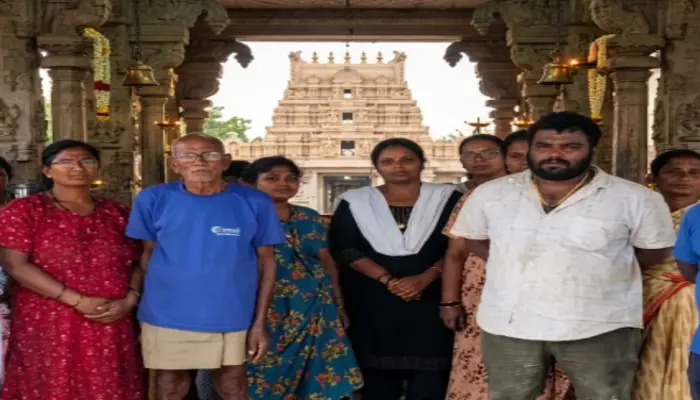
Case Summary
In Belur Hosapalya village under Hindiskere Gram Panchayat of Gubbi taluk, Karnataka, a Hindu temple's land was encroached by a man named Naveen Kumar and his family. According to reports, tensions escalated in the area due ot long-standing dispute over the land surrounding the Sri Renuka Yallammadevi temple, a site of religious importance for local Hindu devotees. The temple was constructed approximately four decades earlier on land collectively donated by villagers, and it continued to serve as a focal point of worship and community activity. The situation deteriorated when a neighbouring resident, Naveen Kumar, along with his family, began asserting ownership over portions of the land associated with the temple and proceeded to occupy and use the space for personal purposes. Members of the family were found to have extended their activities into the temple premises, where they tied cattle and goats, used the surrounding area for parking vehicles, and stored footwear, resulting in the degradation of the temple’s sanctity. When the Hindu villagers opposed the encroachment, they were met with hostility, verbal abuse, and intimidation, creating an atmosphere of fear among those visiting or maintaining the temple. Despite a formal complaint being submitted to the Gram Panchayat, no effective administrative action had been taken to resolve the issue or remove the encroachment. The inaction of local authorities prompted widespread discontent among residents and devotees, culminating in a protest where hundreds gathered near the temple demanding intervention and restoration of the land. The protesters emphasised that the temple land had been dedicated for religious use by the community and called upon officials to conduct a proper site inspection, measure the land boundaries, and return the encroached area to the temple. They further indicated their readiness to escalate the matter to higher district authorities if immediate remedial steps were not undertaken.
Why it is Hate Crime ?
This case has been added to the tracker under the primary category - Attack on Hindu religious representations. Within this, the subcategory selected is - Encroachment or illicit takeover of temple land/land near temple. In Hinduism, a temple is the abode of the Deity. The Deity in the Temple is consecrated, thereby, making it a real, breathing entity. Hindus believe that not just the Deity but the temple premises itself are sacred to Hindus since Hindus hold the faith that the entire Temple space is an amalgamation of the divine energy of the deity. Not only the Temple but the Temple premises in its entirety are considered sacred by Hindus. In several cases, the premises of the Temple and/or religious centre are illicitly taken over by institutions belonging to other faiths – like the Waqf board or the Church. Other times, the temple property, land or the property of religious centres are illicitly encroached by non-Hindu groups. Any illicit take over or encroachment is a crime an initio, however, when non-Hindu groups illicitly take over or encroach the sacred land of Hindus, it is an affront to the Hindu community and is therefore classified as a religiously motivated hate crime under this category. The other sub-category selected is - Defiling religious customs. Sanatan Dharma is not a religion of one book, which is to say that while it has religious scriptures that form the central tenets of the faith, there are several traditions followed through thousands of years, mostly passed from generation to generation orally. There are several such customs and traditions that are followed by various Hindus and Hindu sects. Defiling of these traditions and customs is a breach of an individual or group’s religious practices. Such practices can range from dietary restrictions like not eating non-vegetarian food for a certain period of the year, not eating non-vegetarian food at all, not eating beef since the cow is considered holy in Hinduism, the sanctity of religious customs followed in the house (like many ISCKON devotees), etc. Any malicious action leading to the breach of such traditions or defilement of these traditions owing to animosity towards the faith or for the sake of activism stems not only from the lack of faith in the religion itself but also from disregard for the faith of the devotees who follow the customs/traditions and implicit bias against the faith, the tradition itself. Since these specific traditions are central to the faith of the devotees of that specific sect of Hindus, any non-compliance with these traditional rules would be considered a religiously motivated hate crime. This case has been added to the tracker as it involved the encroachment and misuse of land belonging to the Sri Renuka Yallammadevi temple in Belur Hosapalya village in Gubbi taluk, Karnataka, thereby constituting a direct violation of a Hindu religious site and its associated sacred space. The temple had been built on land collectively donated by Hindu villagers several decades earlier and continued to function as an active place of worship. The subsequent occupation and use of this land for non-religious and degrading purposes amounted to an intrusion into a consecrated space central to the religious life of the local Hindu community. For Hindus, temples are not merely physical structures but sacred spaces believed to house the living presence of the deity. The sanctity of a temple extends beyond the inner sanctum to include the surrounding premises and land, all of which are treated as holy and integral to ritual practice. Any unauthorised occupation or misuse of such land is seen as a violation of religious boundaries and an affront to the faith. In this instance, the temple premises were not only encroached upon but were also used for activities such as tying cattle and goats, parking vehicles, and storing footwear, all of which are incompatible with the purity required for Hindu worship. Such actions resulted in the degradation of the temple environment and disrupted the sanctity necessary for religious observance. When the devotees resisted the encroachment, they were met with hostility and intimidation by the perpetrators. This conduct reflected clear religious animosity, as the actions were not limited to unlawful occupation but extended to suppressing any opposition from the Hindu community. By resorting to threats and aggressive behaviour, the perpetrators fostered an atmosphere of fear, which discouraged devotees from asserting their rights over the temple land. This deliberate intimidation enabled them to continue occupying and misusing the temple premises while undermining the ability of the community to protect and preserve their place of worship. Given these factors, the incident met the criteria for inclusion as a hate crime in the tracker, as it involved the encroachment upon and desecration of a Hindu place of worship, disruption of religious practices, and intimidation of devotees, thereby constituting a targeted affront to the Hindu community and its faith. Disclaimer: The Hinduphobia Tracker records incidents based on when an event occurred or when the victim's ordeal began. It is important to clarify that none of the media sources covering this case has specified the exact date when the temple encroachment began. Therefore, for documentation purposes, we have recorded the date based on when the incident was reported in the media, 11 April 2026.


Case Status
Complaint filed


Perpetrators Details
Perpetrators
Others
Perpetrators Range
One Person
Perpetrators Gender
male
 Sources




