Anti-Hindu hate speech: Ambedkarite man threatens to kill Brahmin community on social media
 Bihar, India
  8 April, 2026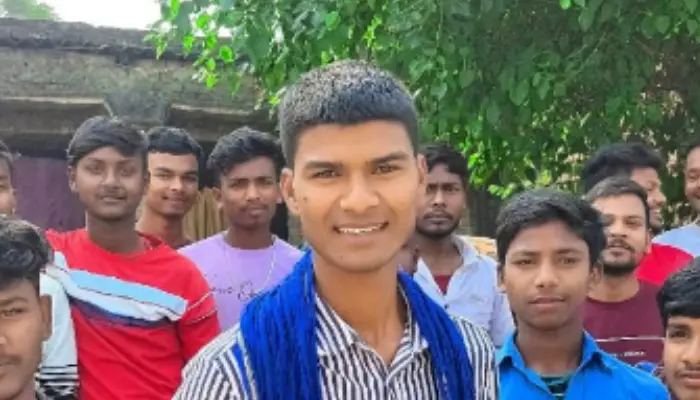
Case Summary
An anti-Hindu video was posted on social media by an Ambedkarite influencer named Bablu Kumar Teja, a resident of Bihar. In his video, the accused threatened to kill all Brahmins by claiming they had oppressed Dalits for thousands of years. This incident came to light when the accused's derogatory video went viral on social media. This video was posted on 9 April 2026 on Instagram. In this video, Bablu was heard saying, "Our ancestors (Dalits) were troubled by Brahmins, so we are going to 'finish' them all." After saying this, Bablu and his group of Ambedkarite accomplices were seen chanting "Jai Bhim", an Ambedkarite slogan. Notably, at the time of writing this report, the accused has more than 9000 followers on Instagram, and his video threatening to murder all Brahmins crossed 21 thousand likes. As the accused's video went viral on several social media handles, it created outrage in the Hindu community. Many Hindu users began tagging the Bihar police and requesting them to arrest the accused for issuing such violent death threats against the Brahmin community.
Why it is Hate Crime ?
The primary category selected in this case is- Hate Speech against Hindus. The subcategory selected is- Violent threats. Violent threats, explicit, implicit or implied, is the most dangerous form of hate speech since it goes beyond discriminatory and prejudicial language to express the intent of causing harm to an individual or a group of people based on their religious identity and faith. There could be several different kinds of threats that are issued to Hindus based on religious animosity. An explicit threat would mean the direct threat of violence towards an individual Hindu, a group of Hindus or Hindus at large. Physical violence, death threats, threats of destruction of property belonging to Hindus and threats of genocide would mean explicit threats against Hindus for their religious identity. Implicit threats may not be a direct threat but implied through the use of symbols of actions – for example – in the Nupur Sharma case, other than explicit threats, there were also implicit threats when Islamists took to the streets to burn and beat her effigies. It implies that they want to do the same to Nupur Sharma – thereby is considered an implicit threat. Violent threats can be delivered in person, through letters, phone calls, graffiti, or increasingly through social media and other online platforms. It would be important to understand that a threat – explicit or implicit, online or offline – to an individual who happens to be a Hindu does not qualify as a religiously motivated threat. Such a threat, while vile and dangerous, could be owing to non-religious reasons and/or personal animosity. To qualify as a religiously motivated threat, it would need to exhibit an indication that the individual is being targeted for religious reasons and/or owing to his/her religious identity as a Hindu. This case represents a clear instance of religiously motivated hate speech and a violent threat issued to the entire Brahmin community, showcasing deep-seated anti-Hindu animosity. The Ambedkarite perpetrator harboured profound religious animosity towards the entire Hindu community, which translated into his explicit hate for Brahmins. He declared that he would kill all Brahmins, framing this threat as retribution for supposed historical oppression of Dalits. Some might argue that this incident targeted only Brahmins and thus was not anti-Hindu. However, anti-Hindu forces such as Ambedkarites, Leftists, and Islamists often target Hindus through buzzwords and euphemisms rather than directly naming "Hindus". They employ terms like "Brahminical patriarchy", "Hindutva", "Brahminism" or "fighting casteism" to make their religious bigotry appear sophisticated and just. In this case, the denigrating and making violent remarks against Brahmins were inherently motivated by religious animosity. Brahmins serve as custodians of Hindu religious scriptures, maintain temple traditions, carry the Hindu faith on their shoulders, and guide the broader Hindu community. Calling for their annihilation is therefore essentially anti-Hindu in nature. The accused issued this violent threat under the false pretext that Brahmins oppressed Dalits. This upper-caste versus lower-caste narrative serves as rhetoric to justify killings of Hindus, particularly Brahmins, all due to anti-Hindu animosity disguised as "fighting casteism". Fake rhetoric perpetuating the idea that "upper caste" Hindus tyrannise disadvantaged sections of Hindu society is anti-Hindu by design, as it spreads disinformation to discredit the Hindu faith by branding it oppressive. Such acts discredit Sanatan Dharma itself as discriminatory and suited only for "upper castes". Such narratives delegitimise the faith, dehumanise followers, and incite violence against specific Hindu sections while pressuring others to abandon their beliefs. Since they attack the faith's core, Brahmins, to alienate Hindus, they constitute hate crimes against Hindus and their professed religion. Considering the accused's Ambedkarite identity and his chanting of "Jai Bhim" slogans, this further underscores his anti-Hindu animosity. Ambedkarism as a political movement frequently expresses disdain for Hinduism, targets the Hindu community, abuses Hindu gods, desecrates temples, and issues violent threats under the guise of opposing 'Hindutva', a Hindu political and civilisation movement, and Brahminism, all framed as fighting casteism. Numerous instances show Ambedkarites calling for violence against Brahmins and "upper-caste Hindus", signalling that any Hindu could be a target. This demonstrates that their ideology is less about uplifting the Dalit community and more about expressing hostility towards Hindus and their faith. Such incidents are not isolated, but form part of a deliberate pattern of attacks on Hindus, motivated by deep-seated intolerance towards the Hindu community. Given that this case meets several parameters of an anti-Hindu hate crime, it is added to the hate crime database of the Hinduphobia Tracker.


Case Status
Unknown


Perpetrators Details
Perpetrators
Others
Perpetrators Range
One Person
Perpetrators Gender
male
 Sources




