Hindu religious identity misused by Muslim men posing as sadhus for alms in Muzaffarnagar
 Muzaffarnagar, Uttar Pradesh, India
  4 February, 2026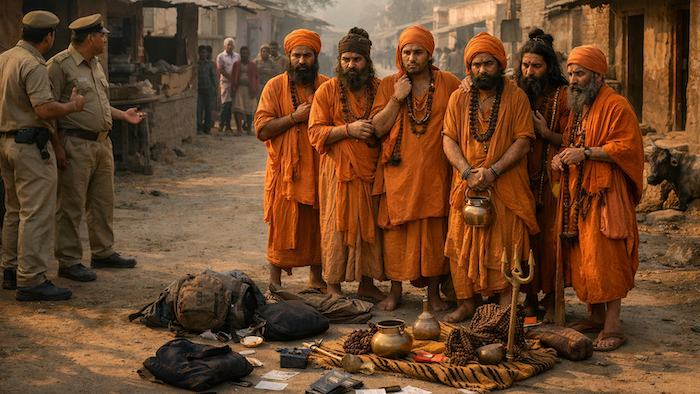
Case Summary
Hindu devotees in Muzaffarnagar district, Uttar Pradesh, were deceived by six individuals who posed as sadhus (Hindu ascetics) and sought alms under false religious identities. The incident took place in the Kakrauli area, where the perpetrators disguised themselves in Hindu religious attire and symbols to interact with the local Hindu community. The sequence of events unfolded in the Kakrauli area of Muzaffarnagar district. Six Muslim men identified as Shakeel, Shaukeen also referred to as Shoaib, Iqbal, Sajeel also referred to as Sajil, Ayub, and Hanif also referred to as Haneesh were found operating while posing as Hindu sadhus. They adopted the appearance and presentation of Hindu ascetics in order to approach people and seek alms. The perpetrators used religious disguise to move within the locality and interact with Hindu residents. During this period, they presented themselves as sadhus and engaged in begging activities. They carried religious items associated with Hindu ascetics to support their assumed identities. Upon intervention by the police, the individuals were apprehended in the Kakrauli area. During the search and subsequent inquiry, fake Aadhaar cards were recovered from the perpetrators. These documents indicated falsified identities used alongside their assumed religious personas. The recovered materials also included religious items that were used to maintain the appearance of Hindu sadhus. The use of false identification documents and religious disguise formed part of their activities in the area. Following their apprehension, a case was registered against all six perpetrators under relevant sections of the Indian Penal Code. The arrests were confirmed by Senior Superintendent of Police Sanjay Kumar on February 5th 2026. The police recovered fake Aadhaar cards and other materials during the operation. The investigation into the matter was ongoing at the time, with authorities examining the extent of the activities and the use of forged documents.
Why it is Hate Crime ?
This case has been added to the tracker under the primary category - Attack on religious representations. Within this, the subcategory selected is - Desecration on Hindu religious symbols. The religious symbol being desecrated in this case is the saffron robe worn by Sadhus, which signifies detachment and enlightenment. The colour saffron holds great significance in Hinduism. Sadhus wear the colour saffron because it signifies sacrifice, detachment and enlightenment. Saffron also signifies 'Agni' (fire) - one of the 4 principal deities. In the Rigveda, Agni, or fire, is called a priest of sacrifice and treasurer of knowledge, which is why saffron is the colour worn by Sadhus and Priests in Hinduism. In this case, the Muslim perpetrators wore the colour saffron and pretended to be Hindu sadhus in order to deceive Hindus, manipulate their piety and earn money. When offered Gangajal, they refused to consume it, proving that they were observant followers of Islam and held no piety and faith towards Hinduism. In that manner, by donning attire which holds great spiritual and religious significance for Hindus, the Muslim perpetrators desecrated the sanctity of the attire worn by Hindu monks. For that reason, this case is being added to the hate crime database. Disclaimer: The exact date of when the incident began is not specified in the available sources. The tracker records incident dates based on when the crime occurred rather than when it was reported. In this case, the arrest date and article publication date, 5th February 2026, have been used as the indicative incident date. This has been recorded for documentation purposes only.


Case Status
Arrested


Perpetrators Details
Perpetrators
Muslim Extremists
Perpetrators Range
From 5 to 10
Perpetrators Gender
male
 Sources




