Hindu sentiments outraged as leftist Muslim journalist made derogatory remarks against Hindu deity on social media
 Delhi, India
  12 March, 2013
Case Summary
Hindu sentiments were insulted by leftist Muslim journalist Rana Ayyub, who made derogatory remarks against the revered Hindu deity, Lord Ram. The complaint detailed a series of social media posts made between 2013 and 2017, which were insulting to Hindu religious figures and traditions, as well as derogatory towards national institutions. In one of her tweets on X (formerly Twitter) posted on 13 March 2013, she said that "Ahem@SitaOrMargarita: Ravana didn't touch Sita even though he could. Ram didn't stand for Sita even though he should have. Ravana 1 Ram 0." Advocate Sachdeva said that this post demeaned Bhagwan Ram, glorified Ravana, and insulted the core beliefs of Hindus. Due to the anti-Hindu nature of the tweets, an FIR was registered against Rana Ayyub by the Cyber Police Station South in New Delhi on 27 January 2025, following directions issued by a sessions court at Saket Courts. The FIR was filed on the basis of a complaint submitted by Advocate Amita Sachdeva, invoking Sections 153A, 295A, and 505 of the Indian Penal Code, which pertain to promoting enmity between groups, deliberate acts intended to outrage religious feelings, and statements conducing to public mischief. The court, presided over by Chief Judicial Magistrate Himanshu Raman Singh, observed that the material placed before it disclosed prima facie cognisable offences and warranted police investigation. The complainant stated that earlier attempts to initiate action through the National Cyber Crime Reporting Portal in November 2024 and subsequent follow-ups with the police had not resulted in progress, prompting recourse to judicial intervention. Upon reviewing the submissions, the court held that the nature of the allegations required involvement of state machinery, noting that the complainant would not be in a position to independently gather the necessary evidence. The court directed the Station House Officer of the Cyber Police Station South to register an FIR and conduct a fair and expeditious investigation. Following these directions, the FIR was formally lodged, and the matter was scheduled for further hearing on 28 January 2025.
Case Images
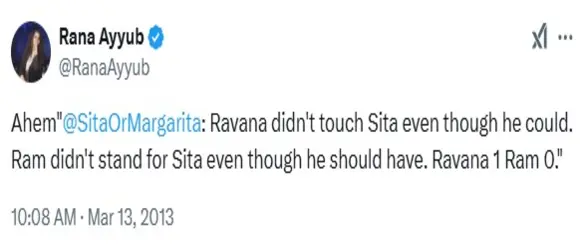
Why it is Hate Crime ?
This case has been added to the tracker under the primary category of - Hate speech against Hindus. Within it, the sub-category selected is - Anti-Hindu slurs, mocking faith. Anti-Hindu slurs and the deliberate mocking of the Hindu faith owing to religious animosity involve the usage of derogatory terms, stereotypes, or offensive references to religious practices, symbols, or figures. One of the common anti-Hindu slurs used against Hindus is “cow-worshipper” and “cow piss drinker”. The intention of using this term is to demean and mock Hindus as a group and their religious beliefs since Hindus consider the cow holy. Additionally, some symbols and the slurs attached to them have a historical context that exacerbates the insult, hate, stereotyping, dehumanisation and oppression against Hindus. Cow worship has been used for centuries to denigrate Hindus, insult their faith and oppress Hindus specifically as a religious group. There has been overwhelming documentation about how cow slaughter has been used to persecute Hindus with cow meat being thrown in temples and places of worship. There has also been overwhelming documentation where cow meat (beef) has been force-fed to Hindus to either forcefully convert them to Islam or denigrate their faith. Apart from cow worship, the Swastika – which holds deep religious significance for the Hindus – has also been misinterpreted and distorted to use as a slur against Hindus. Similarly, the worship of the Shivling has been used by supremacist ideologies and religions to denigrate Hindus owing to religious animosity. Such slurs and denigration stem out of inherent animosity and hate towards Hindus and their faith, therefore, it is categorised as hate speech targeted at Hindus specifically owing to their religious identity. The other sub-category selected is - Subversion of scriptures. Subverting the religious scriptures of Hindus has particularly devastating consequences. Subversion of the scriptures of Hindus is often done to justify or promote hatred, discrimination, or violence against specific individuals or groups of Hindus. Religious scriptures are often nuanced and those who harbour religious animosity towards Hindus often misquote or misrepresent the scripture to legitimise their animosity and hate towards the faith and its adherents. Any such misquoting of scriptures or subversion to justify hate, violence and discrimination against Hindus owing to religious animosity is hate speech and is categorised as such. This case has been added to the tracker because Hindu sentiments were insulted and disrespected after a leftist Muslim journalist, Rana Ayyub, published a series of social media posts between 2013 and 2017 that insulted Hindu religious figures and beliefs, promoted hostility, and contributed to religious disharmony. Lord Ram holds a central place in the Hindu faith as one of the most revered deities, regarded as the seventh avatar of Lord Vishnu and the embodiment of dharma, righteousness, and ideal conduct for millions of devotees. For Hindus, reverence towards Lord Ram was not optional but fundamental to their spiritual life, and any attempt to mock or denigrate him amounted to a direct affront to Hindu sentiments and the Hindu faith, making it a clear case of religiously motivated hate speech. In the tweet, Rana Ayyub not only presented a reductive and dismissive portrayal of sacred narratives from the Ramayana but also directly demeaned and disrespected revered Hindu deities such as Ram. By framing a sacred narrative in the form of a comparative “scoreline” between Ram and Ravana, the statement reduced deeply significant theological and moral episodes into a trivialised and mocking format. This portrayal did not merely reinterpret scripture but explicitly lowered the stature of a central Hindu deity, thereby intensifying the offensive nature of the content. Such expression went beyond critique and entered the realm of derision, as it treated core elements of a living religious tradition as objects of ridicule. The claim that Ravana “didn’t touch Sita even though he could” referenced the episode of Sita’s abduction and captivity in Lanka. Within the Ramayana, Ravana’s failure to violate Sita is not portrayed as an act of moral virtue or restraint arising from righteousness. Traditional interpretations emphasise that Ravana was bound by constraints, including curses and divine protections, which prevented him from forcibly violating her. In several retellings, it is held that any such act would have resulted in his destruction. Therefore, presenting this episode as evidence of Ravana’s moral superiority constitutes a distortion of the narrative, as it selectively reframes a constrained circumstance into a claim of ethical conduct, thereby inverting the moral framework of the text. By elevating Ravana in contrast to Sita’s plight, the statement further trivialised a deeply sacred episode, insulting and mocking a revered Hindu deity. The assertion that Ram “didn’t stand for Sita even though he should have” similarly reflects a misrepresentation of the narrative and its theological context. Within the Ramayana tradition, Ram’s actions are understood in relation to his role as a ruler upholding dharma, where personal relationships are often subordinated to duties towards society and moral order. Episodes such as Sita’s trial by fire and later exile are interpreted within a broader framework of Rajdharma (duty of a king), rather than as personal neglect or failure. By presenting this complex and debated theological issue in a simplistic and accusatory manner, the statement stripped it of its context and reduced it to a form that could be interpreted as disparaging a central deity of Hinduism. This framing directly questioned the moral character of Lord Ram in a dismissive manner, thereby reinforcing the element of insult directed at a revered deity. Therefore, these elements reflected a pattern of subversion and selective reinterpretation of sacred narratives. However, the issue extended beyond mere subversion, as the narrative distortion was coupled with explicit denigration of Hindu deities themselves. By isolating specific incidents, removing them from their theological and cultural context, and reframing them in a manner that inverted their meaning, the statement functioned as a deliberate misrepresentation of scripture. This mode of expression did not engage with the tradition in a scholarly or interpretative manner but instead recast it in a way that was belittling and dismissive of core beliefs. Such subversion amplified its impact, as it transformed revered narratives into tools for mockery. The combination of misrepresentation and direct insult amplified its impact, transforming revered religious figures and narratives into subjects of ridicule. In conclusion, the case was categorised as a hate speech incident because the content involved a depiction of sacred figures and narratives in a manner that was derogatory, misleading, and dismissive of their religious significance. By distorting key elements of the Ramayana and presenting them in a trivialised format, the statements contributed to a narrative that undermined the sanctity of Hindu beliefs. The cumulative effect of misrepresentation, tone, and framing placed the content within the ambit of speech that could be seen as targeting a religious community and offending its deeply held sentiments.


Case Status
Complaint registered


Perpetrators Details
Perpetrators
Muslim Extremists
Perpetrators Range
One Person
Perpetrators Gender
male
 Sources




