Mentally impaired Hindu man lured, confined and coerced into conversion by Muslim preacher amidst anti-Hindu persecution in Bangladesh
 Netrokona District, Bangladesh
  28 March, 2026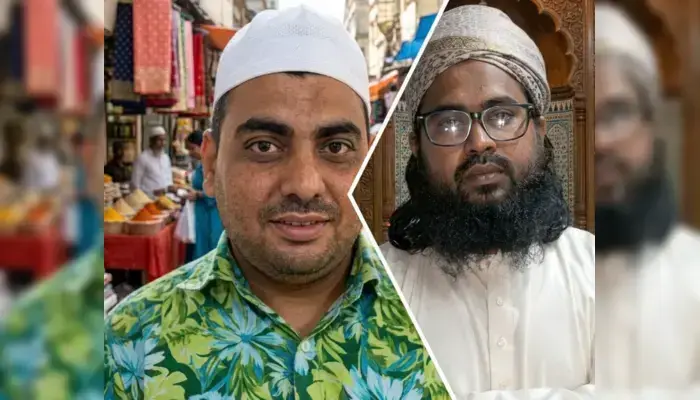
Case Summary
In the Nagra Shivbari village of Netrakona district, Bangladesh, a 24-year-old Hindu man named Pritam Thakur, who had speech and cognitive impairments, was lured, held captive and coerced into conversion by a Muslim preacher, Wasik Billah Nomani. According to the victim's family, on 29 March 2026, Pritam left his home and was later found at a religious centre in Narayan Dohor village under Purbadhala Upazila. There, he was converted to Islam under the supervision of preacher Wasik Billah Nomani and was renamed and given a Muslim name, Mohammad Yusuf. While the conversion was presented as voluntary, Pritam’s family stated that he had been lured away, confined, and coerced into conversion. They emphasised that his physical and cognitive limitations made it unlikely that he could have exercised informed and independent judgement in matters of such significance, including religious conversion. They also revealed that Pritam was mentally and physically impaired, and thus, filed a complaint at the Purbadhala Police Station. Nomani rejected the victim's family statements, claiming that the conversion took place with full consent. Nomani also claimed that Pritam had given a statement before a local executive magistrate affirming his decision. Law enforcement authorities took Pritam into custody and indicated that he would be produced before a Netrakona court, with further proceedings dependent on judicial direction. Members of the local Hindu community expressed concerns that the incident reflected a broader pattern in which socially and physically vulnerable individuals from minority communities faced heightened risks of exploitation. Calls were made for an impartial investigation and accountability in the event of wrongdoing. Human rights advocate Sumon Kumar Roy underscored that religious conversion must be grounded in free and informed consent, warning that ambiguity in such cases risked blurring the line between personal belief and coercion. A fresh wave of anti-Hindu violence followed the 13th National Parliamentary Election 2026 in Bangladesh, reinforcing a recurring pattern of post-poll violence targeting Hindu minorities. Within days of the announcement of results, Hindu families in districts such as Noakhali, Rangpur, Nilphamari, Sylhet, Thakurgaon, and Dinajpur reported coordinated attacks involving arson, looting, assault, and vandalism of temples and homes. In several instances, Hindu homes were selectively targeted, looted, and families were threatened with displacement. This escalation of violence against Hindus in Bangladesh unfolded in three distinct phases: first, following the ouster of Sheikh Hasina’s government in August 2024; second, after the death of Sharif Osman Bin Hadi in December 2025; and third, in the immediate aftermath of the 13th National Parliamentary Election 2026. This electoral violence unfolded against the broader backdrop of sustained anti-Hindu hostility that had persisted since the ouster of the Sheikh Hasina government in August 2024. During that period, multiple reports documented attacks on Hindu homes, temples, and religious institutions, alongside intimidation campaigns, arson, and mob assaults targeting minority neighbourhoods. The Hinduphobia tracker has recorded 336 such incidents against the Hindu minority, underscoring the scale and persistence of anti-Hindu violence during this period. A further escalation occurred following the death of Sharif Osman Bin Hadi, a Muslim political activist and student leader known for his anti-Hindu and anti-India rhetoric. Hadi had been involved in political unrest after the fall of the Hasina government and was killed in Dhaka on 18 December 2025 during clashes. In the aftermath of his death, Hindu communities were blamed and subsequently targeted in retaliatory violence. Hindu homes were selectively set ablaze in multiple localities, forcing families to flee and leaving many displaced. The attacks appeared patterned rather than sporadic, with Muslim mobs focusing on Hindu neighbourhoods, properties, and religious symbols. Among the victims was Dipu Chandra Das, who was lynched to death and his body was set ablaze by a Muslim mob over false blasphemy allegations. The Hinduphobia tracker documented 51 incidents of anti-Hindu violence in the period following Hadi’s death alone. Such incidents underscore the vulnerability of the Hindu minority amid rising communal hostility and the weaponisation of religious accusations. Reports further indicated that posters and written materials calling for the extermination of Hindus were displayed in public spaces, signalling an alarming normalisation of genocidal rhetoric. When combined with acts of arson, vandalism, assault, and targeted intimidation, these developments suggest a coordinated environment of hostility aimed at terrorising the Hindu community and reinforcing majoritarian dominance.
Why it is Hate Crime ?
This case has been added to the tracker under the primary category- Predatory Proselytisation. Within this, the subcategory selected is- Proselytisation by grooming, brainwashing, manipulation or subtle indoctrination, with the tertiary category being - Family claims grooming. Religious brainwashing essentially means the often subtle and forcible indoctrination to induce someone to give up their religious beliefs to accept contrasting regimented ideas. Religious grooming or brainwashing also involves propaganda and manipulation. It involves the systematic effort, driven by religious malice and indoctrination, to persuade “non-believers’ to accept allegiance, command, or doctrine to and of a contrasting faith. Cases of such grooming or brainwashing are far more nuanced than direct threats, coercion, inducement and violence. In such cases, it is often seen that there is repeated, subtle and continual manipulation of the victim to induce disaffection towards their own faith and acceptance of the contrasting faith of the perpetrator. While subtle indoctrination is widely acknowledged as predatory, an element which is often understated in such conversions or the attempts of such conversion is the role of loyalty and trust which might develop between the perpetrator and the victim. Fiduciary relationships are often abused to affect such religious conversion. For example, an educator transmitting religious doctrine of a competing faith to a Hindu student. The Hindu student is likely to accept what the teacher is transmitting owing to existence of the fiduciary relationship. The exploitation of the fiduciary relationship to religiously indoctrinate victims would also be included in this category. Since the underlying animosity towards the victim’s faith forms the basis of predatory proselytization, such cases are considered religiously motivated hate crimes. This case has been added to the tracker because a Hindu man named Pritam Thakur, who had speech and cognitive impairments, was lured, held captive and coerced into conversion by a Muslim preacher, Wasik Billah Nomani. Firstly, it is important to note here that the Hinduphobia Tracker generally adds such cases involving religious conversion of adults in the Undecided Database of the tracker, recognising that adults are legally entitled to choose their faith, including conversion to other religions. However, this principle is contingent upon the presence of free, informed, and unimpaired consent. In the present case, that foundational condition was called into question due to the fact that the victim had mental and physical impairments. The victim’s family stated that he lacked the capacity to make an independent and informed decision due to his disability, thereby demonstrating that the conversion was not an exercise of free will but was a result of deception, coercion, or undue influence. Secondly, the broader context of anti-Hindu persecution in Bangladesh remains relevant for classification. This was not an isolated incident; Bangladesh had a documented pattern of religiously motivated violence and forced conversion against Hindus across the country, which formed the essential context for understanding the religious dimension of the incident. Within such an environment, cases involving vulnerable individuals from minority communities cannot be assessed in isolation. The combination of being a Hindu minority within the context of Bangladesh and cognitive impairment demonstrates susceptibility to undue influence, manipulation, or coercion for the conversion process. Therefore, the circumstances surrounding Pritam’s movement from his home to a religious centre, the involvement of the Muslim preacher who had overseen numerous conversions, and the subsequent change of identity raised serious concerns about the conditions under which the conversion took place. Furthermore, the victim’s family explicitly stated that he was lured, confined, and coerced for conversion, reinforcing the fact that this was not a voluntary act, but one rooted in religious animosity. In such cases, pressuring a Hindu individual to discard his religious faith and embrace another was not a matter of personal choice but a direct infringement on his religious identity and dignity. Where consent itself is compromised, the act of conversion ceases to be a personal decision and instead becomes an act of coercion. Such an attempt reflects religious animosity because the act was not simply about personal differences but about erasing the victim’s Hindu faith, making it a religiously motivated crime. Given these factors, the case was not treated as a routine instance of adult religious conversion. Instead, it was categorised within the hate crime database on the grounds of the victim’s impaired capacity, minority religious identity, and the broader pattern of targeting vulnerable Hindus. In such contexts, the threshold for establishing coercion must be evaluated with greater sensitivity, as the absence of overt physical force does not preclude the presence of manipulation or undue influence. Additionally, for the purpose of documenting the 2024 to 2026 ethnic cleansing of Hindus in Bangladesh and the subsequent persecution after the 13th National Parliamentary Election 2026 and the death of Sharif Osman Hadi, the Hinduphobia Tracker records such incidents as likely religiously motivated at the point of entry. If any case is later established through credible investigation or court findings to stem from motivations other than religious hostility, it will be revised or removed from the hate crime database. Accordingly, given the convergence of vulnerability, questionable consent, and the broader pattern of anti-Hindu targeting, this incident meets the criteria for inclusion in the tracker as part of the continuing pattern of religiously motivated targeting of vulnerable Hindu minorities.
Victim Details
Total Victim
1
Deceased
0
Gender
- Male 1
- Female 0
- Third Gender 0
- Unknown 0
Caste
- SC/ST 0
- OBC 0
- General 0
- Unknown 1
Age Group
- Minor 0
- Adult 1
- Senior Citizen 0
- Unknown 0


Case Status
Complaint filed


Perpetrators Details
Perpetrators
Muslim Extremists
Perpetrators Range
One Person
Perpetrators Gender
male
 Sources




