Insult to Hindu religious sentiments; Derogatory comments made against Hindu deities by man on social media
 Hardoi, Uttar Pradesh, India
  2 April, 2026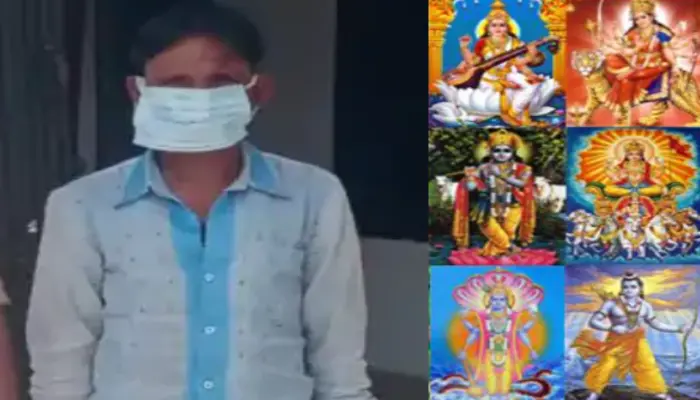
Case Summary
In the Pakariya Usar Majra Lonhara of Hardoi, Uttar Pradesh, Hindu sentiments were insulted after a man named Rajkumar posted offensive and derogatory content targeting Hindu deities. Police acted swiftly upon becoming aware of the posts, registered a case, and arrested the accused. According to reports, the accused, Rajkumar, son of Gurubaksh, posted offensive and objectionable content directed at Hindu gods and goddesses on his social media account. The posts were made to deliberately hurt the religious sentiments of the Hindu community. Police took immediate cognisance of the matter given its gravity. A case was registered against Rajkumar under case number 104/26, Section 353(2) of the Bharatiya Nyaya Sanhita, which pertains to deliberate acts intended to outrage religious feelings. Sub-inspector Ramchandra Sharma and constable Banty Kumar carried out the arrest near Rajkumar's residence. Police stated that strict legal action was being taken against those attempting to disturb religious harmony. All further required legal proceedings in the matter were being completed.
Why it is Hate Crime ?
The primary category for this case is "Hate speech against Hindus". The sub-category for this case is "Anti-Hindu slurs, mocking faith". Anti-Hindu slurs and the deliberate mocking of the Hindu faith owing to religious animosity involve the usage of derogatory terms, stereotypes, or offensive references to religious practices, symbols, or figures. One of the common anti-Hindu slurs used against Hindus is “cow-worshipper” and “cow piss drinker”. The intention of using this term is to demean and mock Hindus as a group and their religious beliefs since Hindus consider the cow holy. Additionally, some symbols and the slurs attached to them have a historical context that exacerbates the insult, hate, stereotyping, dehumanisation and oppression against Hindus. Cow worship has been used for centuries to denigrate Hindus, insult their faith and oppress Hindus specifically as a religious group. There has been overwhelming documentation about how cow slaughter has been used to persecute Hindus with cow meat being thrown in temples and places of worship. There has also been overwhelming documentation where cow meat (beef) has been force-fed to Hindus to either forcefully convert them to Islam or denigrate their faith. Apart from cow worship, the Swastika – which holds deep religious significance for the Hindus – has also been misinterpreted and distorted to use as a slur against Hindus. Similarly, the worship of the Shivling has been used by supremacist ideologies and religions to denigrate Hindus owing to religious animosity. Such slurs and denigration stem out of inherent animosity and hate towards Hindus and their faith, therefore, it is categorised as hate speech targeted at Hindus specifically owing to their religious identity. This case qualifies as a religiously motivated hate speech incident in which a young man in the Kachhauna police station area of Uttar Pradesh deliberately published offensive and derogatory content targeting Hindu gods and goddesses on his social media account. The act was not a private expression of personal opinion. It was a deliberate public broadcast of contempt for Hindu religious belief, published on a platform designed to reach the widest possible audience. Hindu deities occupy a central and sacred position within Hinduism, embodying deeply held spiritual, cultural, and theological values that guide the lives of devotees through worship, rituals, and festivals. Thus, any derogatory comments directed at these revered figures transcended mere offence and amounted to a direct attack on the religious identity and emotional fabric of the Hindu community, causing widespread hurt and outrage. The use of social media as the medium of dissemination further amplified the severity and impact of the offence. By making the content viral, the accused ensured that the derogatory material reached a wide audience, thereby magnifying its potential to inflame sentiments and create communal tension. Social media platforms, in this context, functioned as force multipliers, enabling the rapid spread of offensive content and exposing a large number of individuals to material designed to insult their faith. This deliberate public broadcasting indicated an intention to provoke, humiliate, and cause psychological distress to Hindus on a broader scale. In recent times, social media has increasingly become a platform for anti-Hindu hate, with derogatory memes, videos, and messages targeting Hindu religious symbols, practices, and deities. Such content is recognised as part of a broader pattern of Hinduphobia and religious hate crimes online. This deliberate targeting of revered religious icons firmly establishes this act as a religiously motivated hate crime; therefore, it is being categorised under the hate crime database. Disclaimer: The HinduPhobia Tracker records incident dates based on when the crime occurred rather than when it was reported or published. The source does not specify the exact date on which the offensive social media posts were published. Therefore, the date of the incident has been selected as the date on which the case was reported in the media, 3 April 2026.


Case Status
Arrested


Perpetrators Details
Perpetrators
Others
Perpetrators Range
One Person
Perpetrators Gender
male
 Sources




