Hindu religious sentiments outraged after man made derogatory remarks against Lord Hanuman in Mainpuri, Uttar Pradesh
 Mainpuri, Uttar Pradesh, India
  2 April, 2026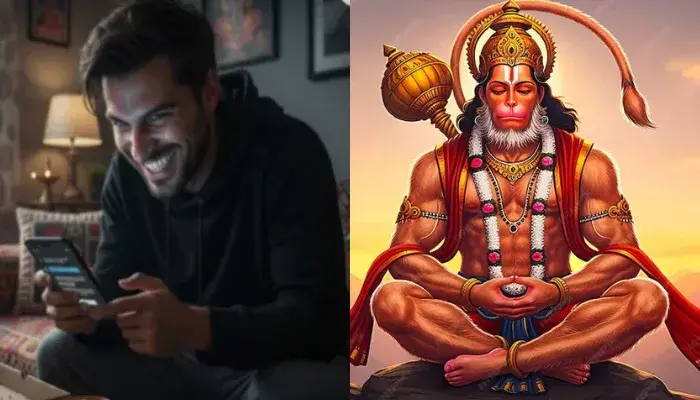
Case Summary
In the Elao area of Mainpuri district, Uttar Pradesh, Hindu religious sentiments were outraged after a man made offensive and derogatory remarks against Lord Hanuman, a Hindu deity. According to reports, the accused was seen in the video using derogatory words against Lord Hanuman, one of the most widely and deeply revered deities in the Hindu tradition. The 27-second video was filmed outside a grocery store near a liquor store on the Kishani-Mainpuri Road. The remarks triggered widespread outrage among Hindu and Brahmin communities in the area, with residents demanding immediate action and warning of protests if the perpetrator was not arrested swiftly. The video spread rapidly across social media platforms, drawing sharp reactions from a large number of people. Local residents stated that such acts deliberately generate tension and animosity within society. Several individuals and community members warned that if prompt action was not taken against the perpetrator, a formal agitation would be launched. Demands for strict action against the accused intensified steadily on social media. Elao police station in-charge Avneesh Tyagi confirmed that the matter had been taken into cognisance. He assured the public that the accused would be arrested shortly and sent to jail.
Why it is Hate Crime ?
The primary category of this case is "Hate speech against Hindus". The sub-category for this case is "Anti-Hindu slurs, mocking faith". Anti-Hindu slurs and the deliberate mocking of the Hindu faith owing to religious animosity involve the usage of derogatory terms, stereotypes, or offensive references to religious practices, symbols, or figures. One of the common anti-Hindu slurs used against Hindus is “cow-worshipper” and “cow piss drinker”. The intention of using this term is to demean and mock Hindus as a group and their religious beliefs since Hindus consider the cow holy. Additionally, some symbols and the slurs attached to them have a historical context that exacerbates the insult, hate, stereotyping, dehumanisation and oppression against Hindus. Cow worship has been used for centuries to denigrate Hindus, insult their faith and oppress Hindus specifically as a religious group. There has been overwhelming documentation about how cow slaughter has been used to persecute Hindus with cow meat being thrown in temples and places of worship. There has also been overwhelming documentation where cow meat (beef) has been force-fed to Hindus to either forcefully convert them to Islam or denigrate their faith. Apart from cow worship, the Swastika – which holds deep religious significance for the Hindus – has also been misinterpreted and distorted to use as a slur against Hindus. Similarly, the worship of the Shivling has been used by supremacist ideologies and religions to denigrate Hindus owing to religious animosity. Such slurs and denigration stem out of inherent animosity and hate towards Hindus and their faith, therefore, it is categorised as hate speech targeted at Hindus specifically owing to their religious identity. This case qualifies as a religiously motivated hate speech incident as the accused in Mainpuri, Uttar Pradesh, deliberately filmed himself making offensive and derogatory remarks about Lord Hanuman and circulated the material on social media. The act was not a private expression of personal opinion. It was a public performance of contempt for Hindu religious belief, recorded and distributed with the clear intent of reaching the widest possible audience. The targeting of Lord Hanuman is the central religious marker of this case. Lord Hanuman is among the most universally beloved and deeply venerated deities across all regions, castes, and sects within Hinduism. His significance extends beyond theology into the everyday devotional life of hundreds of millions of Hindu people. An attack on Lord Hanuman is therefore not an attack on one aspect of Hindu belief. It is an attack on the emotional and spiritual core of Hindu religious identity itself. The perpetrator's choice of Lord Hanuman as the subject of his remarks was not accidental. It was calculated to cause the maximum possible religious offence to the Hindu community. Hindu deities occupy a central and sacred position within Hinduism, embodying deeply held spiritual, cultural, and theological values that guide the lives of devotees through worship, rituals, and festivals. Thus, any derogatory comments directed at these revered figures therefore transcended mere offence and amounted to a direct attack on the religious identity and emotional fabric of the Hindu community, causing widespread hurt and outrage. The deliberate recording and circulation of the remarks is the second religious marker. The perpetrator did not make these comments in a private setting or in the heat of an argument. He stood outside a shop on a public road, recorded himself on video, and ensured that the material reached social media. The use of social media as the medium of dissemination further amplified the severity and impact of the offence. By making the content viral, the accused ensured that the derogatory material reached a wide audience, thereby magnifying its potential to inflame sentiments and create communal tension. Social media platforms, in this context, functioned as force multipliers, enabling the rapid spread of offensive content and exposing a large number of individuals to material designed to insult their faith. This deliberate public broadcasting indicated an intention to provoke, humiliate, and cause psychological distress to Hindus on a broader scale. The immediate and widespread community response confirms the religious gravity of the act. Hindu and Brahmin communities across Mainpuri district responded with deep anger. Residents explicitly framed the act as one designed to generate tension and animosity within society. Demands for arrest and warnings of organised protest followed rapidly. This response was not disproportionate. It reflected the recognition by the Hindu community that a deliberate and public act of religious desecration had been committed against their faith and their most beloved deity. Given that this case met the parameters of a religiously motivated hate speech incident, it was added to the hate speech database of the tracker. Disclaimer: The HinduPhobia Tracker records incident dates based on when the crime occurred rather than when it was reported or published. The source does not specify the exact date on which the video was recorded or when it first began circulating on social media. The publication date of 3 April 2026 has been used as the indicative incident date for documentation purposes. This was recorded for documentation purposes only.


Case Status
Unknown


Perpetrators Details
Perpetrators
Unknown
Perpetrators Range
One Person
Perpetrators Gender
male
 Sources




