Hindu woman was pressurised to convert to Islam; drugged, sexually assaulted and help captive in Ranchi after refusing
 Angul, Odisha, India
  24 September, 2025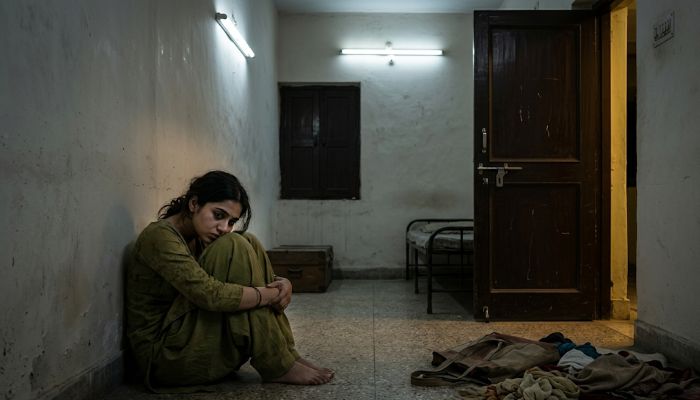
Case Summary
A Hindu woman from Angul district, Odisha, was lured to Ranchi, Jharkhand, under false promises of a better career and a monthly salary of thirty thousand rupees, only to be drugged, sexually assaulted, held captive, beaten, and subjected to sustained pressure to convert to Islam. The case came to light when the victim filed a complaint with Lalpuр police, who registered an FIR and launched an investigation. The victim had been working as a manager at a salon in Angul district, Odisha. Saheb Malik, the operator of Indian Salon in Ranchi, and his associate, Sohel Khan, the owner of Teddy Tips Salon, approached her with the promise of a superior career opportunity and a monthly salary of 30,000 rupees. On the strength of these assurances, she travelled to Ranchi and began work on 25 September 2025. Shortly after she began working, the abuse commenced. On 10 November 2025, Soheb Malik attempted to rape her. Throughout her time at the salon, the perpetrators repeatedly administered alcohol and intoxicating substances to her by force. Under the influence of these substances, she was made to work through the night on multiple occasions. On 29 November 2025 and again on 14 January 2026, the perpetrators subjected her to severe physical abuse that crossed every boundary of human decency. On 14 January 2026, they forcibly loaded her belongings into a vehicle, took her to a private flat, and held her captive there for two days. During this captivity, she was beaten and threatened with death when she resisted. Throughout this entire period, Soheb Malik and Sohel Khan subjected her to relentless pressure to abandon her Hindu faith and convert to Islam. When she refused, she was subjected to repeated mental torture. Every possible method was used to compel her to give up her identity and her faith. The Lalpuр police registered an FIR based on her complaint and statement. Primary evidence was being examined, and the investigation was being taken forward. Police stated that the mobile locations of the accused and CCTV [closed-circuit television] footage from the salon were being examined. Authorities confirmed that the allegations of forced conversion and physical abuse were being investigated in depth and that the guilty would not be spared.
Why it is Hate Crime ?
The primary category for this case is "Predatory Proselytisation". The sub-category here is "Harassment, threats, coercion for conversion. Harassment covers a wide range of behaviours of an offensive nature. It is commonly understood as behaviour that demeans, humiliates, and intimidates a person, including threats and coercion. Harassment and threats, in this case, find their root on discriminatory grounds which has the effect of nullifying a person’s rights or infringing upon his freedom to exercise his right specifically owing to the victim’s religious identity. Verbal and physical threats and psychological or physical harassment are often used against Hindu victims because they choose to practice their professed religion. Religious harassment also includes forced and involuntary conversions by harassment, threats or coercion. Coercion includes intimidatory tactics like force-feeding a Hindu victim beef to convert to another religion, forceful circumcision etc. In several cases documented, non-Hindu perpetrators or those who harbour specific animosity towards Hinduism, harass victims simply based on their religious identity. Such cases often also include harassment to ensure the Hindu victim abandons his/her professed religion and adopts the religion of the perpetrator. Such cases where Hindu victims are harassed to convert to the perpetrator’s religion are rooted in animosity towards the victim’s religious identity and are therefore documented as religiously motivated hate crimes. Another sub-category for this case is "Proselytisation by grooming, brainwashing, manipulation and subtle indoctrination". The tertiary category here is "Rape and sexual assault/harassment". Religious brainwashing essentially means the often subtle and forcible indoctrination to induce someone to give up their religious beliefs to accept contrasting regimented ideas. Religious grooming or brainwashing also involves propaganda and manipulation. It involves the systematic effort, driven by religious malice and indoctrination, to persuade “non-believers’ to accept allegiance, command, or doctrine to and of a contrasting faith. Cases of such grooming or brainwashing are far more nuanced than direct threats, coercion, inducement and violence. In such cases, it is often seen that there is repeated, subtle and continual manipulation of the victim to induce disaffection towards their own faith and acceptance of the contrasting faith of the perpetrator. While subtle indoctrination is widely acknowledged as predatory, an element which is often understated in such conversions or the attempts of such conversion is the role of loyalty and trust which might develop between the perpetrator and the victim. Fiduciary relationships are often abused to affect such religious conversion. For example, an educator transmitting religious doctrine of a competing faith to a Hindu student. The Hindu student is likely to accept what the teacher is transmitting owing to existence of the fiduciary relationship. The exploitation of the fiduciary relationship to religiously indoctrinate victims would also be included in this category. Since the underlying animosity towards the victim’s faith forms the basis of predatory proselytization, such cases are considered religiously motivated hate crimes. The other subcategory selected here is- Conversion/ attempts to convert by inducement. Predatory Proselytisation is not just limited to threat, harassment, force and violence, but it also has contours of stealth. In several cases, the Hindu victim is exploited to convert, with non-Hindus taking advantage of their poverty. In such cases, the Hindu victim who is suffering financially is offered monetary benefits, including lucrative offers for jobs, health treatment, education, etc, to induce the victim into changing his/her religion. In such cases, the religious identity of the victim and the aim to disenfranchise him from his faith form the heart of the crime. Also, taking advantage of and exploiting an individual’s economic vulnerabilities is widely acknowledged as exploitation, forms of which are often penalised by law. Such cases, therefore, are considered religiously motivated hate crimes since the victim’s religious identity forms the very heart of the crime itself. This case qualifies as a religiously motivated hate crime in which a Hindu woman was lured from her home state, subjected to sustained drugging, sexual assault, physical violence, and captivity, and throughout this entire period was subjected to relentless pressure to abandon her Hindu faith and convert to Islam. The perpetrators did not merely exploit a vulnerable employee. They constructed a trap specifically designed to isolate a Hindu woman and use that isolation to break her religious identity. The luring of the victim from Odisha to Ranchi under false pretences is the first religious marker in this case. The perpetrators identified a Hindu woman working alone in another state, approached her with fabricated promises of career advancement and financial security, and relocated her to a city where she had no support network, no family, and no means of immediate escape. The use of inducements to convert individuals is indeed a common tactic in efforts to influence or manipulate vulnerable individuals into changing their faith. This approach often targets economically disadvantaged groups, offering material benefits such as jobs, food, money, or livestock in exchange for conversion. It creates a form of dependency that can alienate individuals from their original faith, as they may feel compelled to convert not out of genuine belief but due to immediate needs or financial pressures. Here too, the perpetrator tried to adopt a similar tactic of exploiting the vulnerability of the Hindu woman to convert her to Islam. This stems from inherent hostility towards the victim's professed faith since Abrahamic faiths believe that any non-adherent to the faith is subject to being dehumanised till they convert. Such predatory actions stem from doctrinal animosity towards the Hindu faith and its adherents. Further, this relocation was the foundation of everything that followed. A Hindu woman who could not easily seek help or leave, therefore, could be subjected to conversion pressure with minimal risk of accountability. The sustained harassment, which was exerted on the victim, is the second religious marker. Keeping the woman in captivity, forcibly drugging her, and repeatedly assaulting her sexually and physically, that too over an extended period, served a dual purpose. It incapacitated her physically and broke her will. This violence was not random. It was an arm-twisting tactic that the perpetrator adopted to compel the victim to renounce her professed faith and accept Islam. This constitutes a religiously motivated hate crime as such actions are driven by intolerance towards the victim's religious identity and aim to coerce them into abandoning their faith, often accompanied by threats, violence, or other forms of intimidation. The conversion pressure itself was relentless and systematic throughout the entire period of the victim's employment. The perpetrators did not raise the question of conversion once. They raised it repeatedly, and each time she refused, the mental torture that followed was deliberate and sustained. The victim stated explicitly that every possible method was used to compel her to give up her identity and her faith. This language reflects not a casual suggestion but a structured campaign to destroy a Hindu woman's religious identity through psychological, physical, and sexual violence. Given that this case met the parameters of a religiously motivated hate crime, it was added to the hate crime database of the tracker. Disclaimer: The tracker records incident dates based on when the crime occurred, not when it was reported. In this case, the victim travelled to Ranchi and began work on 25 September, 2025, after which her ordeal began. Therefore, this day has been used as the date of the incident. This date is indicative and used for documentation purposes only.
Victim Details
Total Victim
1
Deceased
0
Gender
- Male 0
- Female 1
- Third Gender 0
- Unknown 0
Caste
- SC/ST 0
- OBC 0
- General 0
- Unknown 1
Age Group
- Minor 0
- Adult 1
- Senior Citizen 0
- Unknown 0


Case Status
Complaint registered


Perpetrators Details
Perpetrators
Muslim Extremists
Perpetrators Range
One Person
Perpetrators Gender
male
 Sources




