Hindu woman in Ghaziabad subjected to forced religious conversion and dowry harassment by Muslim husband and family
 Loni, Uttar Pradesh, India
  11 May, 2025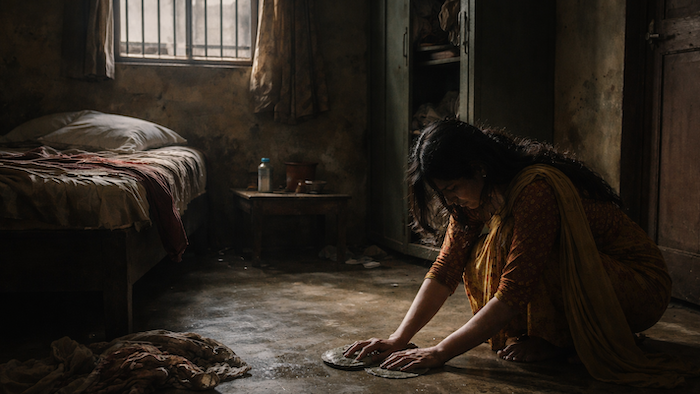
Case Summary
A Hindu woman in Loni, Ghaziabad, Uttar Pradesh, was subjected to sustained abuse after marriage, including pressure to convert her religion and dowry harassment by a Muslim man who had concealed his religious identity to deceive her into a relationship. She faced coercion inside her marital home and was forced into distressing conditions after trusting a marriage conducted under Hindu rituals. The abuse escalated when she resisted religious conversion and unlawful demands. The Hindu woman married a man from Maujpur, Delhi, in May 2025 through Hindu rituals. After marriage, she was taken to her marital home in Loni, Ghaziabad. Soon after, she was made to do all household work and was forced to clean toilets. Her in-laws demanded five lakh rupees and a Grand Vitara car as dowry. The Hindu woman discovered that the man she married had concealed his religious identity. When she objected to his behaviour and the situation, he told her that he had already adopted Islam before marriage. He said she would have to divorce him and undergo halala, which is a practice involving remarriage after divorce in Islamic custom, after which he would marry her again through nikah, which is an Islamic marriage ceremony. Inside the house, she was isolated and made to sleep alone in a separate room. The Muslim man recorded and shared photos and videos with multiple women on social media. When she resisted, he and his family increased pressure on her to convert. They forced her to wear a burkha associated with Islamic practice and pushed her to follow Islamic customs. The Hindu woman was also subjected to threats and intimidation. She was told that after conversion, she would be taken to Saudi Arabia. When she refused to convert, the abuse intensified. In September 2025, she was thrown out of the house for resisting religious conversion and dowry demands. The Hindu woman filed a formal complaint against her husband and his family members. A case was registered against seven individuals in connection with dowry harassment, coercion for religious conversion, and related offences. The police initiated an investigation into the matter. Further legal proceedings were ongoing at the time of documentation.
Why it is Hate Crime ?
This case has been added to the tracker under the primary category of - Crimes against women in relationships and other sexual crimes. Within this, the subcategory selected is - Man pretends to be Hindu. The tertiary category under this is - Marries as per Hindu rituals. When a non-Hindu man pretends to be a Hindu to deceive a Hindu woman into a relationship, the act is seen as triggered by malafide intentions. In some cases, the woman eventually accepts the man’s original religious identity and converts after the man’s identity is revealed. These cases could be argued as cases of religious brainwashing and a result of the pressure a woman feels after getting into a relationship with a man. The woman, it can be argued, also changed her religious identity because of the stigma she believes she might face if she chooses to walk out of a deceptive relationship. However, for the purpose of documenting hate crimes, the cases in this subcategory are limited to those where there is explicit violence aimed at religious conversion against the wishes of the victim (force-feeding beef, blackmailing with intimate videos, rape on refusal to convert, etc), or if the woman herself complains of the man’s religious deception. In such cases, it is established that the deception of the non-Hindu man had a specific aim of religious conversion or targeting of the victim due to her Hindu religious identity, therefore, making it a religiously motivated hate crime. Another subcategory selected is - Forced conversion after marriage. Within this, the tertiary categories selected are - Forced Halala, Forced to wear Hijab, and Forced to do Nikah. In such cases, a non-Hindu man marries a Hindu woman, and the force/pressure to convert to any Abrahamic faith, like Islam, begins after marriage. In such cases, typically, two patterns emerge. First, when the relationship is consensual, and the religious identity of the perpetrator is known to the Hindu woman in the relationship. The marriage could be under the Special Marriages Act, where neither parties are required to convert their religion for the marriage to be considered legitimate. While the victim in such cases enters matrimony assuming that religious identity is not a barrier, the non-Hindu man starts to pressure the woman to convert her religion after marriage. The second is when the woman gets into a marriage with the man, pretending to share her faith. Later, when the truth is revealed, the man starts pressuring the woman to convert her religion and give up her religious identity. In both situations, there is application of force by the perpetrator, including the denial of the woman’s religious rights. Some of the means by which the woman is forced/pressured to convert include force-feeding beef, being forced to read the Kalma, being forced to wear a hijab, forced to undergo Halala, etc. There are several instances where, after marriage, the woman voluntarily converts to Islam. Such cases are often argued to be a result of religious brainwashing, however, for the purpose of documenting religiously motivated hate crimes, in the absence of the victim complaining of forced conversion, such cases do not form a part of the database. Another subcategory selected is - Assault/threat upon refusal to convert. When Hindu women are in a relationship with non-Hindu men, there are cases where the woman faces threats or assault after she refuses to convert and change her religious identity owing to pressure/force by the non-Hindu man. Such relationships may be consensual with the religious identity of the non-Hindu man known to the victim. Somewhere along the relationship, the non-Hindu man starts pressurizing the Hindu woman to convert to Islam and upon her refusal, assaults or threatens the victim. Such cases are driven by specific religious motivations and against the religious identity of the victim and are therefore qualified as hate crimes. Cases where the Hindu woman converts to Islam and does not file a complaint about the force or threat, are not considered a part of the hate tracker, even though, it may be argued that the woman was brainwashed or threatened to convert to Islam. This case qualified as a religiously motivated hate crime because many aspects mark this case as driven by hate and bigotry. A Muslim man deceived a Hindu woman into marriage by concealing his religious identity and then subjected her to sustained coercion to convert. The Hindu woman was pressured to abandon her faith after marriage through threats, abuse, and isolation. Her refusal to convert led to escalating violence and expulsion from her marital home. The actions taken against her were directly tied to her identity as a Hindu woman. The first and most important religious marker here is that the Muslim man masqueraded as a Hindu to lure the Hindu woman into a relationship. This deceptive and manipulative behaviour, which involved concealing his true religious identity, is a clear case of religious hate. By posing as someone who shares her faith, he manipulated her trust and violated her ability to make informed decisions about her relationships. This deception is not just a personal betrayal but a targeted attack on her religious identity, as the girl's trust was built on the belief that she was interacting with someone from her own religious community. After marriage, the Hindu woman was pressured to convert to Islam and follow Islamic practices. She was told she would have to undergo halala, a religious process involving remarriage after divorce, and then be married again through nikah, an Islamic marriage ceremony. This was religiously significant because it imposed a complete transformation of her faith and marital status. The pressure was directed at her because she was Hindu and expected to abandon her religion. The Hindu woman was forced to wear a hijab and follow practices associated with Islam inside her marital home. This was not a voluntary choice but a condition imposed on her daily life. This was religiously significant because it sought to erase visible markers of her Hindu identity and replace them with another religious identity. The coercion was specifically aimed at altering her identity as a Hindu woman. In the broader context of hate crimes, forcing someone to engage in behaviour that is expressly forbidden or offensive in their religion is a clear manifestation of religious intolerance. It demonstrates a blatant disregard for the victim's rights to practice their faith freely. Here, the actions of the perpetrator clearly point towards the deep disdain he harboured for Hindus and their religious beliefs. It is evident that the perpetrator targeted the victim because of her religious identity and that his motivation was driven by religious hate. When the Hindu woman resisted conversion, she was subjected to threats, intimidation, and eventual expulsion from her home. The escalation of abuse upon refusal demonstrated that compliance with religious conversion was central to her treatment. This showed that her suffering was directly linked to her refusal to abandon her Hindu faith. The broader pattern of coercion, including deception before marriage, forced religious practices, and punishment for refusal, reflected a targeted attempt to strip the Hindu woman of her religious identity. Such acts contribute to fear and insecurity among Hindu women, as they show how intimate relationships can be used as a means of religious coercion. Given that this case met the parameters of a religiously motivated hate crime, it was added to the hate crime database of the tracker. Disclaimer: The tracker records incident dates based on when the crime occurred rather than when it was reported. In this case, only the month and year of the incident, May 2025, were available, with no specific date provided. Therefore, the date has been recorded as 12 May 2025, based on the publication date of the report. This has been documented for record-keeping purposes only.
Victim Details
Total Victim
1
Deceased
0
Gender
- Male 0
- Female 1
- Third Gender 0
- Unknown 0
Caste
- SC/ST 0
- OBC 0
- General 0
- Unknown 1
Age Group
- Minor 0
- Adult 1
- Senior Citizen 0
- Unknown 0


Case Status
Complaint filed


Perpetrators Details
Perpetrators
Muslim Extremists
Perpetrators Range
From 5 to 10
Perpetrators Gender
both
 Sources




