Minor Hindu girl lured, threatened, blackmailed and tortured to convert to Islam by minor Muslim boy and family in Chikkaballapur, Karnataka
 Chikkaballapur, Karnataka, India
  24 March, 2026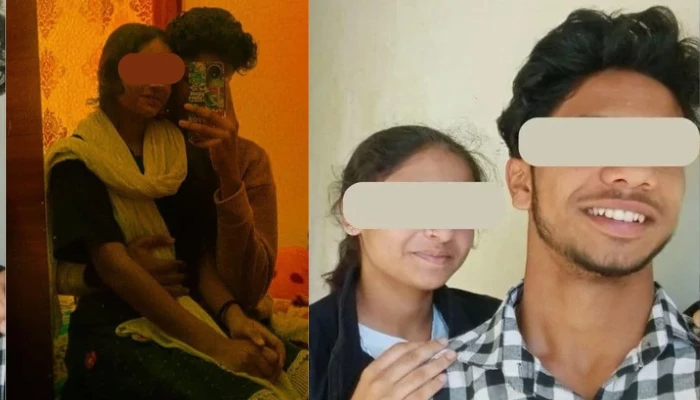
Case Summary
In Bilagola village, Mudigere taluk, Chikkamagaluru district, Karnataka, a minor Hindu girl was brainwashed, threatened and blackmailed to convert to Islam by a minor Muslim boy. The boy threatened to kill the parents of the girl. According to reports, the minor Hindu girl had been in contact with the Muslim minor boy. When the matter came to the notice of the girl’s family and residents, tensions escalated in the village. Following the incident, members of a Hindu organisation confronted the minor Muslim boy, after which he approached the Mudigere Police Station and lodged a false complaint stating that he had been assaulted. Based on his complaint, the police registered a case against individuals associated with the Hindu group. Subsequently, the Hindu girl’s parents filed a complaint against the minor Muslim boy. Based on the complaint and the statement attributed to the girl, the police registered a case under the Protection of Children from Sexual Offences (POCSO) Act and relevant provisions of the Information Technology Act. Reports stated that the complaint included that the minor boy had pressured the Hindu girl to convert to Islam. It was further stated that he threatened to circulate her obscene photographs on social media if she did not agree to convert and marry him. The complaint further stated that the minor boy threatened to kill the girl’s parents if she disclosed the matter or refused to comply. Owing to fear for the safety of her parents, the girl had initially not informed anyone about the threats. The complaint also named the parents of the minor boy, stating that they had encouraged or supported his conduct. Based on these statements, an FIR was also registered against them. Following the registration of cross-complaints, police initiated an investigation into both the assault complaint filed by the boy and the POCSO and intimidation complaint filed by the Hindu girl’s family. Chikkamagaluru SP Jitendra Kumar Dayama stated that complaints had been received from both sides and that a detailed and impartial investigation was underway. Additional police personnel were deployed in the area to maintain law and order in view of the tense atmosphere.
Why it is Hate Crime ?
The primary category selected is Predatory Proselytisation. The subcategory selected is- Harassment, threats, coercion for conversion. Harassment covers a wide range of behaviours of an offensive nature. It is commonly understood as behaviour that demeans, humiliates, and intimidates a person, including threats and coercion. Harassment and threats, in this case, find their root on discriminatory grounds, which has the effect of nullifying a person’s rights or infringing upon his freedom to exercise his right specifically owing to the victim’s religious identity. Verbal and physical threats and psychological or physical harassment are often used against Hindu victims because they choose to practice their professed religion. Religious harassment also includes forced and involuntary conversions by harassment, threats or coercion. Coercion includes intimidatory tactics like force-feeding a Hindu victim beef to convert to another religion, forceful circumcision, etc. In several cases documented, non-Hindu perpetrators or those who harbour specific animosity towards Hinduism, harass victims simply based on their religious identity. Such cases often also include harassment to ensure the Hindu victim abandons his/her professed religion and adopts the religion of the perpetrator. Such cases, where Hindu victims are harassed to convert to the perpetrator’s religion, are rooted in animosity towards the victim’s religious identity and are therefore documented as religiously motivated hate crimes. The other subcategory selected is- Proselytisation by grooming, brainwashing, manipulation or subtle indoctrination. The tertiary category selected is- Victim says was brainwashed and Conversion of Minor. Religious brainwashing essentially means the often subtle and forcible indoctrination to induce someone to give up their religious beliefs to accept contrasting, regimented ideas. Religious grooming or brainwashing also involves propaganda and manipulation. It involves the systematic effort, driven by religious malice and indoctrination, to persuade “non-believers’ to accept allegiance, command, or doctrine to and of a contrasting faith. Cases of such grooming or brainwashing are far more nuanced than direct threats, coercion, inducement and violence. In such cases, it is often seen that there is repeated, subtle and continual manipulation of the victim to induce disaffection towards their own faith and acceptance of the contrasting faith of the perpetrator. While subtle indoctrination is widely acknowledged as predatory, an element which is often understated in such conversions or the attempts of such conversion is the role of loyalty and trust which might develop between the perpetrator and the victim. Fiduciary relationships are often abused to affect such religious conversion. For example, an educator transmitting religious doctrine of a competing faith to a Hindu student. The Hindu student is likely to accept what the teacher is transmitting owing to the existence of the fiduciary relationship. The exploitation of the fiduciary relationship to religiously indoctrinate victims would also be included in this category. Since the underlying animosity towards the victim’s faith forms the basis of predatory proselytisation, such cases are considered religiously motivated hate crimes. The other category selected here is- Crime against women in relationships and other sexual crimes. Within this, the first subcategory selected is- Blackmailed to convert. When Hindu women are in a relationship with non-Hindu men, there are cases where the woman is blackmailed to convert her religion, owing to her religious identity of being a Hindu. Such relationships may be consensual with the religious identity of the non-Hindu man known to the victim, however, there could be cases where the relationship is not consensual and the non-Hindu man starts blackmailing a Hindu woman to convert her religion. In these cases, it is often seen that the Hindu woman is blackmailed with intimate photos and/or videos, threats of harm to her or her family, threats of violence etc. Such cases are driven by specific religious motivations and against the religious identity of the victim and are therefore qualified as hate crimes. The other subcategory is- Brainwashed and/or groomed, and within this, the subcategory selected is, Conversion of minor. In our database, we have not added incidents where women have converted to another religion of their free will and no allegations of forced/involuntary conversion have been made. However, there are certain cases of conversion where the consent itself is a result of the brainwashing or grooming of a minor by the non-Hindu perpetrator trying to victimise a woman for her Hindu religious identity. The phenomenon of grooming points to non-Hindu perpetrators identifying their Hindu victims’ vulnerabilities and exploiting them over months and sometimes years, to extract the supposed ‘consent’ in order to convert their religion. In most cases of grooming, the victims are minors or the grooming started when the victim was a minor. In other cases of grooming, the non-Hindu perpetrator brainwashes and grooms a minor victim to extract their trust and then proceeds to rape them repeatedly with the intent of converting them to their faith. It is pertinent to understand here that when the victim is a minor, the ‘consent’ to convert or enter into a romantic relationship with an adult itself is redundant – addressed by POCSO. While every case of conversion of a minor and incidents of establishing a physical relationship with a minor by an adult is a crime, for the purpose of this database, a case would be considered a hate crime only if there is a distinct religious angle to the grooming. For example, in the UK, if a Hindu minor is targeted by Pakistani grooming gangs, it would be considered a hate crime because the victims are specifically targeted owing to their non-Muslim religious identity with the perpetrators being Muslim. In other cases, if a Hindu minor is brainwashed into entering a physical relationship with the non-Hindu adult perpetrator and the family alleges grooming/brainwashing of the minor to convert her religion, it would form a part of this database. If the victim is a Hindu adult, the case would form a part of this database only if the victim herself says that she was brainwashed/groomed to convert her religion. However, if the victim is deceased (murdered or otherwise), the case would form a part of this database if her family/friends provided testimony that the victim was brainwashed/groomed to convert her religion. Since these crimes have a distinct religious angle where the victim is being targeted owing to her Hindu religious identity, these cases are considered a hate crime. This case qualifies as a religiously motivated hate crime because a minor Hindu girl was subjected to coercion, blackmail, and sustained pressure to abandon her faith identity and convert to Islam. The conduct documented in the complaint shows that the relationship was used not as an ordinary adolescent association but as a means to exercise control over the victim’s choices, identity, and future. A critical aspect of this case is that both individuals were minors. At that age, both minds are naturally impressionable and emotionally fragile. Yet, despite this shared vulnerability, the conduct described reveals a clear pattern of dominance and manipulation by one over the other. The Hindu girl was placed in a position where fear, emotional pressure, and threats were used to overpower her will. This was not a relationship between two equals. It had developed into a coercive structure in which one minor was directing and controlling the other’s personal and religious decisions. Moreover, the fact that the victim was a minor is a critical aggravating factor. By definition, a minor lacks the legal and psychological capacity to give informed consent, particularly in matters involving relationships, cohabitation, or religious change. This means that any claim of voluntary involvement or genuine change of belief is invalid from the outset. Minors, due to their young age and lack of maturity, are particularly vulnerable to manipulation and coercion. They may not have the ability to fully understand the implications of converting to another religion, and the Muslim perpetrator in this case deliberately exploited this vulnerability. The targeting of a minor, therefore, demonstrates a heightened level of predation, where the victim was chosen precisely because she was easier to influence and control. The pressure to convert is the central feature that gives the incident its religious character. The Hindu girl was not merely asked to continue the relationship; she was specifically pressurised to accept Islam and agree to marriage. Her identity as a Hindu became the focal point of the coercion. The relationship itself became the instrument through which that pressure was applied. The blackmail element further deepens the gravity of the offence. The threat to circulate obscene photographs on social media was designed to induce fear, shame, and compliance. This was a deliberate use of vulnerability to silence resistance. Such threats are commonly used to ensure that the victim does not raise her voice, does not approach her family, and gradually submits to the demands being imposed upon her. Even more serious was the threat directed at her parents. She was told that her parents would be killed if she disclosed the matter or refused to comply. This transformed the coercion from personal pressure into family-centred intimidation, where the safety of loved ones was weaponised to force submission. Her initial silence out of fear for her parents shows the extent to which the threats had psychologically confined her. What is particularly significant is that the methods seen here mirror a recurring coercive pattern documented across cases involving minors, young adults, and even fully grown individuals: emotional involvement is first established, followed by isolation, fear-based control, blackmail, and finally pressure to convert. The age of the individuals may differ, but the operational line remains strikingly similar; the relationship is used as the route through which the Hindu victim is gradually pushed towards surrendering religious identity. The involvement of the boy’s parents, as reflected in the complaint, further suggests that the pressure was not confined to a private adolescent dispute. It points towards a broader environment of support or encouragement that reinforced the coercive conduct. For these reasons, this case clearly falls within the parameters of a religiously motivated hate crime and is accordingly being added to the tracker. Disclaimer: Media reports stated that the Hindu victim was targeted by a Muslim boy and his family; however, the total number of perpetrators was not specified. Only one perpetrator was specified. Therefore, the perpetrator count was recorded as one (1). This is a conservative estimate, as the total number of perpetrators could be higher. Disclaimer: The Hinduphobia Tracker records incident dates based on when the victim's ordeal began, rather than when the media reported it. In this case, the report does not mention when the victim's ordeal began; therefore, the date when the report was published has been recorded as the indicative incident date for documentation purposes.
Victim Details
Total Victim
1
Deceased
0
Gender
- Male 0
- Female 1
- Third Gender 0
- Unknown 0
Caste
- SC/ST 0
- OBC 0
- General 0
- Unknown 1
Age Group
- Minor 1
- Adult 0
- Senior Citizen 0
- Unknown 0


Case Status
Complaint filed


Perpetrators Details
Perpetrators
Muslim Extremists
Perpetrators Range
One Person
Perpetrators Gender
male
 Sources




