Minor Hindu girl and Hindu community targeted by Muslim journalist for gifting toy to Chief Minister of Uttar Pradesh
 Kanpur, Uttar Pradesh, India
  26 March, 2026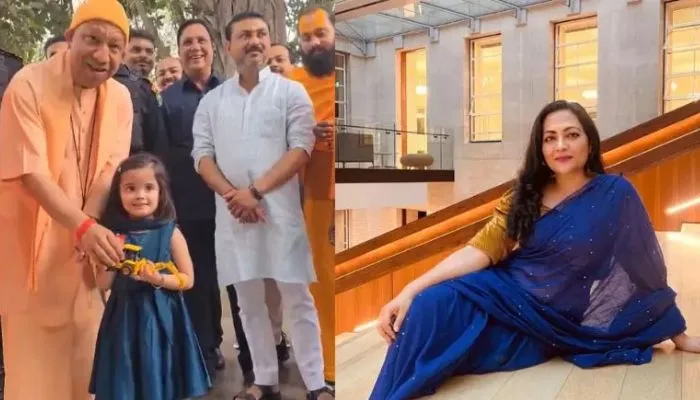
Case Summary
In Kanpur, Uttar Pradesh, a five-year-old Hindu girl and Hindus were targeted online by journalist Arfa Khanum Sherwani. The minor girl named Yashaswini gifted a toy bulldozer to the Uttar Pradesh Chief Minister. Following the interaction, Arfa Khanum shared the video, citing it as an example of “radicalising an entire generation of Hindu children”. This comment made the minor girl the subject of online abuse and widespread hostile commentary online. The incident took place on 27 March 2026, when Yashaswini met the Chief Minister during his morning walk at the temple premises. The child presented him with a toy bulldozer as a gift. In response, the Chief Minister gave her chocolates, returned the toy to her, and advised her to study well and continue playing with it. The interaction was captured on video and subsequently went viral on social media. Following the circulation of the video, Arfa Khanum Sherwani posted on social media that this was “how they are radicalising an entire generation of Hindu children” and described it as “heartbreaking and extremely dangerous.” Her post triggered a wave of online commentary in which the minor Hindu girl was described in highly derogatory terms and projected by some users as a symbol of so-called “Hindu terrorism.” Subsequently, other users amplified similar claims on social media, alleging that Hindu children were being brainwashed and radicalised from a young age. The online discourse shifted from the original interaction between the child and the Chief Minister to direct criticism and stigmatisation of the minor girl on the basis of the symbolic gift she had offered.
Why it is Hate Crime ?
This case is being added to the tracker under the primary category- Hate Speech against Hindus. The subcategory selected is- Anti-Hindu subversion and prejudice. Hate speech is defined as any speech, gesture, conduct, writing, or display that is prejudicial against a specific individual and/or group of people, which leads to or may lead to violence, prejudicial action or hate against that individual and/or group. Media plays a specific and overarching role in perpetuating prejudicial attitudes towards a community owing to unfair, untrue coverage and/or misrepresentation/misinterpretation, selective coverage and/or omission of facts of/about issues affecting a specific religious group. This type of bias can dehumanise the victim group, making it easier for others to justify harmful actions against them, which aligns with the objectives of hate speech laws aimed at preventing such harm. It is often observed that the media takes a prejudicial stand against the Hindu community, driven by their need to shield the aggressor community, which happens to be a numeric minority; however, that is the one perpetrating violence against Hindus. For example, the media is often quick to contextualise religiously motivated crimes against Hindus, omit or misrepresent facts that point towards religiously motivated hate crimes, justify and/or downplay religiously motivated hate crimes, or simply present fake news to stereotype Hindus. Such media bias leads to the denial of persecution and is often used to dehumanise Hindus, leading to justification for violence against them. For example, the media covered several fake allegations of Hindus targeting Muslims and forcing them to chant Jai Shree Ram. Most of these cases were proved false and fabricated after police investigation. These fake news reports were subsequently never retracted or clarified. Such fake news led to the justification of violence and dehumanisation of Hindus based on the argument that since Hindus targeted Muslims and forced them to chant Jai Shree Ram, the dehumanisation of Hindus and violence against them was par for the course and merely a retaliation. Such media bias leads to prejudicial portrayals of Hindus and offers a justification for violence against them and, therefore, is considered hate speech under this category. The other sub- category is - Mocking/denigrating Hindu leaders. Hate speech is defined as any speech, gesture, conduct, writing, or display that is prejudicial against a specific individual and/or group of people, which leads to or may lead to violence, prejudicial action or hate against that individual and/or group. Religious leaders are often seen as representatives of the community, especially the community’s religious faith and beliefs. Mocking or denigrating a religious leader specifically owing to his religious identity and/or the religious rituals he observes can be considered hate speech because the motivating factor of the speech is animosity and/or dislike for what he represents – the religious beliefs and faith of the community. It is important to note that mere insulting words against an individual do not constitute hate speech. Insulting words may be used for an individual; however, the specific speech is not the result of religious hate and/or animosity towards the professed faith of the religious leader, but the individual himself. For the speech to be considered hate speech, the speech itself or the motivating factor behind the speech has to be religious in nature. Such speech, which denigrates Hindu religious leaders specifically owing to animosity towards the faith they profess and the community faith they represent, will be treated as hate speech under this category. This case can be considered a religiously motivated hate incident because a young Hindu child was targeted online due to her identity and a harmless interaction. The video itself showed a normal and innocent moment where a five-year-old girl gifted a toy to the Chief Minister. There was nothing in the act that suggested any form of aggression or intent. However, the reaction that followed changed the nature of the incident. When the journalist described this as “radicalising Hindu children,” it shifted the focus from a child’s innocent act to a broader claim about the entire Hindu community. The statement did not remain limited to the incident but portrayed Hindu children as part of a larger, negative narrative. This reflects hostility not just towards the child, but towards the Hindu collectivity as a whole. What makes this more serious is that the person targeted was a minor. A five-year-old child became the subject of online abuse and was labelled in extreme terms simply because she is Hindu and because of what she represented in that moment. The criticism went beyond the act and directly attacked her identity. The incident also shows how quickly online narratives can turn hostile. Once the initial framing was made, others amplified it and began portraying Hindu children as “brainwashed” or dangerous. This kind of language creates a negative image of an entire community and normalises abuse directed at individuals belonging to it. This kind of framing also contributes to a broader pattern where Hindu identity is portrayed in a negative and threatening light. By presenting a harmless act by a child as evidence of “radicalisation,” it reinforces stereotypes that depict Hindus as inherently aggressive or dangerous. Such narratives do not remain limited to one incident. They shape how the community is perceived more widely and create an environment where hostility towards Hindus becomes normalised. When commentary shifts from criticism of an event to generalisations about an entire community, it risks encouraging further abuse and social exclusion. In this case, the portrayal of a young Hindu child as part of a larger negative narrative shows how quickly such framing can lead to targeted hostility. Taken together, the targeting of a minor Hindu child, the framing of Hindu identity in a negative and threatening light, and the spread of hostile commentary show that this was not just criticism, but identity-based targeting. For this reason, the case is being documented as a hate crime in the tracker.
Victim Details
Total Victim
1
Deceased
0
Gender
- Male 0
- Female 1
- Third Gender 0
- Unknown 0
Caste
- SC/ST 0
- OBC 0
- General 0
- Unknown 1
Age Group
- Minor 1
- Adult 0
- Senior Citizen 0
- Unknown 0


Case Status
Unknown


Perpetrators Details
Perpetrators
Muslim Extremists
Perpetrators Range
One Person
Perpetrators Gender
female
 Sources




