Hindu deity's idol desecrated by anti-social elements in Hardoi, Uttar Pradesh
 Hardoi, Uttar Pradesh, India
  31 March, 2026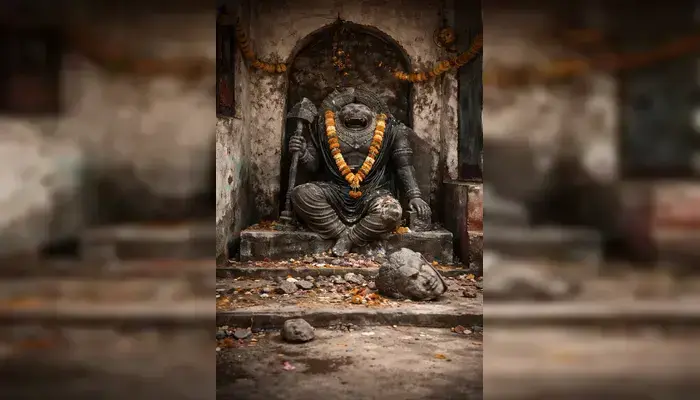
Case Summary
In Berua village of Kotwali area, in Hardoi, Uttar Pradesh, an idol of Shani Dev, a Hindu deity, installed in a Hindu temple, was desecrated by a few unidentified miscreants. According to media reports, the desecration was discovered on the morning of 1 April 2026, when Lavkush Dwivedi, Monu Singh, Sukhveer, and others went to the temple for their daily worship. They found that the idol of Lord Shani that was installed in the temple was damaged, and the hand of the idol was also deliberately broken. On getting information about this, a large number of villagers reached the spot. Within a short time, Guddu, son of Pradhan Waheeda, also reached the scene. He informed the police about the incident. On this, the police reached the temple site and started an investigation regarding the incident. Guddu, the village head's representative, assured all villagers that the broken idol would be removed and another one would be installed. The matter was then settled. Additional Superintendent of Police, Eastern, Subodh Gautam, stated that the incident was being investigated. He stated that anti-social elements had committed the crime. The police also assured the Hindu villagers that the accused would be arrested as soon as possible.
Why it is Hate Crime ?
This case has been added to the tracker under the primary category- Attack on Hindu religious representations. The subcategory selected is- Desecration of Hindu religious symbols. Icons and symbols or a religious representation of a spiritual ideal are widely revered in Hinduism. Iconography is of vital significance in the Hindu milieu. It helps connect people’s spiritual beliefs with the real world. Iconography within the Hindu faith takes several shapes and forms. Murtis are of most significance to Hindus, to which daily rituals, prayers and offerings are done. Besides the murtis, there are several other symbols which have deep significance in the Hindu faith – the Om and Swastika for example. Since these Hindu religious symbols hold paramount importance in Hinduism, any desecration of symbols, icons, murtis, religious representations and manifestations, is driven by animosity towards the faith itself which manifests itself through these murtis, icons and symbols. Therefore, any desecration of these Hindu religious symbols and representations is considered religiously motivated hate crimes under this category. The other subcategory selected is- Attack on Temples. In Hinduism, a temple is the abode of the Deity. The Deity in the Temple is consecrated, thereby, making it a real, breathing entity. Hindus believe that not just the Deity but the temple premises itself are sacred to Hindus since Hindus hold the faith that the entire Temple space is an amalgamation of the divine energy of the deity. Given the central significance of Temples in Hindu Dharma, any attack against a Hindu Temple or its peripheral premises is an attack on the faith itself and is born out of animosity towards the faith, of which, the Temple is a central tenet. Any manner of attack against a Temple and/or its premises would therefore be considered a religiously motivated hate crime. This case is being added to the hate crime database of the Hinduphobia Tracker as the perpetrators desecrated an idol of Shani Dev, a Hindu deity, in Berua village of Hardoi, making it a clear instance of religiously motivated hate crime fueled by anti-Hindu hostility. The deliberate targeting of this sacred Shani Dev idol reveals a profound intent to wound the Hindu community's deepest spiritual convictions. Such acts shatter the peace of devotees who pour their faith into these holy symbols, leaving lasting scars on their sense of security and devotion. The act of desecrating the idol of Shani Dev underscores a violation of sacred Hindu symbols and traditions. Shani Dev embodies justice, karma, and discipline in Hindu belief, revered by millions who seek his blessings to navigate life's trials with resilience and moral fortitude. Hindu idols, or murtis, represent living conduits to the divine, consecrated through rituals like prana pratishtha to invite a deity's presence into the idol and the worshippers' lives. Therefore, desecrating this sacred Shani Dev idol amounts to an affront to the religious sentiments of the Hindu community and an attack on the Hindu faith itself, making it a clear case of a religiously motivated hate crime. Such desecration showcases the perpetrators' deep-seated religious animosity towards the Hindu faith and community. The desecration of the Shani Dev idol occurred inside the sacred confines of the Hindu temple itself, elevating this beyond a mere attack on a single murti to a comprehensive assault on the temple's entire spiritual ecosystem. In Hinduism, temple idols are not separate entities but inseparable, living components of the temple structure, consecrated through elaborate rituals to house divine presence amidst the sanctum's holy architecture, rituals, and communal worship. Desecrating this idol equates to desecrating the temple as a whole, profaning its every pillar, altar, and consecrated space where devotees seek solace and divine connection. This deliberate intrusion into Hinduism's most protected sacred domain reveals a calculated intent to dismantle the Hindu community's spiritual sanctuary, making it an unequivocal religiously motivated hate crime against their faith ecosystem. In this case, even though the perpetrators' identities remain unknown, their actions are clearly rooted in anti-Hindu hatred and bigotry. The raw pain inflicted on Hindu devotees demands recognition of this vicious intent. Therefore, this case is being added to the hate crime database of the Hinduphobia Tracker.


Case Status
Unknown


Perpetrators Details
Perpetrators
Unknown
Perpetrators Range
Unknown
Perpetrators Gender
unknown
 Sources




