Hindu Temple vandalised and illegally demolished by Islamic organisation in Selangor, Malaysia
 Selangor, Malaysia
  22 February, 2026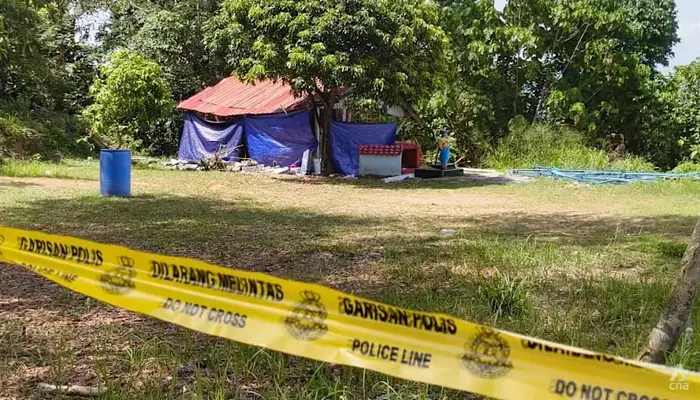
Case Summary
In Rawang, Selangor, Malaysia, the Sri Uchimalai Muniswarar Hindu Temple was vandalised and ultimately demolished by an Islamic organisation named Kubra Foundation, triggering widespread outrage within the Hindu community both locally and internationally. The Hindu temple, believed to have existed since at least 1995, had been established by poor Indian Hindu labourers working in rubber plantations and served not only as a place of worship but also as a vital symbol of cultural identity and heritage for the local Hindu population. The Kubra Foundation, an Islamic organisation, claimed that the land on which the temple stood was acquired by them in 2021. They claimed that the land has been reserved for a housing scheme for the poor and needy and stated that religious practices such as “shirk” should not take place on the property. On 23 February 2026, a group demolished parts of the temple structure using heavy machinery, including a bulldozer, in the presence of police personnel who did not intervene to stop the destruction. Four individuals were detained following the initial incident but were subsequently released, while police also registered cases against ten devotees and members of the temple committee. Despite the escalation and visible tensions, the situation remained largely unrestrained. In the early hours of 25 February 2026, at approximately 3 am, another group arrived equipped with tools such as shovels and sledgehammers and proceeded to completely demolish the remaining structure of the temple, again under police watch. Prior to the final demolition, temple representatives and devotees relocated four idols from the premises between the night of 24 February and the early morning of 25 February under police supervision, ensuring that no immediate physical confrontation took place during the removal. The temple caretaker, R. Arindran, who had longstanding familial ties to the site dating back to his father’s role as caretaker in the 1990s, managed to safeguard the idols and described the temple as the centre of his life and a spiritual refuge for generations of plantation workers who once depended on it for protection and faith. The demolition, carried out by civilians rather than through a formal judicial enforcement process, drew criticism from activists and observers who warned that such actions risked deepening communal tensions and undermining religious harmony in Malaysia’s multi-ethnic society. The incident gained significant traction on social media, with videos and images of the destruction circulating widely and intensifying public reaction. Following the demolition, the temple committee approached the Selayang Magistrate’s Court, which in March 2026 issued a temporary stay order, directing that no further action be taken until the ownership dispute over the land was resolved. The court acknowledged that while the temple had existed for decades, the legal title to the land rested with the foundation, highlighting a broader and recurring issue in Malaysia where many Hindu temples, particularly those established during the colonial plantation era, lacked formal land ownership documentation. These temples were often constructed on estate land with the tacit approval of plantation operators, but subsequent land transfers and urban development had led to increasing legal conflicts.
Why it is Hate Crime ?
This case has been added to the tracker under the primary category- Attack on Hindu religious representations. The subcategory selected is- Attack on Temples. In Hinduism, a temple is the abode of the Deity. The Deity in the Temple is consecrated, thereby, making it a real, breathing entity. Hindus believe that not just the Deity but the temple premises itself are sacred to Hindus since Hindus hold the faith that the entire Temple space is an amalgamation of the divine energy of the deity. Given the central significance of Temples in Hindu Dharma, any attack against a Hindu Temple or its peripheral premises is an attack on the faith itself and is born out of animosity towards the faith, of which, the Temple is a central tenet. Any manner of attack against a Temple and/or its premises would therefore be considered a religiously motivated hate crime. The other subcategory selected is- Desecration of Hindu religious symbols. Icons and symbols or a religious representation of a spiritual ideal are widely revered in Hinduism. Iconography is of vital significance in the Hindu milieu. It helps connect people’s spiritual beliefs with the real world. Iconography within the Hindu faith takes several shapes and forms. Murtis are of most significance to Hindus, to which daily rituals, prayers and offerings are done. Besides the murtis, there are several other symbols which have deep significance in the Hindu faith – the Om and Swastika for example. Since these Hindu religious symbols hold paramount importance in Hinduism, any desecration of symbols, icons, murtis, religious representations and manifestations, is driven by animosity towards the faith itself which manifests itself through these murtis, icons and symbols. Therefore, any desecration of these Hindu religious symbols and representations is considered religiously motivated hate crimes under this category. This case has been added to the tracker as the destruction of the Sri Uchimalai Munishwarar Hindu Temple in Selangor, Malaysia, by the Kubra Foundation, an Islamic organisation, constituted a targeted act against a Hindu place of worship, resulting in the complete demolition of a long-standing religious site and the displacement of sacred idols central to Hindu devotion. The temple, which had existed since at least the mid-1990s and had been established by Indian plantation labourers, represented not only a site of prayer but also a deeply rooted symbol of Hindu cultural continuity and spiritual identity in Malaysia. Its destruction, therefore, amounted to far more than a property dispute, striking at the collective religious consciousness of the Hindu community. Temples in Hinduism are not merely physical structures but sacred abodes where deities are believed to reside following consecration rituals such as prana pratishtha. The Sri Uchimalai Munishwarar Temple, dedicated to Lord Muniswarar, held immense spiritual value for devotees who regarded the deity as a guardian figure offering protection and guidance. The deliberate demolition of such a site represented a direct assault on a consecrated space imbued with divine presence. Even though the idols were removed shortly before the final demolition, the act of dismantling the sanctified structure itself constituted a desecration of a living religious institution and an attack on the faith it embodied. The justification provided for the demolition, which explicitly referenced the need to prevent “shirk” (polytheistic worship), underscored a clear element of religious hostility towards Hindu practices. By framing Hindu worship as something to be eliminated from the land, the action reflected an ideological opposition to the very existence of Hindu religious expression in that space. This transformed the incident from a mere land ownership conflict into one involving targeted religious intolerance, where a Hindu place of worship was erased on the basis of doctrinal rejection of its beliefs and practices. The manner in which the demolition was carried out further reinforces the communal nature of the crime. The demolition was carried out by civilian groups, rather than a strictly regulated legal enforcement process, demonstrating a breakdown of institutional safeguards that should have protected religious sites from arbitrary destruction. Instead of relying solely on established legal mechanisms and awaiting a definitive judicial resolution regarding the disputed land, the foundation proceeded with the demolition of the temple through direct physical action. This choice to bypass a conclusive court adjudication and undertake the removal of a functioning Hindu place of worship reflected clear religious intolerance towards Hindu practices and institutions. Significantly, the subsequent intervention by the court, which issued a stay on further action pending determination of land ownership, highlighted that the matter was still legally contested at the time of demolition. The emotional impact of this incident on the Hindu community was profound. The demolition of the Sri Uchimalai Munishwarar Temple disrupted not only physical access to a sacred space but also the spiritual rhythms of devotion that had been sustained there for decades. Devotees who had grown up with the temple, participated in rituals, and relied on it for spiritual solace were left with a deep sense of loss, vulnerability, and alienation. The destruction of such a site sends a broader message that Hindu religious spaces can be removed or dismantled, thereby instilling fear and diminishing the community’s sense of security. Given the explicit religious justification, the deliberate targeting of a Hindu temple, the manner of its destruction, and the broader implications for the Hindu community, this incident clearly reflects religious animosity and hostility towards Hindu beliefs and institutions. Therefore, it meets the criteria for classification as a religiously motivated hate crime and has been included in the Hinduphobia Tracker database. Disclaimer – While this tracker acknowledges that multiple actors were involved in the demolition of the Sri Uchimalai Munishwarar Temple in Rawang, for documentation purposes, the perpetrator count has been recorded as five, comprising the four individuals who initially carried out the demolition and the Kubra Foundation as the institutional actor responsible for directing and facilitating the action. The religious identity has been recorded as Muslim, as the Kubra Foundation is an Islamic organisation, and the demolition was explicitly justified on religious grounds, including opposition to practices such as “shirk”. While the individual religious identities of all four persons involved in the physical demolition have not been independently verified, their coordinated participation under the direction and framework of the foundation establishes a shared context of action.


Case Status
Case sub-judice


Perpetrators Details
Perpetrators
Muslim Extremists
Perpetrators Range
From 2 To 5
Perpetrators Gender
unknown
 Sources




