Hindu man brutally beaten to death by his Muslim in-laws over interfaith marriage
 Ghaziabad, Uttar Pradesh, India
  27 April, 2025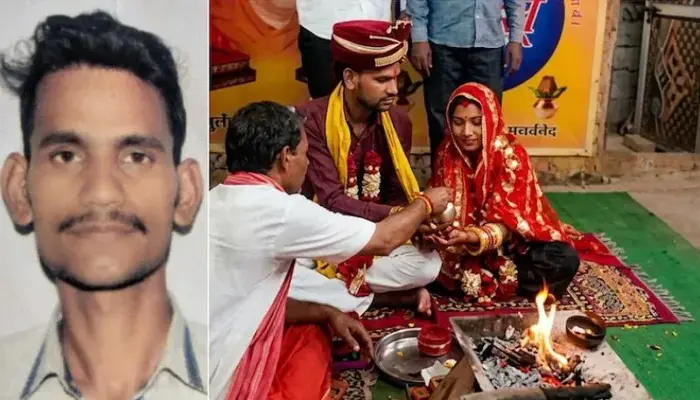
Case Summary
In Ghaziabad, Uttar Pradesh, a 32-year-old Hindu man named Nitin Rathi was brutally beaten to death by his Muslim in-laws following an interfaith marriage that had faced persistent opposition from the woman’s family. According to reports, the Hindu victim, Nitin, was a resident of the Loni area’s Geetanjali Vihar Colony and had married a Muslim woman named Muskan on 28 April 2025 at an Arya Samaj temple. The marriage had remained a point of contention, facing opposition from the woman’s family and tensions between the couple had escalated in the months leading up to the incident. After a dispute, Muskan returned to her parental home and was unwilling to return. Muskan's family called Nitin to their house, and as part of a compromise, they wanted Nitin to stay with them. On 30 March 2026, Nitin was called by his in-laws and taken towards the Tila Mod area, where an argument broke out during the journey, over this issue. In the course of this altercation, he was violently assaulted by his father-in-law and other family members, sustaining critical injuries. He was subsequently abandoned on the roadside near the Bhandeda culvert and left unconscious. Local authorities were alerted, and he was transported to a nearby hospital before being referred to Delhi due to the severity of his condition. Nitin succumbed to his injuries during treatment. The police registered a case of murder and initiated an investigation, resulting in the arrest of his father-in-law and brother-in-law, while efforts continued to apprehend other individuals involved in the crime.
Why it is Hate Crime ?
This case has been added to the tracker under the category of- Men attacked for being associated with non-Hindu women. Within this, the sub-category selected is- Killed by non-Hindu partner’s family. When Hindu men are in a relationship with non-Hindu women, there are cases where the man is forced/pressured to convert his religion and upon his refusal to do so, the family of the non-Hindu partner murders the victim. Such relationships may be consensual with the religious identity of the non-Hindu woman known to the victim. Somewhere along the relationship, the non-Hindu woman and her family start forcing/pressurizing the Hindu man to convert. In some of these cases, the association could be non-consensual as well or, the religious identity of the non-Muslim woman could be previously unknown to the Hindu victim. In such cases, the Hindu man is first forced/pressurized to change his religion by the non-Hindu woman’s family. The pressure could involve threats. The trigger to murdering the Hindu man in these cases is his refusal to comply and change his religion under threat and/or force. In other cases that have been documented, it is also seen that the Hindu partner is murdered by the family of the non-Hindu woman simply for his relationship with the non-Hindu woman and by virtue of him following the Hindu faith and not the religion of the non-Hindu woman. In such cases, the relationship is consensual in most cases and the religion of both partners is known to the other. Often, in such cases, there is no direct force/pressure to convert either, however, the murder is a result of the Hindu man being in a relationship with the non-Hindu partner and not following her religion/following Hinduism specifically. Such cases are driven by specific religious motivations and against the religious identity of the victim and are therefore qualified as hate crimes. In this case, a Hindu man, Nitin Rathi, was brutally beaten to death by his Muslim in-laws following his marriage to a Muslim woman in Ghaziabad. While the immediate trigger of the incident was described as a dispute between the couple and a subsequent altercation with the woman’s family, the broader context of the crime establishes clear indicators that the violence was rooted in religious hostility towards the victim’s Hindu identity and his interfaith marriage. The marriage between Nitin Rathi and Muskan was conducted at an Arya Samaj temple, and from the outset, it faced opposition from the woman’s Muslim family. This sustained disapproval formed the background against which the fatal assault occurred. The fact that Nitin was called by his in-laws under the pretext of reconciliation and then subjected to a brutal assault, resulting in his death, indicates a targeted act rather than a spontaneous or incidental conflict. The violence was directed specifically at him as the Hindu husband of a Muslim woman, highlighting that his religious identity and the interfaith nature of the marriage were central to the hostility he faced. In the Islamic faith, a marriage is deemed illegitimate if the non-Muslim partner does not convert to Islam. For those who practice the faith, when their daughter marries a Hindu man without the man converting to Islam, the difference in religions followed becomes the main point of disapproval for the family of the Muslim woman. Because of the ingrained element of religious supremacy in Islam, even if the motivations are not explicit, it can reasonably be concluded as one of the determining factors of the attack committed by the Muslim family against the Hindu man. This incident falls into a broader and disturbing pattern where Hindu men are targeted specifically for being in relationships with Muslim women. These assaults are often framed as matters of "honour," but the underlying motivation is deeply religious. In many such cases, the religious identity of the Hindu male partner, or his family, becomes the key trigger for violence, especially when there is no conversion to Islam. Although not every case explicitly states a religious motive, the surrounding circumstances, including prior opposition to the marriage, the involvement of the woman’s family, and the targeted killing of the Hindu spouse, indicate that religion was at least one of the determining factors. The pattern observed across similar incidents further reinforces this conclusion, where Hindu men are assaulted or killed for being in relationships with Muslim women without converting. The deliberate nature of the assault, the involvement of multiple family members, and the act of abandoning the victim on the roadside after inflicting fatal injuries demonstrate an intent to punish and eliminate the victim. This goes beyond a personal or domestic dispute and reflects deeper hostility tied to the interfaith relationship. Such incidents form part of a broader pattern where Hindu men are targeted specifically for their religious identity in the context of relationships with Muslim women. The violence is not merely about familial disagreement but about enforcing religious boundaries through coercion and brutality. For these reasons, this case meets the criteria for inclusion in the hate crime database, as the victim’s Hindu identity and his marriage to a Muslim woman were central factors contributing to the fatal violence inflicted upon him. Disclaimer: It is important to clarify that none of the media sources covering this case has specified the exact date when the victim's ordeal began, though it is mentioned that the couple got married on 28 April 2025, and the Muslim family was opposed to the marriage. Thus, to document this case, we have used an indicative date. 28 April 2025, as a placeholder to represent the beginning of his suffering. While media coverage of the incident emerged on 31 March 2026, the Hinduphobia Tracker records the incident based on when the victim’s ordeal began, not when it was reported. The Hinduphobia Tracker acknowledges that multiple members of the Muslim family were involved in the assault on the victim. However, as only two individuals, the father-in-law and the brother-in-law, were explicitly identified in available reports, the perpetrator count has been recorded as 2.
Victim Details
Total Victim
1
Deceased
1
Gender
- Male 1
- Female 0
- Third Gender 0
- Unknown 0
Caste
- SC/ST 0
- OBC 0
- General 1
- Unknown 0
Age Group
- Minor 0
- Adult 1
- Senior Citizen 0
- Unknown 0


Case Status
Case sub-judice


Perpetrators Details
Perpetrators
Muslim Extremists
Perpetrators Range
From 2 To 5
Perpetrators Gender
male
 Sources




