Navratri celebration desecrated; obscene dance performed during sacred jagran event in Fatehpur, Uttar Pradesh
 Fatehpur, Uttar Pradesh, India
  26 March, 2026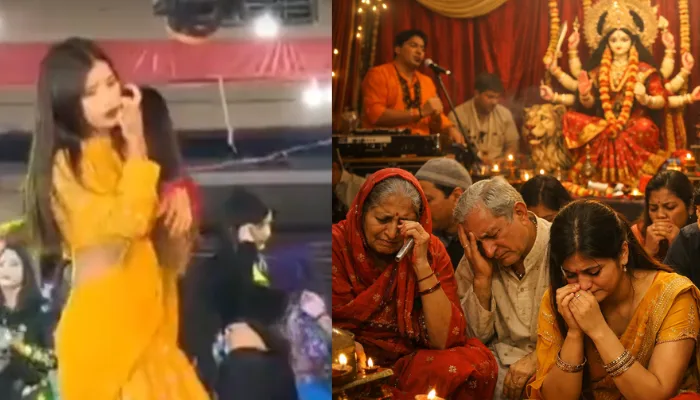
Case Summary
In the Bindki police station area of Fatehpur district of Uttar Pradesh, Navratri celebrations were desecrated as obscene dance performances took place during a jagran event, a Hindu religious event, at the Siddha Peeth Choti Kali Ji Temple. According to media reports, the temple was also celebrating a three-day annual festival, and a Devi Jagran event was organised. The event was inaugurated on 26 March 2026 by the Sub-Divisional Magistrate and the Kotwali police. Subsequently, on the nights of 27 March 2026 and 28 March 2026, female bar dancers were made to perform obscene dance on a stage at the temple premises. The temple is located just 200 metres from the police station, but the police remained uninformed. The organisers had sought permission from the Sub-Divisional Magistrate for the event at the temple in the city's Mohalla Jahanpur. The Sub-Divisional Magistrate summoned a report from the Kotwali police. In their report, the police recommended allowing one day of Devi Jagran and two days of cultural programmes, based on which the Sub-Divisional Magistrate granted permission for the event. Later, the organisers were accused of misleading the Sub-Divisional Magistrate and the police. A video of the incident went viral on social media, and multiple Hindu users expressed outrage over this. They stated that such obscene acts during sacred events and festivals hurt the religious sentiments of Hindus.
Why it is Hate Crime ?
The primary category selected in this case is- Attack on Hindu religious representations. The subcategory selected is- Defiling religious customs. Sanatan Dharma is not a religion of one book, which is to say that while it has religious scriptures that form the central tenets of the faith, there are several traditions followed through thousands of years, mostly passed from generation to generation orally. There are several such customs and traditions that are followed by various Hindus and Hindu sects. Defiling of these traditions and customs is a breach of an individual or group’s religious practices. Such practices can range from dietary restrictions like not eating non-vegetarian food for a certain period of the year, not eating non-vegetarian food at all, not eating beef since the cow is considered holy in Hinduism, the sanctity of religious customs followed in the house (like many ISCKON devotees), etc. Any malicious action leading to the breach of such traditions or defilement of these traditions owing to animosity towards the faith or for the sake of activism stems not only from the lack of faith in the religion itself but also from disregard for the faith of the devotees who follow the customs/traditions and implicit bias against the faith, the tradition itself. Since these specific traditions are central to the faith of the devotees of that specific sect of Hindus, any non-compliance with these traditional rules would be considered a religiously motivated hate crime. The other subcategory selected is- Breaking rules of place of worship. Sanatan Dharma is not a religion of one book, which is to say that while it has religious scriptures that form the central tenets of the faith, there are several traditions followed through thousands of years, mostly passed from generation to generation orally. One of these oral traditions or written traditions is the rules of specific temples. Certain temples have rules which are traditional rules, dependent on the worship of the presiding deities. These rules and traditions have been followed for thousands of years whether they find scriptural mention or not. Such traditions are based on the nature and rules of worship of the presiding deity of that temple. Any non-compliance of these traditions owing to animosity towards the faith or for the sake of activism stems not only from the lack of faith in the presiding deity but also disregard for the faith of the devotees of that deity/temple and implicit bias against the faith, the tradition and the deity itself. Since these specific traditions are central to the faith of the devotees of that specific temple and presiding deity, any non-compliance with these traditional rules would be considered a religiously motivated hate crime. This case constituted a clear instance of a religiously motivated offence, as vulgar dance performances took place inside a temple during a jagran event and the Navratri festival. This resulted in the desecration of the sacred Hindu festival and a religious event. Navratri holds profound religious significance in Hinduism as a vibrant nine-day festival dedicated to worshipping Goddess Durga in her nine forms, celebrated with great devotion, fasting, and vigour by the Hindu community to mark the triumph of good over evil. During this sacred period, Hindu devotees establish temporary pandals or gather at ancient temples like Siddha Peeth Choti Kali Ji as sanctified shrines, invoking Goddess Durga's presence through elaborate rituals, bhajans, aarti, and offerings to seek her blessings for protection, strength, prosperity, and victory against adversities. Jagran, a key all-night vigil during Navratri, especially on Ashtami and Navami, involves continuous devotional singing, prayers, and storytelling of sacred texts like Durga Saptashati to stay awake in reverence, fostering spiritual awakening and communal bonding in an atmosphere of purity. The temple serves as a sanctified space embodying utmost purity, reverence, and religious devotion, where Hindu families, including children and elders, gather to honour this auspicious occasion and immerse themselves in divine energy. Performing vulgar dances to obscene songs on the open stage inside Siddha Peeth Choti Kali Ji Temple in Bindki, Fatehpur, constituted a grave desecration of the sacred Navratri festival. Such acts directly defiled the temple's sanctity by introducing profanity and impurity into a space meant for spiritual elevation, undermining the festival's core purpose of veneration during the Devi Jagran. Organisers permitting or staging these performances for two consecutive nights demonstrated blatant disregard for Hindu traditions and sacred spaces, effectively tarnishing the honour of the Choti Kali temple and the devotees' solemn rituals. This incident exemplified a religiously motivated hate crime through deliberate religious undermining and animosity. By infiltrating a sacred Hindu celebration with lewd bar dancer performances under the guise of cultural programmes, the organisers and performers intentionally provoked outrage, assaulted Hindu religious sentiments, and humiliated participants, particularly families gathered for the jagran. The calculated violation of purity norms and sacred rules in a revered temple revealed intent to demean Hinduism's foundational values, aligning with patterns of targeted desecration against Hindu sacred spaces and festivals. Given that this case met the parameters of a religiously motivated offence, it was added to the hate crime database of the Hinduphobia Tracker.


Case Status
Unknown


Perpetrators Details
Perpetrators
Others
Perpetrators Range
Unknown
Perpetrators Gender
female
 Sources




