Minor Hindu boy assaulted, tilak wiped off, forced to drink urine and saliva by Muslims for opposing their anti-Hindu social media posts
 Raebareli, Uttar Pradesh, India
  27 March, 2026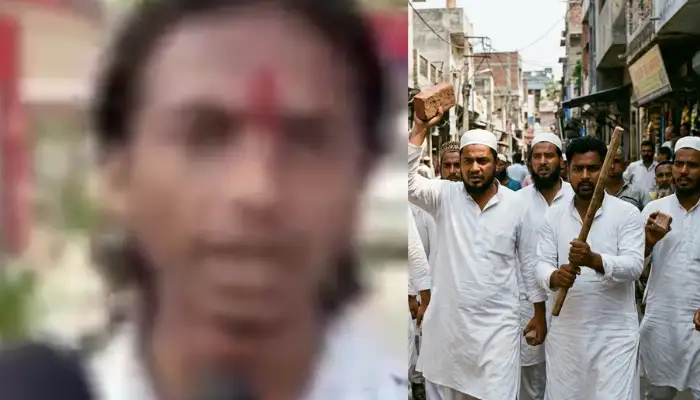
Case Summary
In Chakpir Shah village, located in the Raebareli district of Uttar Pradesh, a minor Hindu boy belonging to the Dalit community was brutally assaulted by members of the Muslim community after he opposed their anti-Hindu social media posts and videos. The perpetrators wiped the victim's tilak, a sacred Hindu religious mark worn on the forehead, and forcibly made him drink saliva and urine. They also hurled religious abuses at him. According to media reports, this incident came to light when the victim filed a police complaint at a local police station. The victim stated that the Muslim perpetrators constantly made anti-Hindu videos and posts on social media, targeting and abusing the Hindu faith. To this, the victim had opposed and told the perpetrators not to make such videos. Outraged by this opposition, the Muslim perpetrators took revenge by attacking the Hindu victim. A video of the Hindu boy sharing his ordeal went viral on social media. As per the victim's testimony, on the day of the incident, 28 March 2026, during the evening, when he was outside, the perpetrators confronted the victim and assaulted him with weapons like sticks and sharp weapons. They also mocked him by stating, "Your Hindu faith cannot harm us in any way, nor can your Bajrang Dal (a Hindu organisation)". Following this, the accused spat on him, wiped off his tilak and forcibly made him drink spit and urine. The victim also said that the perpetrators had taken out a sickle to attack the victim. As a result of this, the Hindu boy shouted for help, alarming all nearby residents. A few residents assembled at the spot to help him. To this, the perpetrators got angry and threatened to kill the victim and fled the spot. Following this, the victim filed a police complaint against the accused at the Mill Area police station, and the police began an investigation based on his statements.
Why it is Hate Crime ?
This case is being added to the tracker under the primary category- Hate Speech against Hindus. The subcategory selected is- Anti-Hindu slurs, mocking faith. Anti-Hindu slurs and the deliberate mocking of the Hindu faith owing to religious animosity involve the usage of derogatory terms, stereotypes, or offensive references to religious practices, symbols, or figures. One of the common anti-Hindu slurs used against Hindus is “cow-worshipper” and “cow piss drinker”. The intention of using this term is to demean and mock Hindus as a group and their religious beliefs since Hindus consider the cow holy. Additionally, some symbols and the slurs attached to them have a historical context that exacerbates the insult, hate, stereotyping, dehumanisation and oppression against Hindus. Cow worship has been used for centuries to denigrate Hindus, insult their faith and oppress Hindus specifically as a religious group. There has been overwhelming documentation about how cow slaughter has been used to persecute Hindus with cow meat being thrown in temples and places of worship. There has also been overwhelming documentation where cow meat (beef) has been force-fed to Hindus to either forcefully convert them to Islam or denigrate their faith. Apart from cow worship, the Swastika – which holds deep religious significance for the Hindus – has also been misinterpreted and distorted to use as a slur against Hindus. Similarly, the worship of the Shivling has been used by supremacist ideologies and religions to denigrate Hindus owing to religious animosity. Such slurs and denigration stem out of inherent animosity and hate towards Hindus and their faith, therefore, it is categorised as hate speech targeted at Hindus specifically owing to their religious identity. Another primary category selected is- Attack not resulting in death. The subcategory selected is- Attacked for opposing radicals or trying to save victims. In several cases, Hindus are attacked for opposing religiously motivated crimes being committed against a fellow Hindu or simply for voicing an opinion opposing radical elements, who either have in the past or continue to persecute Hindus. In such cases, the initial attack against the victim, against which the Hindu was trying to defend the victim, would also need to be classified as a religiously motivated hate crime. Since the initial crime itself was religiously motivated and the subsequent crime of attempting to save the victim or speaking against the radical elements ends up inviting a violent attack, it would also be classified as a religiously motivated hate crime under this category. The other subcategory selected is- Attacked for Hindu identity. In several cases, Hindus are attacked merely for their Hindu identity without any perceived provocation. A classic example of this category of religiously motivated hate crime is a murder in 2016. 7 ISIS terrorists were convicted for shooting a school principal in Kanpur because they got ‘triggered’ seeing the Kalava on his wrist and tilak that he had put. In this, the Hindu victim had offered no provocation except for his Hindu religious identity. The motivation for the murder was purely religious, driven by religious supremacy. Such cases where Hindus are targeted merely for their religious identity would be documented as a hate crime under this category. Another primary category selected is- Attack on Hindu religious representations. The subcategory selected is- Desecration of Hindu religious symbol. Icons and symbols or a religious representation of a spiritual ideal are widely revered in Hinduism. Iconography is of vital significance in the Hindu milieu. It helps connect people’s spiritual beliefs with the real world. Iconography within the Hindu faith takes several shapes and forms. Murtis are of most significance to Hindus, to which daily rituals, prayers and offerings are done. Besides the murtis, there are several other symbols which have deep significance in the Hindu faith – the Om and Swastika for example. Since these Hindu religious symbols hold paramount importance in Hinduism, any desecration of symbols, icons, murtis, religious representations and manifestations, is driven by animosity towards the faith itself which manifests itself through these murtis, icons and symbols. Therefore, any desecration of these Hindu religious symbols and representations is considered religiously motivated hate crimes under this category. This case is a clear instance of a religiously motivated hate crime, as the Muslim perpetrators viciously attacked a minor Dalit Hindu boy purely for opposing their derogatory remarks against the Hindu faith on social media. They brutally assaulted him with sticks and sharp weapons, forcibly made him drink saliva and urine, wiped off his sacred tilak from his forehead, and hurled vile abuses at him. These calculated acts of degradation and violence, rooted in retaliation for his defence of Hinduism, expose the perpetrators' deep-seated animosity and hatred towards the Hindu faith, transforming the assault into an unmistakable religiously motivated hate crime. The fact that this incident ignited when the perpetrators spewed derogatory remarks against the Hindu faith through social media videos underscores their profound religious animosity towards the Hindu community. For a Hindu devotee, faith forms the bedrock of their existence; they grow up immersed in its rituals, stories, and values, forging an unbreakable emotional and spiritual bond that defines their very identity at its deepest core. When individuals or groups broadcast such insults on social media, it wounds the religious sentiments of millions of Hindu devotees worldwide, amplifying the outrage through viral reach to hurt the maximum number of Hindus. This deliberate public dissemination of hate speech reveals their intent to outrage Hindu sentiments on a massive scale, cementing this as a clear case of religiously motivated hate crime. When the minor Dalit Hindu boy opposed these anti-Hindu tirades, the Muslim perpetrators retaliated with savage brutality, arming themselves with sticks and sharp weapons to assault him simply for challenging their denigration of his faith. This ferocious response solely for voicing dissent against their anti-Hindu rhetoric illustrates how Hindus face violent reprisals for resisting radical Muslims and their anti-Hindu propaganda online. The targeted assault on a young Hindu boy who dared to protect his religion's honour exposes the perpetrators' intolerance for any pushback, marking this as a textbook religiously motivated hate crime driven by vengeance against Hindu defiance. The Muslim perpetrators' act of wiping off the boy's tilak further proves the attack stemmed not only from retaliation for his opposition but also from visceral hatred for his Hindu identity. By deliberately smearing and removing this sacred mark, they sought to erase visible symbols of his faith, inflicting profound humiliation tied to his religious belonging. This targeted desecration reveals an immense loathing for Hinduism itself, amplifying the religious motivation behind the violence and establishing it as a clear case of religiously motivated hate crime. While attacking the Hindu boy, the Muslim perpetrators taunted him with anti-Hindu remarks, mockingly declaring that "your Hindu faith cannot harm us in any way nor can your Bajrang Dal do anything to us." These statements confirm the victim was singled out due to raw religious animosity towards Hinduism and the Hindu community, as the attackers belittled his entire faith and its protective organisations to justify their savagery. By voicing such contempt, they demonstrated utter disdain for Hindu beliefs, rationalising their assault and degradation as a triumph over the Hindu religion, which solidifies this as a religiously motivated hate crime. The desecration of the tilak alone constitutes a grave offence, as this sacred Hindu religious mark symbolises divine blessings, spiritual purity, and devotion, applied reverentially on the forehead during prayers and festivals to invoke protection from deities. The Muslim perpetrators forcibly wiping it off with saliva represents a direct assault on this holy emblem, mocking and invalidating the victim's piety in the most degrading manner. Such an affront to a core Hindu symbol deeply wounds religious sentiments, intentionally profaning a symbol central to Hindu identity and practice, thereby qualifying the incident as a clear religiously motivated hate crime. The perpetrators' ultimate degradation, surrounding the Hindu boy, holding him captive, spitting on him, and forcibly making him drink their saliva and urine, highlights the extreme severity and religious zeal fuelling their desire to dehumanise the Hindu victim for his religious identity. They pinned him down, pried open his mouth, and poured the filth directly into it, revelling in his helplessness to maximise his humiliation as a Hindu. This barbaric ritual of forced consumption aimed to break his spirit, pollute his body with impurities antithetical to Hindu purity laws, and assert religious dominance over him solely because of his faith, rooting the entire atrocity in anti-Hindu animosity and marking it as a profoundly religiously motivated hate crime. The victim was also subjected to death threats by the Muslim perpetrators. This act was designed to send chilling waves of terror through the minor Hindu victim and instil paralysing fear in him for simply defending his faith. By menacing him with lethal violence solely for his Hindu identity and opposition to anti-Hindu slurs, they aimed to intimidate him into silence and submission, breaking his spirit through mortal dread. This escalation reveals the Muslim assailants' willingness to go to any extreme lengths to punish and eradicate perceived Hindu defiance, underscoring a profound hatred that weaponises fear to suppress the entire Hindu community's religious expression. Overall, this entire incident pulsates with religious animosity, as the Muslim perpetrators orchestrated their violence to assert Islamic supremacy, systematically humiliating the Hindu victim explicitly for his religious identity while indirectly proclaiming Muslim dominance over Hindus. By targeting him with calculated degradation tied to his faith, they sought to strip away his dignity, render him powerless and broken, and compel subservience from him and his community, sending a menacing signal that Hindus must cower under the weight of such religiously fuelled aggression. This brazen pattern of ritualistic humiliation during attacks on Hindus reveals a deliberate agenda to subjugate an entire faith and community through terror and symbolic domination, leaving Hindu victims scared and humiliated. Given that this case meets all key parameters of a hate crime, including targeted violence, religious desecration, hate speech, and retaliatory brutality against Hindu identity, it has been added to the hate crime database of the Hinduphobia Tracker.
Victim Details
Total Victim
1
Deceased
0
Gender
- Male 1
- Female 0
- Third Gender 0
- Unknown 0
Caste
- SC/ST 1
- OBC 0
- General 0
- Unknown 0
Age Group
- Minor 1
- Adult 0
- Senior Citizen 0
- Unknown 0


Case Status
Complaint filed


Perpetrators Details
Perpetrators
Muslim Extremists
Perpetrators Range
Unknown
Perpetrators Gender
male
 Sources




