Dalit Hindu community targeted in derogatory post by Muslim influencer, accused has also mocked Hindu deities in the past
 Pilibhit, Uttar Pradesh, India
  21 March, 2026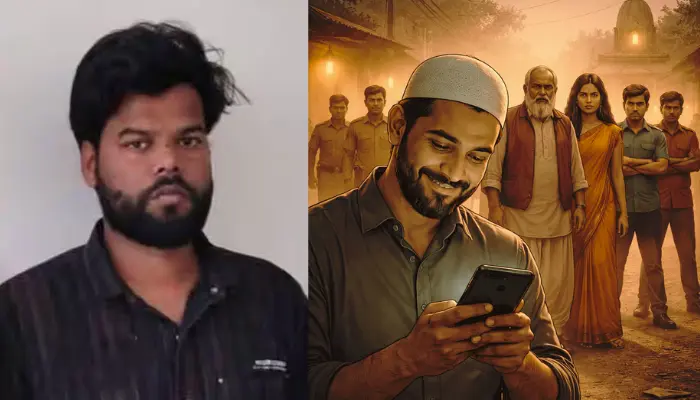
Case Summary
In the Pilibhit district of Uttar Pradesh, the Hindu Dalit community was targeted by a Muslim influencer. He used derogatory language against them in a video posted on social media. As per reports, the accused was identified as Wasim Raza, a resident of Naugawan Pakdiya village, who operated a social media account under the name “Mr Pilibhit”. The video was recorded during his visit to the Pilibhit Tiger Reserve and later uploaded online. In the video, he used derogatory language against the Valmiki community. Members of the community also stated that he had made similar offensive remarks earlier and had passed objectionable comments on Hindu deities in the past. After the video went viral, tension escalated in the area. Hundreds of members of the Hindu community gathered in protest, assembled at a Valmiki temple in the Nakhasa locality and took out a procession on 22 March,2026. Senior administrative and police officials, including the Additional Superintendent of Police, City Magistrate, and Circle Officer, arrived at the scene with a large police force to control the situation. Following the protest, the police registered a case against the accused under relevant provisions of the Bharatiya Nyaya Sanhita and the Information Technology Act. The FIR was lodged on the basis of a complaint filed by a resident. The accused was arrested by Sungarhi police and subsequently sent to jail.
Why it is Hate Crime ?
The primary category selected in this case is- Hate speech against Hindus. The selected subcategory is - Anti-Hindu slurs, mocking faith. Anti-Hindu slurs and the deliberate mocking of the Hindu faith owing to religious animosity involve the usage of derogatory terms, stereotypes, or offensive references to religious practices, symbols, or figures. One of the common anti-Hindu slurs used against Hindus is “cow-worshipper” and “cow piss drinker”. The intention of using this term is to demean and mock Hindus as a group and their religious beliefs since Hindus consider the cow holy. Additionally, some symbols and the slurs attached to them have a historical context that exacerbates the insult, hate, stereotyping, dehumanisation and oppression against Hindus. Cow worship has been used for centuries to denigrate Hindus, insult their faith and oppress Hindus specifically as a religious group. There has been overwhelming documentation about how cow slaughter has been used to persecute Hindus, with cow meat being thrown in temples and places of worship. There has also been overwhelming documentation where cow meat (beef) has been force-fed to Hindus to either forcefully convert them to Islam or denigrate their faith. Apart from cow worship, the Swastika – which holds deep religious significance for the Hindus – has also been misinterpreted and distorted to use as a slur against Hindus. Similarly, the worship of the Shivling has been used by supremacist ideologies and religions to denigrate Hindus owing to religious animosity. Such slurs and denigration stem from inherent animosity and hate towards Hindus and their faith; therefore, it is categorised as hate speech targeted at Hindus specifically owing to their religious identity. This case constituted a clear instance of targeted abuse where a Muslim man deliberately made derogatory remarks against the Valmiki community. The targeting itself was specific and proved hostility targeted towards a community because of their Hindu identity. Notably, the act that hurt the sentiments of Hindus was not casual or offhand; it involved the deliberate creation and circulation of a video. This certified that the decision to publicly demean a specific Hindu community was intentional and premeditated. Further, the use of offensive language against the Hindu community demonstrated an intent to insult and degrade their identity. Such remarks were not limited to criticism but crossed into deliberate humiliation, aimed at lowering the dignity of the community and provoking outrage. Moreover, reports indicated that the accused was a habitual offender who was engaged in similar conduct in the past, including objectionable comments on Hindu deities. This pattern was significant. It showed that the act was not isolated but part of a continued behaviour marked by hostility towards Hindu beliefs and communities. Importantly, the reaction from the community underscored the gravity of the offence. Members of the Valmiki community gathered in protest, indicating that the remarks had caused deep hurt and collective distress. The scale of the protest reflected the extent to which the statements were perceived as an attack on their identity. Many might argue that the remarks were directed at a specific caste group rather than Hindus as a whole. However, such an argument overlooked the broader context. The Valmiki community forms an integral part of the Hindu social fabric, and targeting it with derogatory language inherently amounts to targeting Hindus as a collective. In this case, the deliberate use of insulting language, the public nature of the act, and the prior pattern of similar remarks demonstrated that the conduct was driven by entrenched hostility. It was not merely offensive speech but a targeted attempt to demean a Hindu community and its identity. Therefore, this incident qualified as a religiously motivated hate crime. Disclaimer: The media reported that the Hindu community was targeted by the derogatory remarks; however, the exact number of individuals affected was not specified. Therefore, the victim count was not precisely determined and has been conservatively recorded as a collective community impact. The Hinduphobia Tracker records incident dates based on when the victim's ordeal began, rather than when the media reported it. In this case, the report does not mention when the video was published but mentions the date when the protest was staged, 22 March, 2026; therefore, it has been recorded as the indicative incident date for documentation purposes.


Case Status
Arrested


Perpetrators Details
Perpetrators
Muslim Extremists
Perpetrators Range
One Person
Perpetrators Gender
male
 Sources




