Poor Hindus exploited through false promises of curing illnesses and financial aids for conversion by Christian missionaries
 Gorakhpur, Uttar Pradesh, India
  21 March, 2026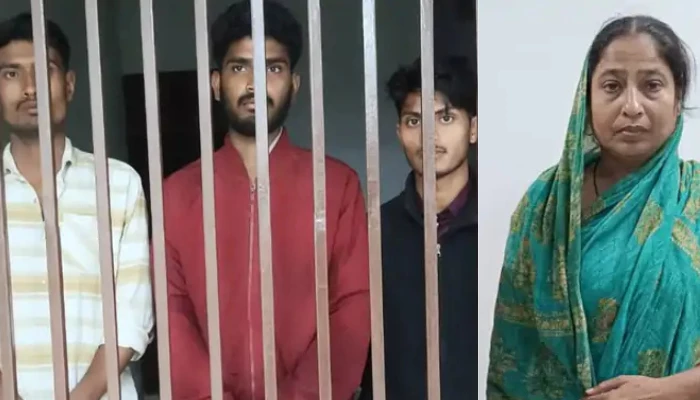
Case Summary
In Gorakhpur district, Uttar Pradesh, poor and vulnerable Hindus were lured and forced to convert to Christianity under the guise of healing. They were induced by the promise of financial benefits and the curing of illnesses by Christian missionaries. According to information, locals stated that activities regarding the conversion of poor Hindus were reported in Gulriha Bazaar, Bhathat, areas around Ayush University, Jungle Ekla, Sarhari, Pipraich, and PPganj, especially near missionary schools. However, no formal complaint had been filed earlier. Similar activities were also reported in neighbouring districts such as Sant Kabir Nagar, Kushinagar, and Maharajganj. On Sunday, 22 March, 2026, Sheetal Mishra, a resident of Surajkund in the Gorakhnath police station area, submitted a written complaint at Gulriha police station. In the complaint, it was stated that Christian missionaries were persuading people to convert by offering money. Based on the complaint, the police initiated an investigation. As per the complaint, weekly prayer meetings were being organised in the area every Sunday. A video related to such a gathering also surfaced. Hindus were being called to these prayer meetings on the pretext of curing illnesses and removing spirit-related issues, after which they were offered money and other benefits to convert. During the investigation, it emerged that a converted Christian named Wilson, a resident of Bihar, was operating with Amit Singh, a resident of Ramkola in Kushinagar, his mother, Rita Devi, Vicky Kumar, a resident of Sarhari in Gulriha, and Kanhaiya Yadav, a resident of Ward No. 6 in PPganj. Acting on this information, the police team conducted a raid and arrested four accused, including a mother and son. The arrested individuals were identified as Amit Singh, Rita Devi, Vicky Kumar, and Kanhaiya Yadav, while Wilson remained absconding. It was revealed in the investigation that Hindus from economically weaker and backward sections were being targeted. They were promised better financial support and improved facilities upon changing their religion. Following the arrest, a case was registered at Gulriha police station under the relevant provisions of the Uttar Pradesh Prohibition of Unlawful Conversion of Religion Act. Police further stated that indications of involvement of more individuals had been found, and efforts were underway to identify a possible organised network. Call detail records of the accused were also being examined as part of the investigation. Legal proceedings against the accused were ongoing during the drafting of the report.
Why it is Hate Crime ?
This case has been added to the tracker under the primary category of Predatory Proselytisation. Within it, the sub-category selected is- Conversion/ attempts to convert by inducement. Predatory Proselytisation is not just limited to threat, harassment, force and violence, but it also has contours of stealth. In several cases, the Hindu victim is exploited to convert, with non-Hindus taking advantage of their poverty. In such cases, the Hindu victim who is suffering financially is offered monetary benefits, including lucrative offers for jobs, health treatment, education, etc, to induce the victim into changing his/her religion. In such cases, the religious identity of the victim and the aim to disenfranchise him from his faith form the heart of the crime. Also, taking advantage of and exploiting an individual’s economic vulnerabilities is widely acknowledged as exploitation, forms of which are often penalised by law. Such cases, therefore, are considered religiously motivated hate crimes since the victim’s religious identity forms the very heart of the crime itself. The other selected sub-category is Predatory Proselytisation. Within it, the sub-category selected is- Proselytisation by grooming, brainwashing, manipulation or subtle indoctrination. Religious brainwashing essentially means the often subtle and forcible indoctrination to induce someone to give up their religious beliefs to accept contrasting, regimented ideas. Religious grooming or brainwashing also involves propaganda and manipulation. It involves the systematic effort, driven by religious malice and indoctrination, to persuade “non-believers’ to accept allegiance, command, or doctrine to and of a contrasting faith. Cases of such grooming or brainwashing are far more nuanced than direct threats, coercion, inducement and violence. In such cases, it is often seen that there is repeated, subtle and continual manipulation of the victim to induce disaffection towards their own faith and acceptance of the contrasting faith of the perpetrator. While subtle indoctrination is widely acknowledged as predatory, an element which is often understated in such conversions or the attempts of such conversion is the role of loyalty and trust which might develop between the perpetrator and the victim. Fiduciary relationships are often abused to affect such religious conversion. For example, an educator transmitting religious doctrine of a competing faith to a Hindu student. The Hindu student is likely to accept what the teacher is transmitting owing to the existence of the fiduciary relationship. The exploitation of the fiduciary relationship to religiously indoctrinate victims would also be included in this category. Since the underlying animosity towards the victim’s faith forms the basis of predatory proselytisation, such cases are considered religiously motivated hate crimes. This case has been added to the tracker because poor and economically vulnerable Hindus were deliberately targeted and induced to convert through monetary incentives and organised prayer gatherings. Firstly, the trigger of the incident lay in the religious identity of the victims. The individuals who were approached and persuaded were Hindus, and they were specifically chosen because they belonged to weaker economic backgrounds. This was not random outreach but a targeted effort aimed at a particular religious community. The intention was clear to move Hindus away from their faith by exploiting their circumstances. Their identity as Hindus remained central to why they were chosen and how they were approached. Secondly, the use of money and promises of better facilities demonstrated a calculated attempt to exploit vulnerability. Offering financial benefits to individuals already struggling was not an act of kindness; it was a cruel tactic. It reduced faith to a transaction. When survival needs were placed against religious identity, genuine consent became compromised. This reflected a conscious effort to prey upon poor Hindus and push them towards conversion. Thirdly, the method adopted through regular prayer meetings showed a pattern of subtle and sustained indoctrination. People were called under the pretext of healing and relief from illness or supernatural distress. For vulnerable individuals, such promises carried emotional weight. However, these gatherings were not neutral spaces. They were structured environments designed to influence belief. Using healing as a hook to draw in poor Hindus was a manipulative tactic that exploited their situation and weakened their resistance over time. Further, the role of Christian missionaries like Wilson, who had himself converted and then began influencing others, reflected a chain of targeted outreach. This was not an isolated act but part of a continuing effort. Converted individuals were used to approach other Hindus, making the process more familiar and persuasive. This indicated a structured and deliberate pattern rather than a spontaneous occurrence. Moreover, the continuation of such activities across multiple locations and over a period reinforced that this was not incidental. The absence of earlier formal complaints did not negate the persistence of these acts. Instead, it suggested that such efforts were carried out quietly to avoid scrutiny. This sustained targeting added to the gravity of the offence. Finally, pressuring Hindus to abandon their faith through inducements and psychological conditioning amounted to a direct attack on their religious identity. It stripped individuals of genuine choice by placing their immediate needs and vulnerabilities above their beliefs. This was not a voluntary change but an influence built on imbalance, where vulnerable individuals were gradually pushed away from their faith. The Christian faith, by its very theological foundations, places a strong emphasis on proselytisation. In pursuit of conversion objectives, Christian evangelists often employ unethical means, ranging from psychological pressure and misinformation to inducements such as money or jobs. This systematic attempt to erode the religious foundation of individuals and replace it with allegiance to another faith reflects deep religious malice and animus against the Hindu identity. Taken together, these elements showed a clear pattern of targeting, inducement, and sustained influence, rooted in the intent to alter the religious identity of Hindus.


Case Status
Case sub-judice


Perpetrators Details
Perpetrators
Christian Extremists
Perpetrators Range
From 2 To 5
Perpetrators Gender
both
 Sources




