Hindu sentiments outraged as West Bengal politician makes offensive remarks against Lord Ram ahead of Ram Navami festival
 Bolpur, West Bengal, India
  21 March, 2026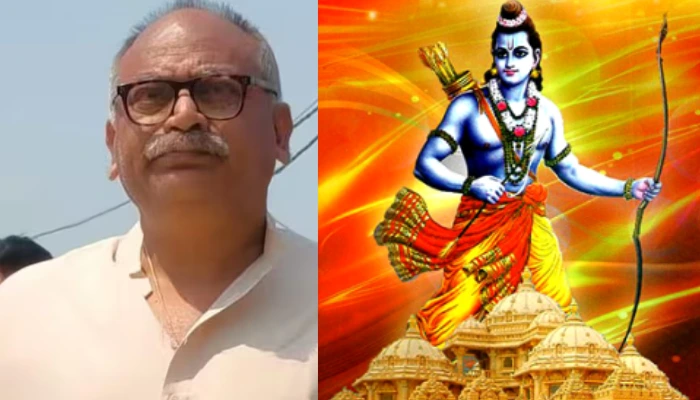
Case Summary
In West Bengal’s Bolpur, offensive remarks against Lord Ram were made by Trinamool Congress (TMC) leader Chandranath Sinha ahead of Ram Navami. The accused also mocked the revered Hindu slogan "Jai Sri Ram". According to media reports, this occurred during an election campaign rally at Ward No. 20 of the Bolpur Municipality. Here, the accused made offensive remarks on Lord Ram by saying that “Lord Ram is a north Indian deity” and that in Bengal, only Goddess Kali is worshipped. He also went on to mock the revered Hindu slogan “Jai Sri Ram” by saying that “Jai Sri Ram” would not work in West Bengal. He stated: “The same thing is repeatedly said by the BJP: we don't want Muslim votes. This is said to provoke Hindus. The Bharatiya Janata Party (BJP) is religious and boasts of false religion. This time, Prime Minister Narendra Modi did not say ‘Jai Shri Ram’ when he came here; he said ‘Jai Maa Kali’. In 2024, he said ‘Jai Shri Ram’. This means that the BJP is a North Indian party, and Ramchandra is a North Indian deity. That's why they used to invoke Ramchandra's name, but now they have realised that Ramchandra will not work in Bengal. That's why they first invoked Kali along with Durga, but Mamata Banerjee is donating to clubs for Durga Puja, so they have realised that Durga will not work either. We are devotees of Maa Kali here in Bengal. That's why they are invoking Maa Kali. They are trading votes in the name of religion.” His statement heated up the political atmosphere and sparked accusations and counter‑accusations between various parties. The BJP strongly criticised this statement. Party leaders said such comments hurt the religious sentiments of Hindus. The BJP district leadership also reacted sharply, criticising Chandranath Sinha and calling his statement unfortunate. At the time of writing this report, no detailed response had come from Chandranath Sinha regarding this entire controversy. However, the issue continued to remain at the centre of political discussion.
Why it is Hate Crime ?
This case is being added to the tracker under the primary category- Hate Speech against Hindus. The subcategory selected is- Anti-Hindu slurs, mocking faith. Anti-Hindu slurs and the deliberate mocking of the Hindu faith owing to religious animosity involve the usage of derogatory terms, stereotypes, or offensive references to religious practices, symbols, or figures. One of the common anti-Hindu slurs used against Hindus is “cow-worshipper” and “cow piss drinker”. The intention of using this term is to demean and mock Hindus as a group and their religious beliefs since Hindus consider the cow holy. Additionally, some symbols and the slurs attached to them have a historical context that exacerbates the insult, hate, stereotyping, dehumanisation and oppression against Hindus. Cow worship has been used for centuries to denigrate Hindus, insult their faith and oppress Hindus specifically as a religious group. There has been overwhelming documentation about how cow slaughter has been used to persecute Hindus with cow meat being thrown in temples and places of worship. There has also been overwhelming documentation where cow meat (beef) has been force-fed to Hindus to either forcefully convert them to Islam or denigrate their faith. Apart from cow worship, the Swastika – which holds deep religious significance for the Hindus – has also been misinterpreted and distorted to use as a slur against Hindus. Similarly, the worship of the Shivling has been used by supremacist ideologies and religions to denigrate Hindus owing to religious animosity. Such slurs and denigration stem out of inherent animosity and hate towards Hindus and their faith, therefore, it is categorised as hate speech targeted at Hindus specifically owing to their religious identity. In this case, ahead of Ram Navami, a sacred Hindu festival, Trinamool Congress (TMC) leader Chandranath Sinha made offensive remarks that directly targeted Lord Ram and ridiculed the Hindu slogan “Jai Sri Ram.” His remarks went far beyond political disagreement and constituted an intentional attack rooted in religious animosity towards Hinduism and the Hindu community, making it an anti-Hindu hate speech. Lord Ram is one of the most revered deities in Hinduism, widely regarded as the embodiment of dharma, righteousness, compassion and ideal leadership. His life, as depicted in the Ramayana, forms a core part of the moral and spiritual foundation of Hindu tradition across India. Similarly, Ram Navami, the festival that celebrates his birth, is observed with deep devotion, fasting, chanting and processions, symbolising the triumph of good over evil and the reaffirmation of faith for millions of Hindus. Therefore, any verbal attacks or mockery directed at Lord Ram are not merely personal criticism but an assault on the religious identity, beliefs and emotions of the Hindu community as a whole, and amount to religiously motivated hate speech. In his speech, the accused singled out Lord Ram by calling him a “North Indian deity” and asserting that “Jai Sri Ram and Ramchandra won’t work in Bengal.” By reducing Lord Ram to a regional, politically convenient symbol and dismissing the legitimacy of his worship in Bengal, he sought to delegitimise a core Hindu belief. He then mocked the sacred slogan “Jai Sri Ram,” treating it as a political tool that fails in Bengal, and contrasted it with the worship of Goddess Kali, implying that devotion to Ram has no place in Bengali religious life. This is not mere political rhetoric; it is a directed insult to the Hindu faith and its most cherished symbols. The way he framed these remarks adds another layer of severity. By labelling Lord Ram a “North Indian deity” and dismissing “Jai Sri Ram” as something that “won’t work in Bengal,” he trivialised the religious experiences of Hindus across the state. He then used the figure of Goddess Kali, as a supposedly “Bengali” alternative, to reinforce the idea that worship of Ram is somehow foreign or inauthentic to Bengal. This instrumentalisation of a Hindu goddess to belittle another Hindu deity exposes a deeper hostility: he is not just criticising a party or a slogan, but setting Hindu gods against each other to insult and demean Hindu religious identity as a whole. This reveals a pattern of animosity towards the Hindu community and its faith. The accused’s claim that Lord Ram is only a North Indian deity and that Bengali Hindus only worship Goddess Kali is factually false. Vaishnavite traditions within Bengal have long revered Lord Ram, alongside Krishna and other deities, and Ram bhajans, kirtans and Ram Navami observances are very much part of Bengali Hindu cultural life. By denying this reality and portraying Ram’s worship as alien to Bengal, he deliberately undermined centuries of lived Hindu practice, which reflects a profound contempt for Hinduism itself. Rather than confining his remarks to political criticism of the BJP, the accused shifted the focus to a Hindu deity and the Hindu slogan “Jai Sri Ram.” By mocking both together, he turned a religious symbol into a target of derision and ridicule. Calling Ram a “North Indian deity” and dismissing “Jai Sri Ram” as irrelevant in Bengal is not political debate; it is anti‑Hindu slurring wrapped in a political justification. This transforms his speech into a clear case of religiously targeted hate speech, where the Hindu community is singled out for insult through the degradation of its primary symbols and beliefs. The fact that the perpetrator belongs to the TMC is also significant. The TMC has, over several years, been associated with a pattern of anti‑Hindu actions and statements across West Bengal, including the denigration of Hindu deities and leaders, the disruption of Hindu processions, and the restriction of Ram Navami and Durga Puja events. In several instances, Ram Navami processions have been attacked or heavily curtailed under TMC rule, and Hindu communities have reported repeated instances of violence and intimidation. The accused’s belonging to this party situates his hate speech within a broader climate of hostility towards Hinduism and the Hindu community, making it part of a systemic pattern rather than an isolated incident. The fact that this incident occurred just ahead of Ram Navami, a major and deeply sacred Hindu festival, underscores its clear character as religiously motivated hate speech. The festival is a time of heightened devotion and profound emotional attachment for Hindus, and to deliberately mock Lord Ram and the slogan “Jai Sri Ram” at this moment is to target the community’s most revered religious occasion. Such timing is not incidental; it is clearly intended to provoke hurt, outrage and division along religious lines. The choice to insult a central Hindu deity and his most widely chanted slogan just before one of the most important Hindu festivals amounts to an act of religious provocation and squarely fits the legal and social understanding of hate speech and hate crime, where the intent to destabilise and demean Hindu religious sentiment is central to the offence. Given that this case meets the parameters of a religiously motivated hate speech, it is being added to the hate crime database of the tracker. Disclaimer: The Hinduphobia Tracker records incident dates based on when a crime occurs rather than when it is reported by the media. In this case, media reports have not specified the exact date on which the crime took place. Therefore, the date on which the media reported this incident, namely 22 March 2026, is being selected as the indicative incident date. This date is recorded for documentation purposes only.


Case Status
Unknown


Perpetrators Details
Perpetrators
State and Establishment
Perpetrators Range
One Person
Perpetrators Gender
male
 Sources




