Hindu woman and her minor daughter abducted, sexually assaulted and forcibly converted to Islam by Muslim men in Pakistan
 Sindh, Pakistan
  17 March, 2026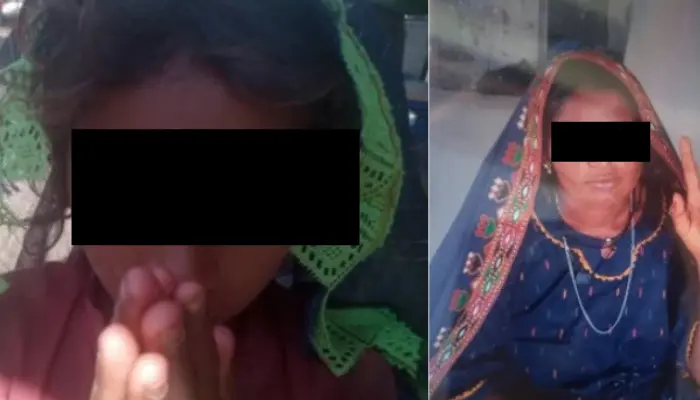
Case Summary
In Dhilyar, Khipro, Sindh province, Pakistan, a Hindu woman and her minor daughter were abducted at gunpoint, sexually abused and forcibly converted to Islam by armed Muslim men. The victims were Pari, aged around 35 years, and her daughter Sapna, aged approximately 10 years. According to media reports, the abduction was carried out at gunpoint by Muslim armed men while the victims were travelling in the area. Following the incident, information circulated indicating that both the mother and daughter were subjected to sexual assault and forcibly converted to Islam. Members of the Hindu community and local activists raised concerns about the incident and highlighted the continued vulnerability of Hindu minorities in the region. Religious minorities made up a small percentage of Pakistan’s population, with Hindus representing roughly 1.6–2% and the majority living in Sindh province. Reports also confirmed that the authorities did not take immediate action and initially failed to register a police complaint in connection with the case. The incident drew attention to repeated instances of abduction, forced conversion, and coercion involving Hindu women and minor girls in Sindh, which had been consistently raised by minority rights groups. This was not the first time that women and minor girls were abducted and forcibly converted in Pakistan. The Hinduphobia Tracker had previously documented numerous similar cases. For example, in Mirpur Khas, Sindh, a minor Hindu girl named Maria, daughter of Shamon Bheel of Village Usman Shah Hadi, Tando Allahyar, was abducted and forcibly converted to Islam. She was married to her abductor, Naeem Memon Rajput, aged twenty-nine, and her name was changed to Naila Sheikh. Her family stated that the conversion and marriage were carried out without consent and under coercion. In September 2025, in Umerkot, Sindh, a minor Hindu girl named Shardha Oad was abducted and subjected to forced religious conversion and marriage by a Muslim man named Riaz Ali and his accomplices. The case came to light after her widowed mother, Kamla Oad, approached the Women’s Police Station in Umerkot seeking justice. In September 2025, in Mirpur Khas, Sindh, a minor Hindu girl named Aneeta Thakur was abducted and subjected to forced religious conversion and marriage to a Muslim man named Abdul Rehman Mallah. This current case highlights the persecution faced by the Hindu minorities in Pakistan, marked by systemic discrimination, violence, and forced conversions. Hindu women, particularly young girls, are often abducted, forcibly converted to Islam, and married off to Muslim men with little to no legal recourse. Temples are frequently vandalised or destroyed, and Hindu communities are subjected to social and economic marginalisation. Blasphemy laws are disproportionately used against Hindus, leading to false accusations and severe punishments. Many Hindu families are forced to flee their homes due to religious intolerance, living in constant fear of attacks. This sustained persecution highlights the dire conditions for Hindus in Pakistan, where their religious identity makes them targets of oppression.
Why it is Hate Crime ?
This case has been added to the tracker under the primary category- Predatory Proselytisation. Within this, the subcategory selected is- Harassment, threats, coercion for conversion. Harassment covers a wide range of behaviours of an offensive nature. It is commonly understood as behaviour that demeans, humiliates, and intimidates a person, including threats and coercion. Harassment and threats, in this case, find their root on discriminatory grounds, which has the effect of nullifying a person’s rights or infringing upon his freedom to exercise his right specifically owing to the victim’s religious identity. Verbal and physical threats and psychological or physical harassment are often used against Hindu victims because they choose to practice their professed religion. Religious harassment also includes forced and involuntary conversions by harassment, threats or coercion. Coercion includes intimidatory tactics like force-feeding a Hindu victim beef to convert to another religion, forceful circumcision, etc. In several cases documented, non-Hindu perpetrators or those who harbour specific animosity towards Hinduism, harass victims simply based on their religious identity. Such cases often also include harassment to ensure the Hindu victim abandons his/her professed religion and adopts the religion of the perpetrator. Such cases, where Hindu victims are harassed to convert to the perpetrator’s religion, are rooted in animosity towards the victim’s religious identity and are therefore documented as religiously motivated hate crimes. Another subcategory selected is- Proselytisation by grooming, brainwashing, manipulation or subtle indoctrination. Within this, the tertiary category selected is- Pattern of targeting Hindus, Conversion of Minor, Rape and sexual assault/harassment. Religious brainwashing essentially means the often subtle and forcible indoctrination to induce someone to give up their religious beliefs to accept contrasting, regimented ideas. Religious grooming or brainwashing also involves propaganda and manipulation. It involves the systematic effort, driven by religious malice and indoctrination, to persuade “non-believers’ to accept allegiance, command, or doctrine to and of a contrasting faith. Cases of such grooming or brainwashing are far more nuanced than direct threats, coercion, inducement and violence. In such cases, it is often seen that there is repeated, subtle and continual manipulation of the victim to induce disaffection towards their own faith and acceptance of the contrasting faith of the perpetrator. While subtle indoctrination is widely acknowledged as predatory, an element which is often understated in such conversions or the attempts of such conversion is the role of loyalty and trust which might develop between the perpetrator and the victim. Fiduciary relationships are often abused to affect such religious conversion. For example, an educator transmitting religious doctrine of a competing faith to a Hindu student. The Hindu student is likely to accept what the teacher is transmitting owing to the existence of the fiduciary relationship. The exploitation of the fiduciary relationship to religiously indoctrinate victims would also be included in this category. Since the underlying animosity towards the victim’s faith forms the basis of predatory proselytisation, such cases are considered religiously motivated hate crimes. This case was added to the hate crime database because the abduction and forced conversion of a minor Hindu girl and her Hindu mother in Pakistan illustrated the exploitation of vulnerable Hindu minorities through coercion and force. Such incidents formed part of a persistent pattern in Pakistan, where Hindu minorities, particularly young girls, faced frequent kidnappings, forced religious conversions and marriages to Muslim men. This trend showcased the systemic discrimination and violence endured by the Hindu community since Pakistan’s inception. The victims in this case included a minor, Sapna, aged around 10 years. This negated any element of consent or voluntary change of faith. Children, still developing emotionally and cognitively, are especially vulnerable to manipulation and coercion, making them prime targets for exploiting religious differences. Abducting and coercing the Hindu minor girl for conversion in this way constituted a clear instance of a hate crime and violations of human rights and child protection norms. The sexual abuse endured by Pari and her daughter Sapna further exposed the perpetrators' religious animosity. By subjecting Hindu women to sexual assault after abduction, they aimed to degrade, humiliate and dominate them specifically for their faith. This brutal violation stripped the victims of dignity while asserting Islamic supremacy over the Hindu victims and their wider community, turning personal exploitation into a tool of religious hatred against the Hindu community. The act of forced conversion violated the victims' religious rights in the most profound way. The perpetrators deliberately worked to erase Pari and Sapna's Hindu faith, stripping away their sacred beliefs, rituals and cultural identity, then imposed Islam upon them against their will. This was no accident; it targeted their core religious identity to break their spirit and force submission. Such actions revealed deep animosity towards Hinduism and the Hindu community, using coercion to diminish their faith while elevating another. This makes it a clear hate crime: religiously motivated violence that attacks a minority group's beliefs to intimidate and eradicate them, far beyond any personal motive. As the motive behind the crime was rooted in religious targeting and coercion, this case met the threshold of a hate crime and was therefore included in the hate crime database of the Hinduphobia Tracker. Disclaimer: The Hinduphobia Tracker records the date of an incident based on when the crime occurred, rather than when it was reported. In this case, the exact date of the incident was not specified. Therefore, the date on which the matter was first highlighted in the media, 18 March 2026, was used as the indicative date for documentation purposes.
Victim Details
Total Victim
2
Deceased
0
Gender
- Male 0
- Female 2
- Third Gender 0
- Unknown 0
Caste
- SC/ST 0
- OBC 0
- General 0
- Unknown 2
Age Group
- Minor 1
- Adult 1
- Senior Citizen 0
- Unknown 0


Case Status
Unknown


Perpetrators Details
Perpetrators
Muslim Extremists
Perpetrators Range
Unknown
Perpetrators Gender
male
 Sources




