Revered Hindu historical leader maliciously denigrated by former Maharashtra minister in Mumbai, Maharsahtra
 Mumbai, Maharashtra, India
  15 March, 2026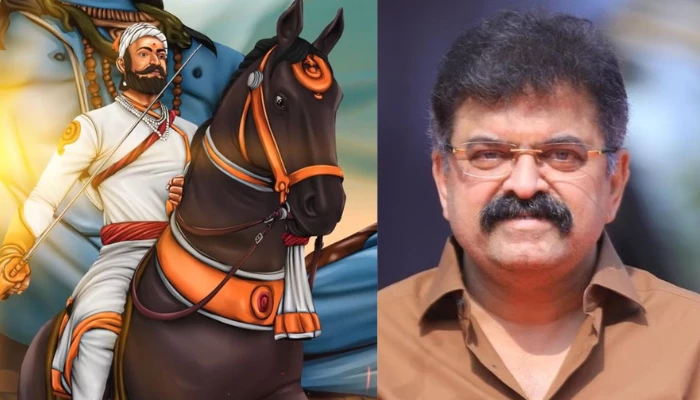
Case Summary
In Mumbai, Maharashtra, revered Hindu religious king, Chhatrapati Shivaji Maharaj, was defamed and disrespected by NCP-SCP (Nationalist Congress Party - Sharadchandra Pawar) Member of Legislative Assembly, Jitendra Awhad. On 16 March 2026, during a discussion on the Maharashtra Freedom of Religion Bill in the state legislative assembly, Jitendra Awhad made a controversial remark regarding the coronation of Chhatrapati Shivaji Maharaj, which triggered immediate outrage inside the House. As per reports, Awhad stated that “he had applied a tilak with the foot”, claiming that this assertion was based on a book. The remark was strongly opposed and objected to as it was perceived as objectionable and disrespectful towards a revered historical and cultural figure. Following this statement, members of the ruling party strongly objected, leading to a major disruption in the assembly proceedings. Several legislators began protesting inside the House, resulting in chaos and forcing the session to be adjourned for approximately 10 minutes. Maharashtra Assembly Speaker Rahul Narwekar intervened and directed Awhad to withdraw his remarks and issue an apology. He also ordered that the controversial statements be expunged from the official records of the House. During the proceedings, state minister Shambhuraj Desai strongly criticised Awhad’s statement, asserting that misinterpreting or selectively citing historical references to insult a revered figure would not be tolerated. He demanded that Awhad immediately apologise for his remarks. Other leaders, including BJP MLA Nitesh Rane, also demanded strict action, including suspension, stating that the apology initially offered was insufficient given the nature of the remark. Amid mounting pressure and continued disruption, Awhad eventually withdrew his statement and issued a formal apology in the assembly, expressing regret for hurting sentiments. The incident led to sharp political reactions, with multiple legislators stating that remarks against Shivaji Maharaj, who is widely revered across Maharashtra and by Hindus as a symbol of resistance, honour, and cultural pride, were unacceptable and deeply offensive. The controversy also gained traction on social media, where videos and reactions circulated widely, amplifying public outrage and drawing further attention to the remarks made in the legislative assembly. Notably, this was not the first instance; Jitendra Ahwad had been known as a habitual offender for his Anti- Hindu stance and derogatory comments towards Hindu beliefs, leaders, and Sanatana Dharma. He had previously been associated with multiple statements that drew criticism for targeting core aspects of the Hindu faith and history. In 2023, Awhad stated, “Ram Navami and Hanuman Jayanti were created only for riots?”, a remark that was widely criticised for casting Hindu religious festivals in a negative light and questioning their legitimacy. In another statement, he commented on Mughal ruler Aurangzeb, asserting that Aurangzeb was not anti-Hindu. He said, “He (Chhatrapati Sambhaji Maharaj) was brought to Bahadurgad, where his eyes were removed. Close to the Bahadurgad Fort, there was a Vishnu Temple. Aurangzeb was cruel but not anti-Hindu. If he were anti-Hindu, he would have demolished that temple too (Vishnu Temple).” He also denied accounts of large-scale atrocities and killings of Hindus during Aurangzeb’s rule. In August 2025, Awhad made further controversial remarks regarding Sanatana Dharma. He stated, “Sanatan Dharma has ruined India. There was never any religion called Sanatan Dharma. We are followers of Hindu Dharma. It was this so-called Sanatan Dharma that denied our Chhatrapati Shivaji Maharaj his coronation. This Sanatan Dharma defamed our Chhatrapati Sambhaji Maharaj.” He further added, “One must not be afraid to say openly that Sanatan Dharma and its Sanatani ideology are perverted.” These statements attracted widespread criticism from political leaders and sections of the public. BJP leader and former minister Raj K Purohit responded by stating, “Jitendra Awhad gets elected from a region where the majority population is Muslim. To appease the community, he makes such statements.”
Why it is Hate Crime ?
This case has been added to the tracker under the primary category of - Hate speech against Hindus. The sub-category selected here is- Mocking/Denigrating Hindu leaders. Hate speech is defined as any speech, gesture, conduct, writing, or display that is prejudicial against a specific individual and/or group of people, which leads to or may lead to violence, prejudicial action or hate against that individual and/or group. Religious leaders are often seen as representatives of the community, especially the community’s religious faith and beliefs. Mocking or denigrating a religious leader specifically owing to his religious identity and/or the religious rituals he observes can be considered hate speech because the motivating factor of the speech is animosity and/or dislike for what he represents – the religious beliefs and faith of the community. It is important to note that mere insulting words against an individual do not constitute hate speech. Insulting words may be used for an individual; however, the specific speech is not the result of religious hate and/or animosity towards the professed faith of the religious leader, but the individual himself. For the speech to be considered hate speech, the speech itself or the motivating factor behind the speech has to be religious in nature. Such speech, which denigrates Hindu religious leaders specifically owing to animosity towards the faith they profess and the community faith they represent, will be treated as hate speech under this category. The other sub-category selected is: Anti-Hindu subversion and prejudice. The tertiary category selected under it is: Anti-Hindu Fake news or Downplaying Hate speech is defined as any speech, gesture, conduct, writing, or display that is prejudicial against a specific individual and/or group of people, which leads to or may lead to violence, prejudicial action or hate against that individual and/or group. Media plays a specific and overarching role in perpetuating prejudicial attitudes towards a community owing to unfair, untrue coverage and/or misrepresentation/misinterpretation, selective coverage and/or omission of facts of/about issues affecting a specific religious group. This type of bias can dehumanise the victim group, making it easier for others to justify harmful actions against them, which aligns with the objectives of hate speech laws aimed at preventing such harm. It is often observed that the media takes a prejudicial stand against the Hindu community, driven by their need to shield the aggressor community, which happens to be a numeric minority; however, that is the one perpetrating violence against Hindus. For example, the media is often quick to contextualise religiously motivated crimes against Hindus, omit or misrepresent facts that point towards religiously motivated hate crimes, justify and/or downplay religiously motivated hate crimes, or simply present fake news to stereotype Hindus. Such media bias leads to the denial of persecution and is often used to dehumanise Hindus, leading to justification for violence against them. For example, the media covered several fake allegations of Hindus targeting Muslims and forcing them to chant Jai Shree Ram. Most of these cases were proved false and fabricated after police investigation. These fake news reports were subsequently never retracted or clarified. Such fake news led to the justification of violence and dehumanisation of Hindus based on the argument that since Hindus targeted Muslims and forced them to chant Jai Shree Ram, the dehumanisation of Hindus and violence against them was par for the course and merely a retaliation. Such media bias leads to prejudicial portrayals of Hindus and offers a justification for violence against them and, therefore, is considered hate speech under this category. This case had been added to the tracker specifically for the derogatory remark made by Jitendra Awhad about Chhatrapati Shivaji Maharaj. This was not a casual or accidental statement; it was a deliberate and calculated insult directed at one of the most revered figures in Hindu history. Shivaji Maharaj is not merely a historical personality but a civilisational symbol of Hindu resistance, dignity, and self-rule. To attribute such a degrading narrative to his coronation is a direct attack on his legacy and, by extension, on the Hindu community that reveres him. The subsequent apology had not erased the intent; rather, it had reflected a familiar pattern in which offensive statements were made with full awareness and later diluted under pressure, being called a slip of the tongue. The timing and nature of the remark had carried deeper significance. In an era where Hindus across various regions had faced repeated instances of violence, suppression, and intimidation, the legacy of Shivaji Maharaj had continued to inspire resistance, courage, and adherence to Dharma. He had stood as a ruler who refused subjugation, who protected his people, and who asserted Hindu identity with pride and strength. To demean such a figure had not been an isolated act of historical misinterpretation but a deliberate attempt to weaken that very source of inspiration. Disrespecting Shivaji Maharaj in the present context had signalled an effort to psychologically condition Hindus into passivity, to strip them of assertiveness and reduce them to silent sufferers. Shivaji Maharaj had embodied the exact opposite: strength, retaliation against injustice, and fearless defence of faith. Targeting him had therefore been an attack on the spirit he represented. This incident had not stood alone but had formed part of a consistent and repeated pattern of statements made by Awhad that had targeted Hindu beliefs, traditions, and historical narratives. From questioning Hindu festivals to defending figures like Aurangzeb and making derogatory remarks about Sanatana Dharma, his record has demonstrated a clear and sustained hostility towards Hindu identity. Such repeated conduct had removed any scope for interpreting the statement as an isolated lapse. Instead, it had established a pattern of ideological bias where Hindu symbols, faith, and history had been persistently undermined. This continuity of behaviour had indicated that the animosity had been rooted not in academic debate or political critique but in a deeper disdain for Hindu civilisational identity. Furthermore, the pattern of such statements had aligned with a broader framework of political appeasement. Publicly denigrating Hindu icons while simultaneously downplaying historical atrocities committed against Hindus had served a calculated political purpose, consolidating specific vote banks by aligning with narratives that diminished Hindu assertion. Such conduct had reflected an approach where Hindu sentiments had been treated as expendable in pursuit of electoral advantage. By repeatedly targeting the Hindu faith and leaders, while softening or sanitising historical aggressors, the messaging had reinforced a perception that undermining Hindu identity had been politically beneficial. This had not been mere rhetoric; it had been a strategic positioning designed to retain power by appealing to sections that responded favourably to such narratives. Taken together, the deliberate insult to a revered Hindu leader, the broader attempt to weaken symbols of Hindu resistance, the consistent history of anti-Hindu remarks, and the underlying political motivations had clearly established that this had not been an incidental controversy. Such conduct had squarely met the threshold of hate speech and had therefore been recorded as a hate crime in the tracker.


Case Status
Unknown


Perpetrators Details
Perpetrators
State and Establishment
Perpetrators Range
One Person
Perpetrators Gender
male
 Sources




