Hindu sentiments insulted as Leftist Indian politician denigrates Lord Ayyappa and Sabarimala temple
 Kerala, India
  16 March, 2026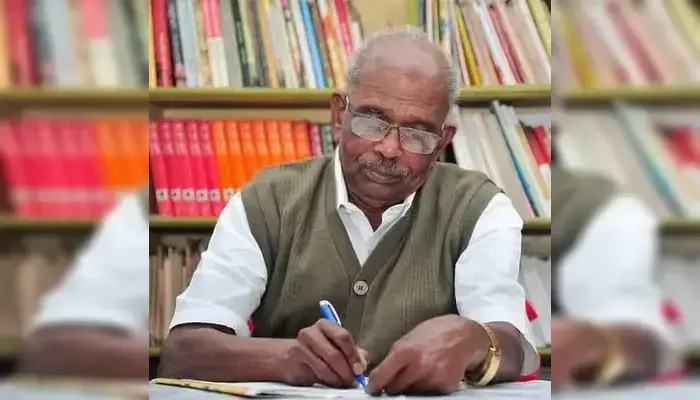
Case Summary
In Kerala, Hindu religious sentiments were insulted after Indian leftist politician M. M. Mani made derogatory remarks about Hindu beliefs, Swami Ayyappa and the Sabarimala Temple. The incident occurred during a televised interaction, where M. M. Mani, a leader of the Communist Party of India (Marxist), made disparaging remarks against a Hindu deity. He claimed that Lord Ayyappa was not “vomited by someone” but delivered by a woman, which was aimed at mocking Hindu religious narratives and beliefs. He further questioned the restriction on the entry of women of menstruating age into the Sabarimala Temple, invoking a long-standing and sensitive religious issue linked to temple traditions and judicial interventions. The statement drew criticism and was viewed in the context of similar past remarks concerning Hindu beliefs and practices by leaders associated with the CPI(M). For instance, V. Sivankutty, a CPI(M) leader and General Education Minister, had earlier faced backlash over a social media post perceived as disrespectful towards the Hindu faith during debates surrounding the film The Kerala Story 2: Goes Beyond, which depicted cases of interfaith relationships involving coercion and religious targeting.
Why it is Hate Crime ?
This case has been selected under the primary category - Hate Speech against Hindus. The subcategory selected is- Anti-Hindu slurs, mocking faith. Anti-Hindu slurs and the deliberate mocking of the Hindu faith owing to religious animosity involve the usage of derogatory terms, stereotypes, or offensive references to religious practices, symbols, or figures. One of the common anti-Hindu slurs used against Hindus is “cow-worshipper” and “cow piss drinker”. The intention of using this term is to demean and mock Hindus as a group and their religious beliefs since Hindus consider the cow holy. Additionally, some symbols and the slurs attached to them have a historical context that exacerbates the insult, hate, stereotyping, dehumanisation and oppression against Hindus. Cow worship has been used for centuries to denigrate Hindus, insult their faith and oppress Hindus specifically as a religious group. There has been overwhelming documentation about how cow slaughter has been used to persecute Hindus, with cow meat being thrown in temples and places of worship. There has also been overwhelming documentation where cow meat (beef) has been force-fed to Hindus to either forcefully convert them to Islam or denigrate their faith. Apart from cow worship, the Swastika – which holds deep religious significance for the Hindus – has also been misinterpreted and distorted to use as a slur against Hindus. Similarly, the worship of the Shivling has been used by supremacist ideologies and religions to denigrate Hindus owing to religious animosity. Such slurs and denigration stem from inherent animosity and hate towards Hindus and their faith; therefore, it is categorised as hate speech targeted at Hindus specifically owing to their religious identity. This case constituted a clear instance of religiously motivated hate speech, as M. M. Mani made derogatory and ridiculing remarks about Swami Ayyappa, a deeply revered deity in Hinduism, during a televised interaction. Instead of limiting his response to the policy or legal aspects of the long-standing debate surrounding the Sabarimala Temple, he chose to invoke and mock the birth narrative associated with Lord Ayyappa. By claiming that Ayyappa was not “vomited by someone” but delivered by a woman, he reduced a sacred religious belief to a subject of ridicule, thereby denigrating Hindu religious traditions and sentiments. For Hindu devotees, Lord Ayyappa holds immense spiritual significance, particularly in Kerala and across southern India, where millions undertake rigorous pilgrimage and observe strict religious practices to seek his blessings. The Sabarimala shrine is not merely a place of worship but a symbol of devotion, discipline, and cultural continuity. Any attempt to mock or trivialise the deity or associated beliefs is perceived as a direct affront to the faith and identity of Hindus. In this context, the remarks went beyond casual commentary and struck at the core of deeply held religious convictions. The accused had the opportunity to articulate a position on the entry of women into the Sabarimala Temple, a matter rooted in long-standing religious customs and practices, but instead chose to frame his response in a manner that targeted the religious foundation of the tradition itself. The practices and mode of worship at Sabarimala are governed by specific temple traditions, which devotees regard as integral to the sanctity of the shrine and therefore deserving of respect and preservation. These customs are not acts of discrimination but are tied to the unique nature of the deity and the form of worship observed at the temple. Notably, there are several temples in Kerala where entry is restricted for men, such as the Attukal Bhagavathy Temple during the Attukal Pongala festival, and the Chakkulathukavu Temple during specific rituals, where only women are permitted to participate. Similarly, the concept of a female-centric counterpart to Sabarimala, often associated with temples like Chottanikkara Temple, reflects the diversity of temple traditions in Hinduism. These examples highlight that such restrictions are based on temple-specific customs rather than gender-based discrimination. However, despite this context, M. M. Mani chose to invoke and mock the religious narrative associated with Swami Ayyappa, thereby exploiting a sensitive issue to ridicule Hindu beliefs instead of engaging in a respectful or reasoned discussion. The nature and framing of the remarks demonstrated more than an incidental or offhand expression; it reflected religious animosity. By invoking a sacred narrative in a mocking tone, the statement contributed to a broader pattern of normalising disrespect towards Hindu deities and traditions in public discourse. When individuals in positions of political authority make such comments, it risks legitimising similar expressions of contempt and encourages a wider culture of derision directed at Hindu religious symbols. Social media in general has devolved into a hub of anti-Hindu vitriol, inundated with derogatory memes, comments, and images that relentlessly mock and abuse Hinduism, its deities, and its revered scholars. These coordinated assaults permeate platforms daily, transforming sacred icons into punchlines and caricatures. This pervasive pattern of anti-Hindu hate speech constitutes clear instances of online Hinduphobia, inflicting profound hurt on Hindu sentiments and rendering the community a perpetual target for ridicule and abuse. Given that the incident involved the direct ridicule of a revered Hindu deity and the denigration of associated religious beliefs, it fulfilled the criteria for classification as a case of anti-Hindu hate speech. Accordingly, it has been included in the Hinduphobia Tracker database under hate speech targeting Hindu religious identity and practices. Disclaimer: The Hinduphobia Tracker records the dates of incidents based on when the crime occurs rather than when it is reported by the media. In this case, media reports did not state the exact date when the accused made these derogatory remarks. Since the media report was published on 17 March 2026, this date is selected as the indicative incident date. This is recorded for documentation purposes only.


Case Status
Unknown


Perpetrators Details
Perpetrators
Others
Perpetrators Range
One Person
Perpetrators Gender
male
 Sources




