Hindus targeted, subjected to caste-based slurs by MAGA activist, California
 California, United States
  14 March, 2026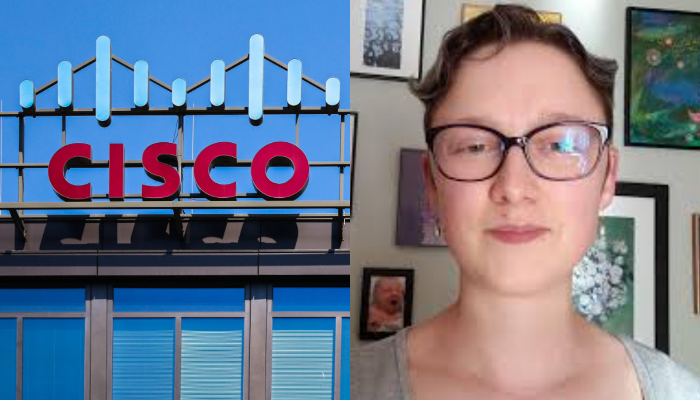
Case Summary
On 15 March (Sunday), Natasha Chart, who describes herself as an admirer of Western civilisation, an author, and a supporter of the Make America Great Again (MAGA) movement, attempted to stigmatise the Indian, particularly Hindu community, and reinforce negative stereotypes by invoking a controversial and widely debated “caste discrimination” case filed by the California Civil Rights Department (CRD) against two Indian-origin engineers from Cisco Systems Inc. in the Superior Court. Referring to the case, Chart claimed that a Dalit engineer had faced discrimination in the workplace, claiming he was denied promotions, excluded from key projects, and eventually removed. She further asserted that this treatment was due to caste bias, stating that internal communications allegedly showed hiring managers discussing caste identities and favouring individuals from their own backgrounds. On 15 March 2026, author and supporter of the (Make America Great Again) movement, Natasha Chart, stated on her Twitter profile, “ At Cisco, a Dalit engineer was blocked from promotion, kept off key projects, and eventually pushed out. Why? He wasn’t from the right caste. Internal messages showed hiring managers actively discussing caste identity, and choosing only from their own." Natasha Chart, a self-described “Western civilisation appreciator,” author and supporter of the (Make America Great Again) movement, defamed and targeted Hindus working in US Tech, Cisco. While making these claims, she amplified the narrative that Indians in the United States, particularly in the tech industry, practise caste-based discrimination. The remarks were made in response to and alongside social media discussions that portrayed Indian professionals as dominating major American companies. As per reports, in June 2020, a lawsuit was brought against Sundar Iyer and Ramana Kompella, alleging discrimination against a “self-identifying Dalit”, Chetan Narsude. It is important to mention that Chetan Narsude was voluntarily dismissed by the CRD (Civil Rights Department), a California state government agency, on 10th April 2023. The suit was dismissed as withdrawn. As per the reports, Iyer offered the “victim” an impressive package that included millions in stock grants. He gave up his equity to recruit him and other workers. Moreover, he also employed at least one additional “self-identifying Dalit” in a leadership role at the corporation. CDR, the largest state civil rights agency in the United States, was fully cognisant of the enterprise’s diversity and of the specific division in which Sundar Iyer served. It was discovered that the scheduled-caste person had been employed for 8 years at the time of the allegation. Meanwhile, CDR was unable to locate any evidence of harassment against the two Cisco Systems engineers. The Hindu American Foundation (HAF) outlined that the agency relied on deceptive “reports” published by the infamous Equality Labs, disregarded Iyer’s official status as “agnostic” for more than 20 years and wrongly labelled him as a “Hindu.” It was also revealed that the Dalit man had known him for almost 20 years, dating back to their time at the Indian Institute of Technology Bombay (IIT Bombay). “The nightmare endured is beyond imaginable and a cautionary tale for what awaits in California over caste,” HAF Director Suhag A Shukla expressed at the time. The lie, although debunked, has persisted as the racist cabal, who refuse to allow the truth to deter their propaganda, use it to attack the hard-working Indian community. The statements made by Natasha Chart were circulated widely on social media platforms, where they drew reactions and criticism, particularly for generalising allegations against Indian and Hindu professionals in the US tech sector.
Why it is Hate Crime ?
The primary category in this case is "Hate speech against Hindus". The sub-category here is "Anti-Hindi slurs mocking faith". Anti-Hindu slurs and the deliberate mocking of the Hindu faith owing to religious animosity involve the usage of derogatory terms, stereotypes, or offensive references to religious practices, symbols, or figures. One of the common anti-Hindu slurs used against Hindus is “cow-worshipper” and “cow piss drinker”. The intention of using this term is to demean and mock Hindus as a group and their religious beliefs since Hindus consider the cow holy. Additionally, some symbols and the slurs attached to them have a historical context that exacerbates the insult, hate, stereotyping, dehumanisation and oppression against Hindus. Cow worship has been used for centuries to denigrate Hindus, insult their faith and oppress Hindus specifically as a religious group. There has been overwhelming documentation about how cow slaughter has been used to persecute Hindus, with cow meat being thrown in temples and places of worship. There has also been overwhelming documentation where cow meat (beef) has been force-fed to Hindus to either forcefully convert them to Islam or denigrate their faith. Apart from cow worship, the Swastika – which holds deep religious significance for the Hindus – has also been misinterpreted and distorted to use as a slur against Hindus. Similarly, the worship of the Shivling has been used by supremacist ideologies and religions to denigrate Hindus owing to religious animosity. Such slurs and denigration stem from inherent animosity and hate towards Hindus and their faith; therefore, it is categorised as hate speech targeted at Hindus specifically owing to their religious identity. The other sub-category selected is: Anti-Hindu subversion and prejudice. The tertiary category selected under it is: Mislabelling/Misrepresentation of perpetrator's religion as Hindu. Hate speech is defined as any speech, gesture, conduct, writing, or display that is prejudicial against a specific individual and/or group of people, which leads to or may lead to violence, prejudicial action or hate against that individual and/or group. Media plays a specific and overarching role in perpetuating prejudicial attitudes towards a community owing to unfair, untrue coverage and/or misrepresentation/misinterpretation, selective coverage and/or omission of facts of/about issues affecting a specific religious group. This type of bias can dehumanise the victim group, making it easier for others to justify harmful actions against them, which aligns with the objectives of hate speech laws aimed at preventing such harm. It is often observed that the media takes a prejudicial stand against the Hindu community, driven by their need to shield the aggressor community, which happens to be a numeric minority; however, that is the one perpetrating violence against Hindus. For example, the media is often quick to contextualise religiously motivated crimes against Hindus, omit or misrepresent facts that point towards religiously motivated hate crimes, justify and/or downplay religiously motivated hate crimes, or simply present fake news to stereotype Hindus. Such media bias leads to the denial of persecution and is often used to dehumanise Hindus, leading to justification for violence against them. For example, the media covered several fake allegations of Hindus targeting Muslims and forcing them to chant Jai Shree Ram. Most of these cases were proved false and fabricated after police investigation. These fake news reports were subsequently never retracted or clarified. Such fake news led to the justification of violence and dehumanisation of Hindus based on the argument that since Hindus targeted Muslims and forced them to chant Jai Shree Ram, the dehumanisation of Hindus and violence against them was par for the course and merely a retaliation. Such media bias leads to prejudicial portrayals of Hindus and offers a justification for violence against them and, therefore, is considered hate speech under this category. This case has been added to the tracker because Hindus in the United States were targeted through defamatory statements that portrayed them as inherently discriminatory based on caste, thereby amounting to hate speech against the Hindu community. Firstly, the statements made by Natasha Chart generalised an entire community by attributing caste-based discrimination to Hindus working in the US tech sector. By presenting an unproven, legally unsettled and withdrawn case as a settled truth, the remarks painted Hindu professionals as biased and exclusionary. Such broad-brush accusations were not neutral criticism. They reduced a diverse religious community into a negative stereotype. This form of targeting created a narrative that presented the whole Hindu community as biased and associated with caste-based discrimination, thereby fostering prejudice and hostility against Hindu identity. Secondly, Natasha Chart actively used her social media platform to amplify and spread these false claims. By posting such statements publicly, she ensured that the narrative reached a wide audience, thereby magnifying its impact. Social media, by its very nature, enables rapid dissemination and repetition, which can turn a single allegation into a widely accepted belief. In this case, her posts did not merely comment on an issue but worked to shape perception, portraying Hindus as systemic discriminators. This deliberate use of a public platform to circulate and reinforce a negative stereotype amounts to targeted defamation of the Hindu community. Thirdly, the remarks relied on a case that had already seen key claims fall apart, including the dismissal of the complainant and the absence of evidence found by authorities. Despite this, the narrative was amplified as fact. This reflected a clear intent to malign Hindus as a whole. The purpose of the post was not to inform, but to defame Hindus. When disputed or weakened allegations are repeatedly projected as truth against a specific religious group, it becomes a tool of reputational harm and reinforces existing biases against that community. Fourthly, by linking caste discrimination directly and exclusively to Hindus, the statements reinforced a long-standing trope used to vilify the Hindu faith. Instead of recognising caste as a complex and evolving social issue, it was weaponised as a label to stigmatise Hindus globally. This functions as a modern form of slur, where a community is reduced to a single negative trait and judged collectively. Such stereotyping dehumanises Hindus and legitimises hostility against them in social and professional spaces. Furthermore, the context in which these remarks were made is significant. They emerged alongside discussions portraying Indian professionals as dominating the tech industry. In such a setting, the allegations served to delegitimise their presence and success by attributing it to discrimination rather than merit. This not only targeted Hindus based on religion but also placed them under suspicion in workplaces, increasing the risk of bias, exclusion, and professional harm. Moreover, what Natasha Chart had effectively done to Hindus was what she had apparently claimed to be speaking against through her post. She had branded Hindus based on their religion. She had portrayed Hindus as casteist oppressors solely because the persons involved were of Hindu identity. She had herself practised discrimination based on religion, fostered contempt, spread misinformation, and created an environment normalising discrimination against Hindus. Therefore, the statements went beyond criticism and entered the realm of hate speech. They targeted Hindus as a religious group, relied on distorted or incomplete facts, and were amplified through social media to maximise reach and impact. For these reasons, this case has been categorised under hate speech against Hindus, with the sub-category of anti-Hindu slurs and derogatory stereotyping of the faith. Disclaimer: In this case, the accused Natasha Chart had attacked the whole Hindu community, though in the report, the victim count was specifically stated as two, Sundar Iyer and Ramana. Therefore, the victim count was recorded as two (2), though the accused had maligned the whole Hindu community through her post.
Victim Details
Total Victim
2
Deceased
0
Gender
- Male 2
- Female 0
- Third Gender 0
- Unknown 0
Caste
- SC/ST 0
- OBC 0
- General 0
- Unknown 2
Age Group
- Minor 0
- Adult 0
- Senior Citizen 0
- Unknown 2


Case Status
Unknown


Perpetrators Details
Perpetrators
Christian Extremists
Perpetrators Range
One Person
Perpetrators Gender
female
 Sources




