Muslims attack Hindus for bursting crackers, pelt stones and vandalise cars
 Indore, Madhya Pradesh, India
  31 October, 2024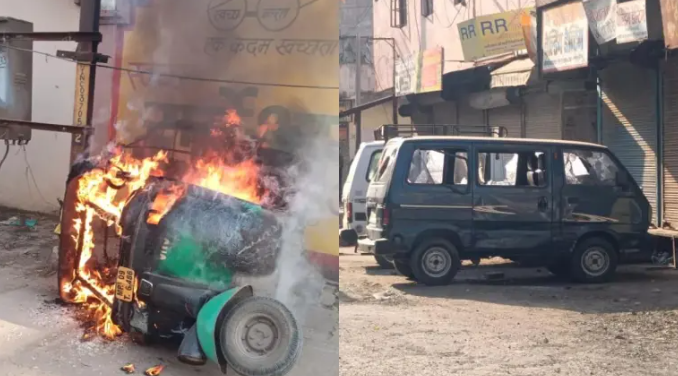
Case Summary
In Indore, tensions arose after a dispute between two neighbours from different communities over firecracker use following Diwali celebrations. The incident occurred in the Chhatripura area when Hindu children set off firecrackers, angering some Muslim individuals who then damaged vehicles along the road, smashing car windows. The situation escalated into stone-pelting, resulting in minor injuries to several people. Police quickly arrived to control the situation, with around 80 officers deployed to ensure peace. The injured were treated at the hospital, and an investigation was initiated. DCP Zone 4 Rishikesh Meena confirmed the incident. Following the incident, Eklavya Gaur, son of MLA Malini Gaur, visited the Chhatripura police station with Hindu group members, calling for punishment of the attackers.
Why it is Hate Crime ?
This case has been added to the tracker under the category- Attack not resulting in death. Under this, the sub-category selected is- Attacked for Hindu identity. In several cases, Hindus are attacked merely for their Hindu identity without any perceived provocation. A classic example of this category of religiously motivated hate crime is a murder in 2016. 7 ISIS terrorists were convicted for shooting a school principal in Kanpur because they got ‘triggered’ seeing the Kalava on his wrist and tilak that he had put. In this, the Hindu victim had offered no provocation except for his Hindu religious identity. The motivation for the murder was purely religious, driven by religious supremacy. Such cases where Hindus are targeted merely for their religious identity would be documented as a hate crime under this category. The incident in Indore can be classified as a hate crime under the category of "attacked for Hindu identity" due to the targeted aggression directed at the Hindu community during a festive celebration. The conflict arose specifically from Hindu children bursting firecrackers, a traditional practice associated with Diwali, which angered members of the neighbouring Muslim community. The ensuing violence, characterized by the vandalism of vehicles and stone-pelting, signifies a broader hostility towards the expressions of Hindu identity and culture. It is also important to mention here that this attack was entirely unprovoked, with the Hindus simply engaging in traditional celebrations when they became the target of aggression. The young boy was innocently bursting firecrackers, a customary Diwali practice, when the Muslim mob, initiated the attack. Such an unprovoked attack on Hindus, for simply indulging in their religious activity, stems from the deep-seated hatred the Muslim perpetrators harboured for the victim's religion. Such acts of violence are driven by intolerance and a desire to intimidate or harm individuals based on their religious identity and qualify as a hate crime.


Case Status
Complaint registered


Perpetrators Details
Perpetrators
Muslim Extremists
Perpetrators Range
Unknown
Perpetrators Gender
unknown
 Sources




