Ajmer dargah’s Sarwar Chishti justifies murder of Hindu youth Ram Gopal Mishra in Bahraich
 Ajmer, Rajasthan, India
  16 October, 2024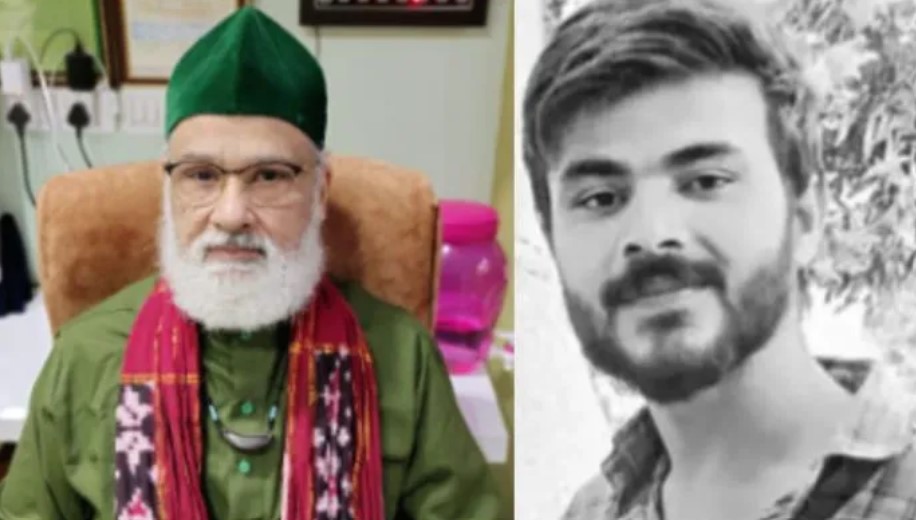
Case Summary
Sarwar Chishti, an Anjuman Committee member of the Ajmer Dargah, defended the killing of Hindu youth Ram Gopal Mishra in Bahraich, Uttar Pradesh by a Muslim mob. Chishti stated that when Muslims are “abused,” violence is inevitable, referencing the Bahraich incident as an expected response rather than condemning the act. Chishti commented that the flag incident naturally invited violence, rather than “flowers being showered.” Rather than condemning the murder, he described such incidents as common, blaming disrespect toward Islamic scholars. Chishti added that Muslims generally hold peaceful processions and do not incite violence, arguing that conflict stems from one side alone. It is notable that the Bahraich violence was unprovoked and driven by a Muslim mob. Eyewitnesses have recounted how announcements were made from the mosque to target Hindus and it was announced that those who kill Hindus would be rewarded. The attack by the Muslim mob was against Hindu devotees who were taking out a procession for the immersion of Maa Durga during Durga Puja. Notably, this is not the first time that Sarwar Chishti has made such inflammatory remarks. Last month, a video featuring Chishti went viral wherein was seen inciting Muslims to hit the streets and create chaos under the pretext of opposing the Waqf Amendment Bill of 2024.
Why it is Hate Crime ?
This case has been added to the tracker as a religiously motivated crime under the prime category of- Hate speech against Hindus and within this, the sub-category that has been chosen as per the case details is- Anti-Hindu subversion and prejudice. Further, under this sub-category, a tertiary category named, 'Anti-Hindu Fake News or Downplaying' has also been chosen. Hate speech is defined as any speech, gesture, conduct, writing, or display that is prejudicial against a specific individual and/or group of people, which is leading to or may lead to violence, prejudicial action or hate against that individual and/or group. Media plays a specific and overarching reach in perpetuating prejudicial attitudes towards a community owing to unfair, untrue coverage and/or misrepresentation/misinterpretation, selective coverage and/or omission of facts of/pertaining to issues affecting a specific religious group. This type of bias can dehumanise the victim group, making it easier for others to justify harmful actions against them, which aligns with the objectives of hate speech laws aimed at preventing such harm. It is often observed that the media takes a prejudicial stand against the Hindu community driven by their need to shield the aggressor community which happens to be a numeric minority, however, is the one perpetrating violence against Hindus. For example, the media is often quick to contextualise religiously motivated crimes against Hindus, omit or misrepresent facts that point towards religiously motivated hate crimes, justify and/or downplay religiously motivated hate crimes or simply present fake news to stereotype Hindus. Such media bias leads to the denial of persecution and is often used to dehumanise Hindus, leading to justification for violence against them. For example, the media covered several fake allegations of Hindus targeting Muslims and forcing them to chant Jai Shree Ram. Most of these cases were proved false and fabricated after a police investigation. These fake news reports were subsequently never retracted or clarified. Such fake news led to the justification of violence and dehumanisation of Hindus based on the argument that since Hindus targeted Muslims and forced them to chant Jai Shree Ram, the dehumanisation of Hindus and violence against them was par for the course and merely a retaliation. Such media bias leads to prejudicial portrayal of Hindus and offers a justification for violence against them and therefore, is considered hate speech under this category. A Muslim mob brutally killed Ram Gopal Mishra in the presence of police on 13th October in the Bahraich district of Uttar Pradesh during a visarjan procession of Goddess Durga’s idol. The incident has drawn widespread condemnation and raised serious concerns about the safety of Hindus in the area, further exacerbating communal divides. In the aftermath of the heinous murder, the reaction from some community leaders such as Sarwar Chishti has been alarming, showcasing the bias and hate they harbour for Hindus and Hinduism. As evidenced in this case, Sarwar Chishti, a member of the Anjuman Committee of the Ajmer Dargah, was noted for defending the violence, framing it as a justified response to perceived abuses against Muslims. His comments reflect a broader trend of downplaying violence against Hindus. By framing the murder as an inevitable consequence of imagined disrespect toward Islam, Chishti effectively shifts responsibility away from the attackers, who in this case were his co-religionists, and instead places blame on the victim’s perceived actions. This stance implicitly condones the violent outcome, minimizing the severity of the crime and framing it as an understandable reaction, rather than condemning it as a criminal act. The prejudice displayed in the murder of Ram Gopal Mishra and the subsequent comments from community leaders reflects a deep-seated animosity against Hindus and Hinduism. This hatred is often fueled by a narrative that portrays Hindus as oppressors, leading to a justification of violence against them as a form of retribution. The rhetoric used by figures like Sarwar Chishti, who defends violent acts rather than condemning them, further normalizes this animosity, creating an environment where hostility toward Hindus is not only accepted but expected. Since this systematic dismissal is indicative of an underlying bias that perpetuates discrimination against Hindus and exemplifies how the motivations behind the denial or downplaying of religiously motivated persecution are rooted in a profound animosity toward Hindus and their faith, this case has been added to the tracker.


Case Status
Unknown


Perpetrators Details
Perpetrators
Muslim Extremists
Perpetrators Range
One Person
Perpetrators Gender
male
 Sources




